Best Universities In USA

  • Home
  • About Us
  • Contact Us
  • Privacy Policy
  • Disclaimer
  • USA University

Best Texas Universities For Pakistani Students 2026-27 – Complete Guide

August 10, 2026 Leave a Comment

Best Texas Universities For Pakistani Students: Texas has a deeper and more formally recognized connection to Pakistan than most students realize. The Texas Legislature officially recognized the ATX+PAK Entrepreneurship program and the U.S.-Pakistan Women’s Council Future of Women in Energy Scholars program, and UT Austin maintains academic partnerships with the National College of Art in Lahore, the University of Karachi, and Fatima Jinnah Women University in Islamabad.

Best Texas Universities for Pakistani Students

The Pakistani-American community is one of the most active in Texas — with the Pakistani Society of North Texas, Pakistani Association of Greater Houston, and the Pakistani American Collaborative of Texas all represented at the Texas State Capitol.

For Pakistani students considering the United States, Texas offers a combination of academic quality, affordable scholarship mechanisms, a strong Muslim community, halal food access, and career pathways in energy, technology, and engineering that no other U.S. state can fully match at the same cost. This guide covers the best Texas universities for Pakistani students in 2026–27.

Why Texas for Pakistani Students — 7 Key Advantages

  1. Strong Muslim community infrastructure — Houston, Dallas, and Austin all have established Muslim communities with mosques, halal food, Islamic schools, and Pakistani cultural organizations. Houston has over 50 mosques; DFW has 30+
  2. Zero state income tax — Texas has no state income tax. On a $90,000 OPT salary, Pakistani graduates keep approximately $5,000–$7,000 more per year than counterparts working in New York or California
  3. STEM OPT — 36 months post-graduation work authorization — all major Texas university engineering, CS, and business analytics programs are STEM-designated
  4. Scholarship mechanisms that actually work — Texas public universities offer automatic merit scholarships that unlock in-state tuition rates for international students — bringing annual tuition to $11,852–$14,644
  5. Energy sector access (Houston) — Pakistan’s energy professionals are in high demand globally; Houston’s energy corridor gives Pakistani petroleum, chemical, and mechanical engineering graduates the world’s best industry access
  6. Good Neighbor Scholarship — Pakistan qualifies as a Western Hemisphere-adjacent nation; verify current eligibility with individual Texas universities
  7. About 85% of Pakistani students receive F-1 visa approval — a strong approval rate relative to other South Asian nations; proper preparation makes the difference

Best Texas Universities for Pakistani Students 2026-27

UniversityBest ForIntl Tuition/yrWith ScholarshipMuslim Infra NearbySTEM OPT
UT DallasCS, IT, Engineering, Business Analytics~$40,000–$41,000~$14,644 (AES)✅ Richardson/Plano✅ 36 months
UNTCS, Data Science, Business, Education~$21,244–$28,107~$13,506 (Excellence)✅ Denton/DFW✅ 36 months
Texas A&MEngineering, Agriculture, MBA~$40,124~$12,995 ($4K waiver)✅ MSA active✅ 36 months
University of HoustonPetroleum Eng, MBA, CS~$22,000–$27,776~$13,506 (waiver)✅ Houston — largest✅ 36 months
UT AustinCS, Engineering, MBA, Law~$40,582–$48,712TA/RA waivers available✅ ISMC Austin✅ 36 months
Texas TechEngineering, Business, Science~$24,451~$11,852 (Presidential)✅ MSA on campus✅ 36 months
Lamar UniversityEngineering, Grad Programs~$20,085~$8,642 (auto grad waiver)Growing community✅ 36 months

1. University of Texas at Dallas (UTD) — Best Overall for Pakistani Graduate Students

UT Dallas is ranked #1 in Texas for international students (IIE Open Doors) and is one of the most popular Texas universities for Pakistani graduate students — particularly in Computer Science, Information Technology Management, and Business Analytics. The Richardson campus sits in the heart of the DFW Telecom Corridor, with Samsung, Ericsson, AT&T, Cisco, and Texas Instruments all within minutes.
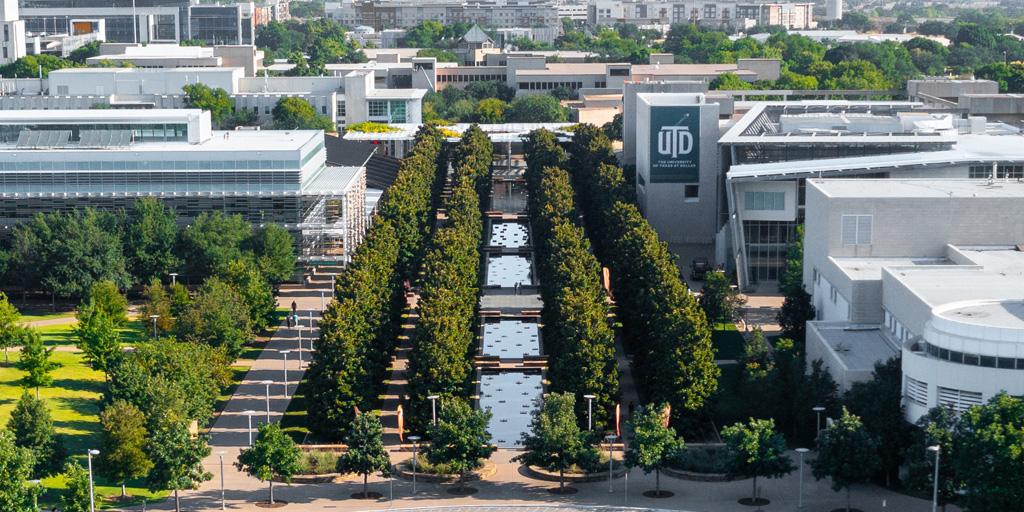
University of Texas at Dallas

Why UTD for Pakistani Students

  • AES Scholarship — any level automatically unlocks in-state tuition of $14,644/year instead of $40,000+. Apply by December 1 with a complete admission file — no separate scholarship application needed
  • Muslim Student Association (MSA) at UTD — one of the most active Muslim student organizations in North Texas; Eid celebrations, Friday prayers on campus, halal food advocacy
  • Richardson/Plano/Frisco Muslim infrastructure — Islamic Center of Plano, Masjid Al-Islam (Richardson), Islamic Association of North Texas (Irving) — all within 15–30 minutes of campus
  • Halal food — multiple halal restaurants within 5 minutes of campus in Richardson; Pakistani restaurants in Plano (Al-Madina, Karachi Darbar, and others)
  • The University of Texas at Dallas’ scholarship programs and credit courses benefit transfer students, international students, graduate students, and continuing students alike
  • Eugene McDermott Scholars Program — full-ride open to international applicants including Pakistanis

Most Popular Programs for Pakistani Students at UTD

  • MS Computer Science (STEM) — most enrolled graduate program
  • MS Information Technology Management (STEM)
  • MS Business Analytics and AI (STEM — Jindal School AACSB)
  • MS Electrical Engineering (STEM)
  • MBA (AACSB — Naveen Jindal School)
  • MS Software Engineering (STEM)

Typical annual cost for Pakistani students at UTD (with AES):
~$14,644 tuition + ~$12,000–$15,000 living = approximately $26,000–$30,000/year
At ₨280/USD: approximately PKR 73–84 lakhs/year

2. University of North Texas (UNT) — Best Value R1 in DFW for Pakistani Students

UNT in Denton is one of the most affordable R1 research universities in Texas — and one with a particularly active Muslim student community. The university’s location 35 miles north of Dallas gives students access to DFW’s career market while living in a more affordable, quieter college town environment.

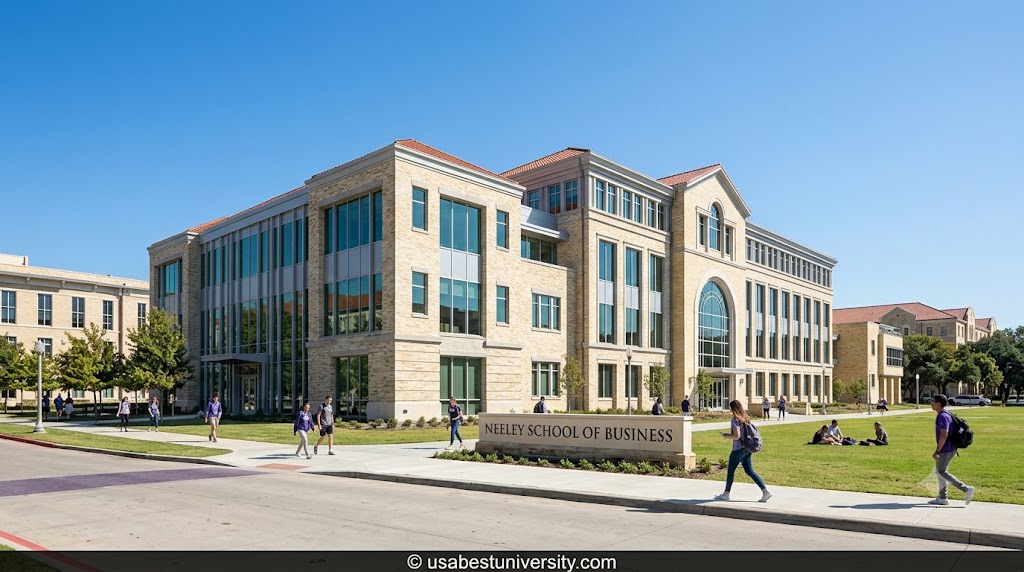
University of North Texas Campus

Why UNT for Pakistani Students

  • Excellence Scholarship — automatic consideration by March 1; any tier unlocks in-state tuition of ~$13,506/year. Top tier (President’s Elite) awards $12,000/year additional scholarship.
  • Muslim Student Association at UNT — very active; weekly halal dinners, Friday prayers, Ramadan iftars, Eid events
  • Islamic Association of Denton — mosque within 10 minutes of campus
  • Halal food options in Denton growing; DFW’s full halal market accessible 35 miles south
  • Pakistani Student Association at UNT — active cultural events
  • DART A-train connects Denton to Dallas for weekend access to full DFW Muslim community

Most Popular Programs for Pakistani Students at UNT

  • MS Computer Science (STEM)
  • MS Data Science (STEM)
  • MS Information Science (STEM)
  • MBA (AACSB — Ryan College of Business)
  • MS Business Analytics (STEM)
  • MS Artificial Intelligence (STEM — growing program)
  • MEd (Education — for Pakistani educators)

Typical annual cost for Pakistani students at UNT (with Excellence Scholarship):
~$13,506 tuition + ~$10,000–$12,000 living = approximately $23,000–$26,000/year. At ₨280/USD: approximately PKR 64–73 lakhs/year

3. Texas A&M University — Best for Engineering and Research

Texas A&M is ranked #51 nationally and #1 public university in Texas (WSJ). With 125 engineering degree programs, TAMU is one of the most comprehensive engineering universities in the country. The Muslim Students Association (MSA) at Texas A&M is one of the largest and most active in Texas.
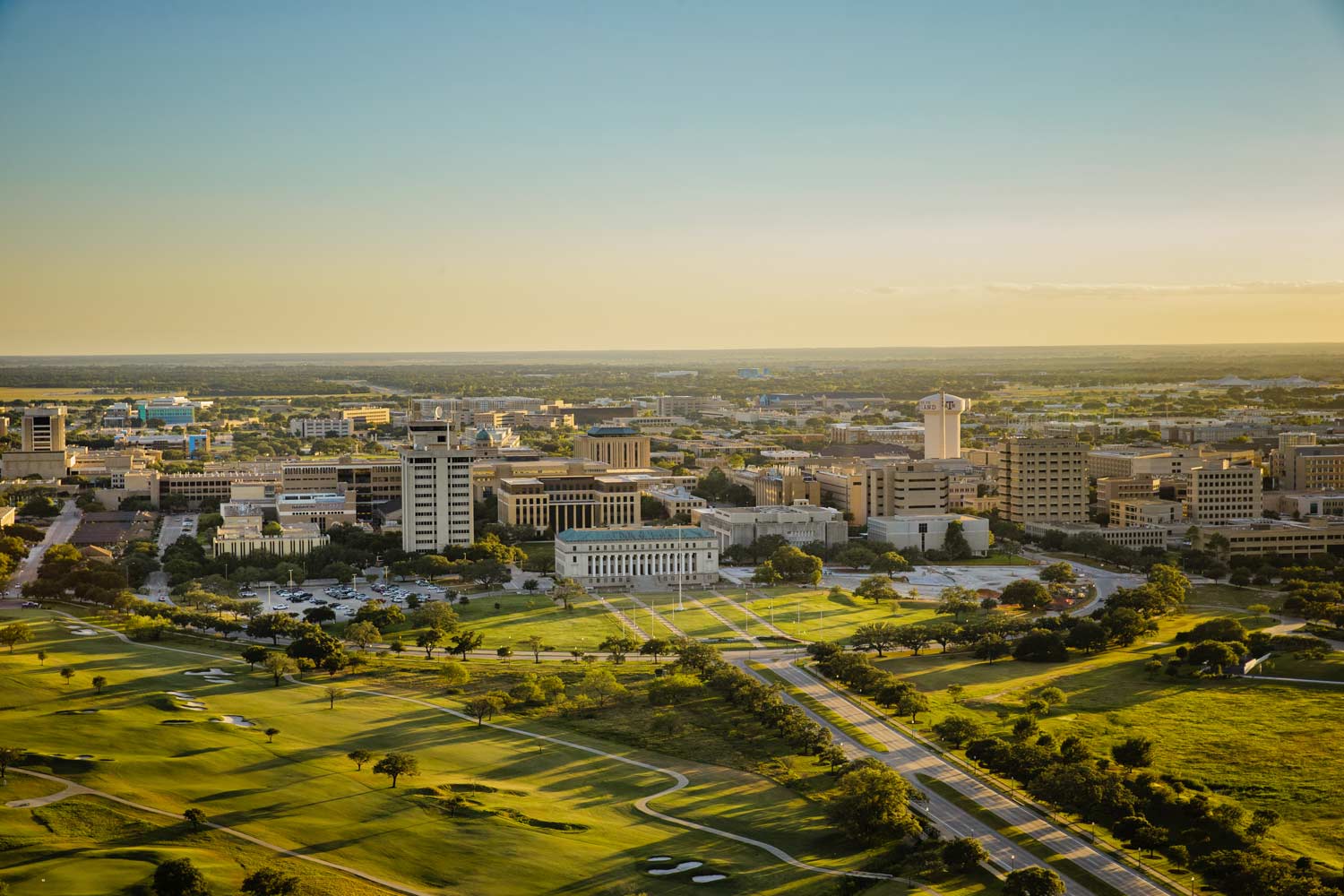
Texas A&M University

Why Texas A&M for Pakistani Students

  • $4,000 competitive scholarship waiver — combine multiple institutional awards to reach $4,000/year, unlock in-state tuition of $12,995/year. Graduate students only needa  $1,000+ scholarship
  • TAMU MSA — one of the most active Islamic student organizations at any Texas university; Friday prayers in the MSC, Ramadan events, halal food on campus
  • Islamic Association of Bryan-College Station — mosque serving the TAMU student population
  • Halal food options: Halal Brothers, Karachi Kitchen, and other halal restaurants in College Station specifically serving the Muslim student population
  • Pakistan Students Association at TAMU — cultural events, orientation support for new Pakistani students
  • Texas and Pakistan benefit from several mutual exchanges, including the ATX+PAK Entrepreneurship program — TAMU’s entrepreneurship ecosystem connects to this Pakistan-Texas relationship
  • $1 billion+ annual research expenditure — TA/RA positions available across engineering and science departments with tuition waivers and stipends

Most Popular Programs for Pakistani Students at TAMU

  • MS Computer Science (STEM)
  • MS Electrical Engineering (STEM)
  • MS Petroleum Engineering (STEM — energy sector careers)
  • MS Mechanical Engineering (STEM)
  • MS Chemical Engineering (STEM)
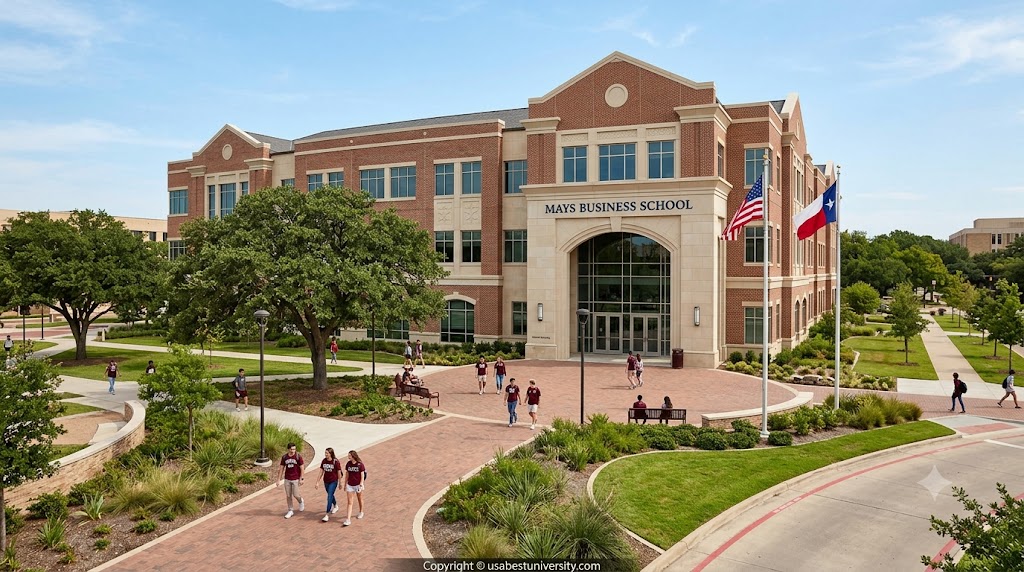
  • MBA (Mays — #1 Online MBA nationally)
  • MS Agricultural Economics (for students with an agriculture background)

Typical annual cost for Pakistani students at TAMU (with scholarship waiver):
~$12,995 tuition + ~$10,000–$12,000 living = approximately $23,000–$25,000/year
At ₨280/USD: approximately PKR 64–70 lakhs/year

4. University of Houston — Best for Energy Sector and Houston Muslim Community

The University of Houston is located in the world’s energy capital — and Houston has the largest and most established Pakistani community of any Texas city. For Pakistani students pursuing careers in petroleum engineering, chemical engineering, or energy management, UH’s location is a genuine structural advantage.
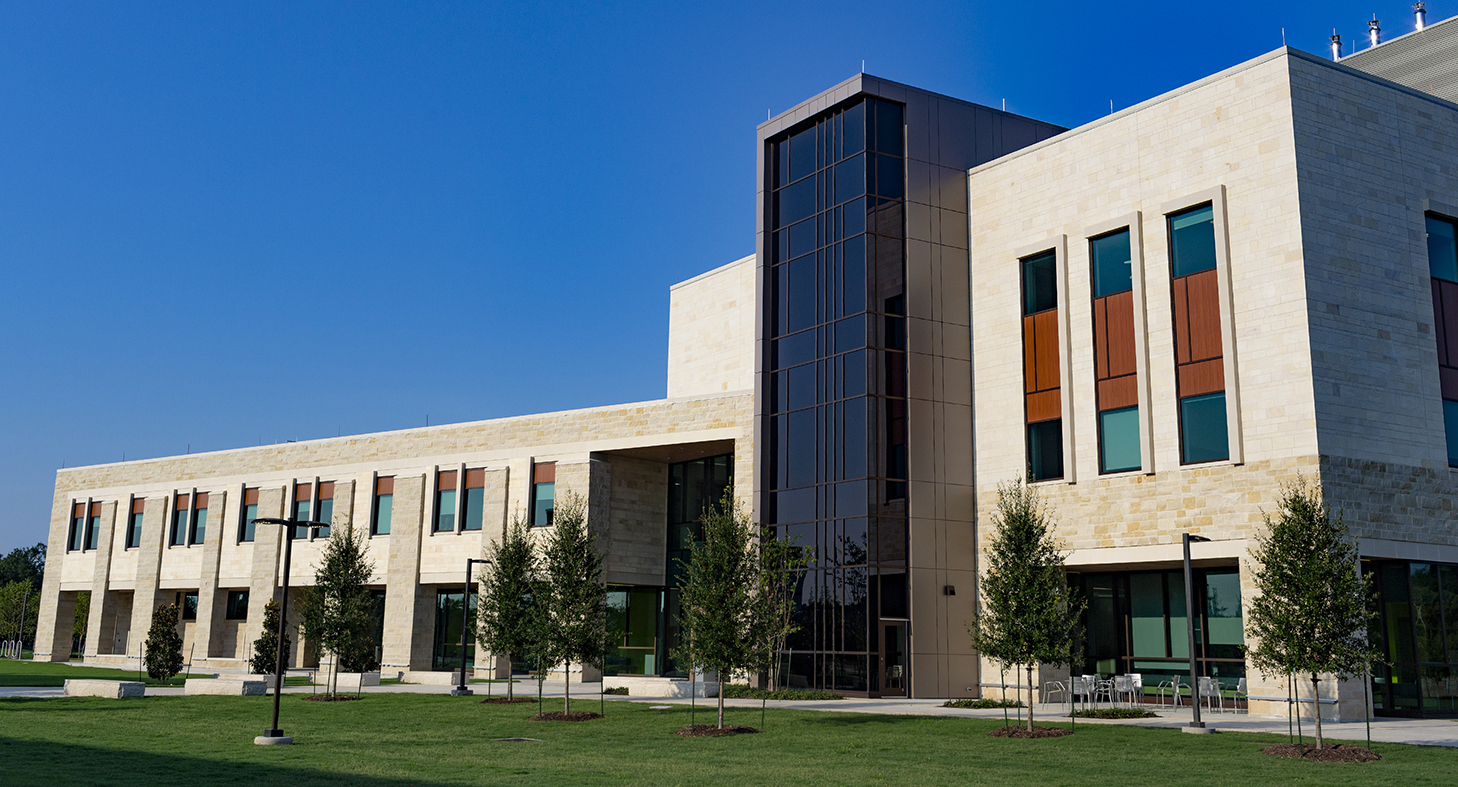
University of Houston

Why UH for Pakistani Students

  • Houston Pakistani community — one of the largest Pakistani-American communities in the U.S.; Pakistan Center of Houston, Pakistani American Cultural Center, multiple Pakistani restaurants, halal grocery stores, and community organizations throughout the city
  • Houston mosques — 50+ mosques in Houston metro; ISGH (Islamic Society of Greater Houston) operates multiple centers including the Masjid Al Salam, Masjid Hamza, and others within commuting distance of UH
  • Energy sector access — ExxonMobil, Shell, Chevron, Halliburton, Schlumberger all within Houston — direct internship and career pathways for engineering students
  • Competitive scholarship waiver available — $1,000+ competitive scholarship unlocks in-state tuition (~$13,506/year)
  • Muslim Student Association at UH — very active; halal food on campus
  • The University of Houston, a prominent public research institution, is the third-largest University in Texas. Recognized for its significant research endeavours, it holds the prestigious classification of R1: Doctoral Universities — Very high research activity
  • Pakistan Consulate General is located in Houston — a practical advantage for consular services during your studies

Most Popular Programs for Pakistani Students at UH

  • MS Petroleum Engineering (STEM — world-class program)
  • MS Chemical Engineering (STEM)
  • MS Computer Science (STEM)
  • MS Electrical Engineering (STEM)
  • MBA (Bauer — AACSB, #25 Professional MBA public schools)
  • MS Industrial Engineering (STEM)

Typical annual cost for Pakistani students at UH:
~$22,000–$27,776 tuition + ~$12,000–$16,000 living = approximately $34,000–$44,000/year
At ₨280/USD: approximately PKR 95–123 lakhs/year
With competitive scholarship waiver: approximately PKR 70–84 lakhs/year

5. UT Austin — Best Prestige Option for Pakistani Students

UT Austin is ranked #30 nationally — the most prestigious public university in Texas and one of the most recognized globally. UT Austin maintains academic partnerships with the National College of Art in Lahore, the University of Karachi, the National Academy of Performing Arts in Karachi, and Fatima Jinnah Women University in Islamabad — resulting in faculty and student exchanges in film studies, music, performing arts, and social sciences. This Pakistan connection is formal and institutionalized.

UT Austin vs Texas A&M

Why UT Austin for Pakistani Students

  • Formal academic partnerships with multiple Pakistani universities — creating exchange pathways and scholarly connections
  • Islamic Center of Greater Austin — one of the largest mosques in Austin; Pakistani community growing rapidly in North Austin
  • Graduate TA/RA positions in engineering and CS departments include tuition waivers and stipends — most impactful financial support for Pakistani graduate students.
  • Cockrell School of Engineering ranked #1 nationally for Petroleum and Nuclear Engineering
  • McCombs MBA ranked #18 nationally — strongest MBA prestige in Texas
  • Austin’s tech sector (Apple, Google, Tesla, Dell, Oracle) provides strong CS and engineering career access

Challenge for Pakistani Students

UT Austin’s acceptance rate has dropped to 22.2% overall and approximately 11.76% for out-of-state/international students. For competitive MS programs (CS, Electrical Engineering), the effective acceptance rate is lower still. Pakistani students should have a strong GPA (3.5+), competitive GRE scores (315+), and research experience to be competitive for UT Austin graduate admissions.

Typical annual cost for Pakistani students at UT Austin:
~$40,582–$48,712 tuition + ~$16,000–$20,000 living = approximately $56,000–$69,000/year
At ₨280/USD: approximately PKR 157–193 lakhs/year (before TA/RA waivers)

6. Texas Tech University — Best Affordable Option for Pakistani Undergraduates

Texas Tech University is an R1 research university in Lubbock with strong engineering and business programs. For Pakistani undergraduate students, the Presidential Scholarship + competitive tuition waiver combination is one of the most accessible scholarship pathways in Texas.
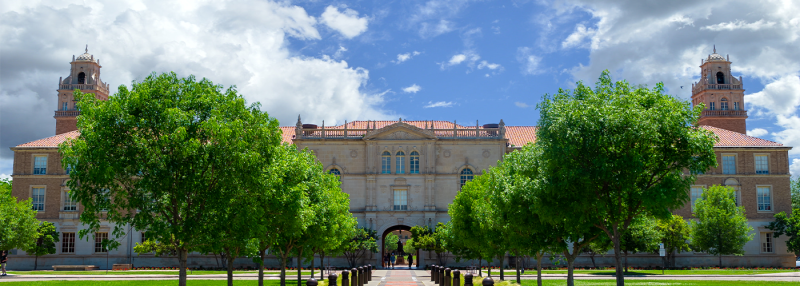
Texas Tech University Campus

Why Texas Tech for Pakistani Students

  • Presidential Scholarship — automatically considered at admission; unlocks in-state tuition of ~$11,852/year
  • Muslim Students Association at Texas Tech — active; Islamic Center of Lubbock nearby
  • Petroleum Engineering program — strong industry connections to the Permian Basin (West Texas oil fields)
  • 71% acceptance rate — one of the most accessible R1 universities for Pakistani applicants
  • Lubbock’s cost of living is among the lowest of any major Texas university city

Typical annual cost for Pakistani students at TTU (with Presidential Scholarship):
~$11,852 tuition + ~$10,000–$12,000 living = approximately $22,000–$24,000/year
At ₨280/USD: approximately PKR 62–67 lakhs/year

7. Lamar University — Most Affordable Graduate Engineering Option

Lamar University in Beaumont is one of the best-kept secrets for Pakistani engineering graduate students in Texas. Most international graduate students receive an automatic out-of-state tuition waiver — bringing effective tuition to $8,642/year. Combined with the petrochemical corridor location (ExxonMobil, Total Energies, Air Liquide all within commuting distance), Lamar offers world-class career access at an extraordinarily affordable price.
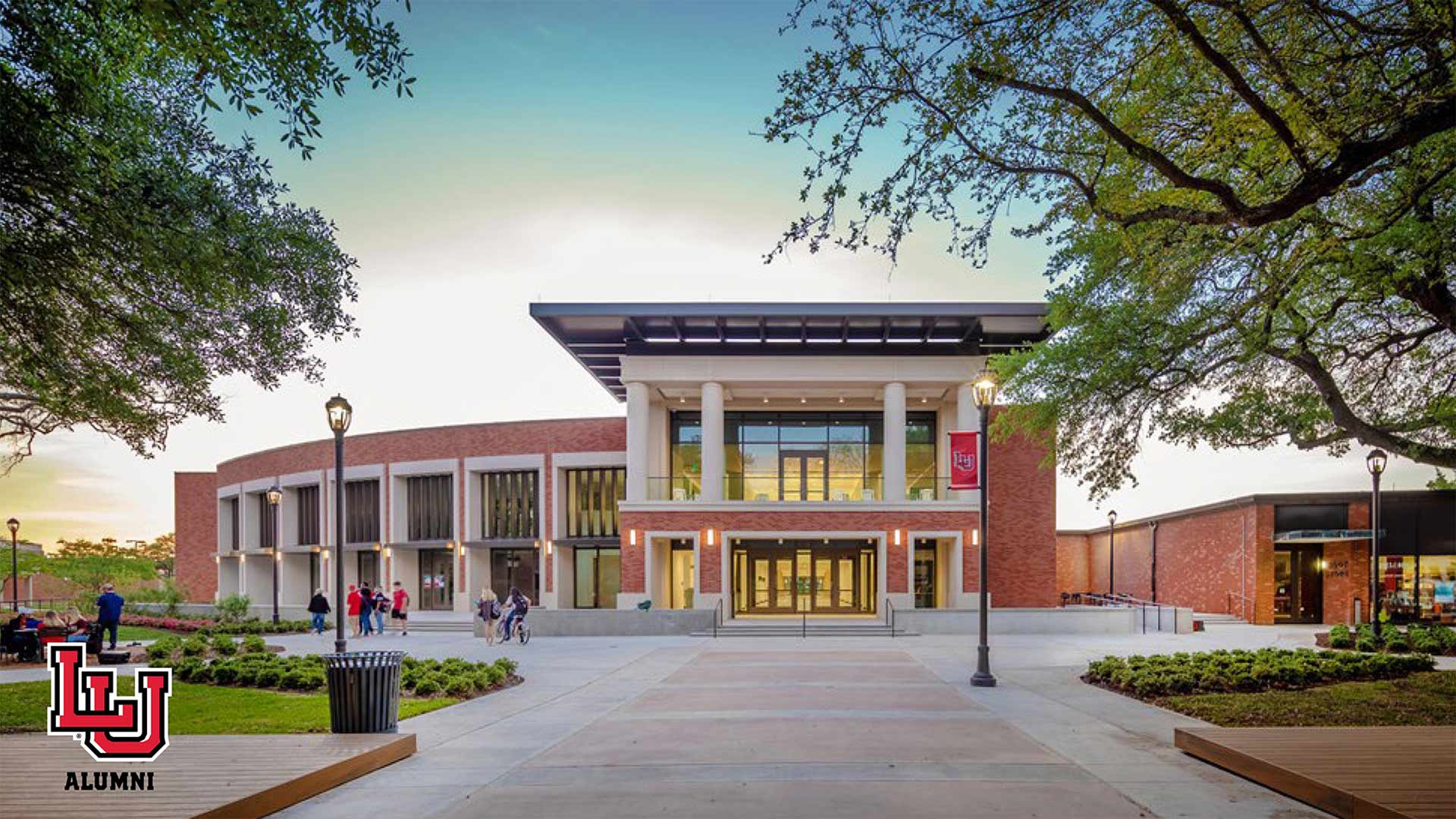
Lamar University

Typical annual cost for Pakistani students at Lamar (with auto grad waiver):
~$8,642 tuition + ~$10,000–$12,000 living = approximately $19,000–$21,000/year. At ₨280/USD: approximately PKR 53–59 lakhs/year

Fees in PKR — What Pakistani Students Actually Pay (2026-27)

UniversityAnnual Tuition (USD)Annual Tuition (PKR at ₨280/USD)Total 2-yr MS Cost (PKR est.)
Lamar (auto grad waiver)~$8,642~PKR 24.2 lakhs~PKR 53–59 lakhs
Texas Tech (Presidential Scholarship)~$11,852~PKR 33.2 lakhs~PKR 62–67 lakhs
TAMU (with $4K waiver)~$12,995~PKR 36.4 lakhs~PKR 64–70 lakhs
UNT (with Excellence Scholarship)~$13,506~PKR 37.8 lakhs~PKR 64–73 lakhs
UTD (with AES)~$14,644~PKR 41.0 lakhs~PKR 73–84 lakhs
University of Houston~$22,000–$27,776~PKR 61.6–77.8 lakhs~PKR 95–123 lakhs
UT Austin (without TA/RA)~$40,582–$48,712~PKR 113.6–136.4 lakhs~PKR 157–193 lakhs

Muslim Community Infrastructure in Texas by City

Houston — Largest Muslim Community in Texas

  • 50+ mosques in the Houston metro — the most of any Texas city
  • Islamic Society of Greater Houston (ISGH) — operates multiple masjids and Islamic schools
  • Pakistani Association of Greater Houston — one of the most active Pakistani community organizations in the state
  • Pakistani restaurants throughout Southwest Houston (Hillcroft Avenue corridor), Sugar Land, and Katy
  • Multiple halal grocery stores including Fiesta Mart (halal section), Al Safa halal stores
  • Pakistan Consulate General of Houston — consular services for Pakistani nationals in Texas
  • Universities near Houston Muslim community: University of Houston, Rice University, Houston Baptist University

Dallas-Fort Worth — Second Largest Muslim Community

  • 30+ mosques in DFW metro — Islamic Association of North Texas (Irving), Islamic Center of Plano, Masjid Al-Islam (Richardson), East Plano Islamic Center (EPIC — one of the largest in the US)
  • Pakistani Society of North Texas — very active cultural organization
  • Pakistani restaurants in Plano, Irving, Richardson, and Carrollton (Lahori Chargha, Butt Karahi, Saraab Restaurant)
  • Halal meat shops throughout DFW — Al-Madina, Bismillah Halal Meat, and others
  • ATX+PAK Entrepreneurship program connects Pakistani entrepreneurs with DFW business ecosystem
  • Universities near DFW Muslim community: UT Dallas (Richardson), UNT (Denton), SMU (Dallas), TCU (Fort Worth)

Austin — Fastest-Growing Muslim Community

  • Tech sector Muslims predominantly South Asian (Indian, Pakistani) engineers and product managers. The Islamic Center of Greater Austin is the largest mosque.
  • Nueces Mosque, Austin Masjid, and multiple smaller Islamic centers
  • Halal food growing rapidly — multiple halal restaurants in North Austin and the Domain area
  • Universities near Austin Muslim community: UT Austin, Texas State University, Concordia University Texas

F-1 Visa for Pakistani Students — Texas-Specific Tips

For Pakistani students, the F-1 visa process takes 3-4 months from I-20 receipt to visa approval. Visa processing takes 3-5 days after the interview, but scheduling requires 1-3 months’ booking during peak season. About 85% of Pakistani students receive F-1 visa approval.

Pakistan F-1 Visa — Key Facts

DetailInformation
Interview locations in PakistanU.S. Embassy Islamabad; U.S. Consulates Lahore, Karachi, Peshawar
Recommended lead time4–6 months before program start date
Peak season delaysMay–August — book early
Approval rate~85% for Pakistani students
SEVIS fee$350 (pay at fmjfee.com after receiving I-20)
MRV application fee$185
Total government fees$535 minimum
Pakistan Consulate (Houston)Available for consular services once in Texas

Pakistani Student F-1 Interview Tips

  • Strong financial documentation is essential — bank statements, HEC scholarship letters, sponsor letters showing sufficient funds for one full academic year (minimum your university’s stated COA)
  • Demonstrate clear study plan — know your program, university, and why you chose it specifically. Vague answers about “good education” are red flags.
  • Home country ties — family, property ownership, bank accounts, future employer connections, plans to return — consular officers need confidence you will return to Pakistan after completing your degree.e
  • HEC (Higher Education Commission) scholarship holders — HEC scholarship letters significantly strengthen your financial documentation and demonstrate government backing of your studies
  • Apply at multiple consulate locations if appointment slots are limited — Islamabad, Lahore, Karachi, and Peshawar all conduct F-1 visa interviews.ws
  • Do not mention immigration intent — F-1 is a non-immigrant visa; any suggestion of wanting to stay in the US permanently can result in refusal.

For the complete F-1 visa step-by-step guide, see our F-1 Student Visa Guide for Texas Universities 2026.

STEM OPT — Why It Matters for Pakistani Students

Pakistani students face similar long-term immigration challenges to Indian students in the U.S. employment-based green card system. The EB-2 and EB-3 preference categories have growing backlogs for Pakistani nationals. STEM OPT’s 36 months of post-graduation work authorization is critical for:

  • Building U.S. work experience before H-1B sponsorship is needed
  • Establishing the extraordinary ability track record needed for O-1 visa applications
  • Completing research that supports National Interest Waiver (NIW/EB-2) applications
  • Earning Pakistan-comparable purchasing power salaries with Texas’s zero state income tax advantage

STEM-designated programs at Texas universities qualifying for 36-month OPT: Computer Science, Electrical Engineering, Mechanical Engineering, Chemical Engineering, Petroleum Engineering, Data Science, Business Analytics, Information Technology, Cybersecurity, Mathematics, and many more. Always verify with your university’s DSO.

HEC Scholarships — Pakistani Government Funding for Texas Universities

The Higher Education Commission (HEC) of Pakistan funds overseas scholarships for Pakistani students — and U.S. universities, including Texas institutions, are eligible destinations. Key HEC programs to check:

  • HEC Overseas Scholarships (Phase III) — MS/PhD funding for Pakistani nationals to study abroad; covers tuition, living stipend, health insurance, and airfare
  • HEC Need-Based Scholarships — for financially deserving students pursuing graduate education
  • USEFP Fulbright Pakistan Program — U.S.-funded Fulbright scholarship specifically for Pakistani students; covers full tuition, living expenses, and health insurance at U.S. universities; highly competitive
  • Higher Education Department provincial scholarships — Punjab, Sindh, KPK, and Balochistan all offer study abroad scholarships for graduate study.

HEC scholarship letters are among the strongest financial documentation you can present in your F-1 visa interview. If you qualify, apply for HEC before applying to Texas universities — the scholarship letter streamlines both your university financial aid process and your visa interview.

Which Texas University Should Pakistani Students Choose?

If Your Goal Is…Best Texas University
Lowest total cost (tuition + living)Lamar University (~PKR 53–59 lakhs/year)
Best CS/IT + DFW tech placementUT Dallas (Richardson — Telecom Corridor)
Best engineering breadth + Aggie NetworkTexas A&M (#9 public engineering)
Petroleum/energy engineering careerUniversity of Houston (inside Houston energy corridor)
Largest Pakistani community nearbyUniversity of Houston (Houston has Pakistan Consulate + largest community)
Best affordable R1 in DFWUNT (Denton) with Excellence Scholarship
Highest prestigeUT Austin (#30 nationally, Pakistan academic partnerships)
Best undergraduate + scholarshipTexas Tech (Presidential Scholarship, 71% accept rate)
Best MBA valueTexas A&M Mays (#1 Online MBA nationally)

Final Thoughts

Texas and Pakistan have a formally recognized, growing relationship — from the Texas Legislature’s official recognition of Pakistan Day of Action, to UT Austin’s academic partnerships with Pakistani universities, to the Pakistan Consulate General in Houston serving the state’s growing Pakistani-American community.

For Pakistani students, Texas offers engineering and technology programs that lead directly into energy, aerospace, and tech careers — supported by Muslim community infrastructure, halal food access, zero state income tax, and scholarship mechanisms that can bring world-class education within realistic financial reach.

For complete guides on Texas universities, scholarships, and the F-1 visa process:

  • Texas Universities with Full Scholarships 2026
  • 10 Cheapest Texas Universities for International Students
  • F-1 Student Visa Guide for Texas Universities 2026
  • How to Get a  Scholarship at a Texas University — Step by Step
  • Best Texas Universities for Engineering 2026

Are you a Pakistani student planning to study in Texas? Tell us your program and target university in the comments — we’ll give you our honest take on the best fit for your goals.

Filed Under: Texas University

University of Texas at Arlington (UTA) – Tuition, Programs & Admissions

August 5, 2026 Leave a Comment

The University of Texas at Arlington (UTA) is a public R1 research university in Arlington, Texas — part of the UT System — with 41,600+ students, an estimated 80% acceptance rate, and international graduate tuition of $25,714/year (2026–27).

University of Texas at Arlington

UTA is a Carnegie R1 “Very High Research Activity” institution with more than 20 graduate programs recognized by US News, the 4th largest engineering college in Texas, and a campus community of more than 5,000 Indian students — one of the largest South Asian student populations at any Texas university.

UTA provides around $30 million in scholarships each academic year. Located in the heart of the Dallas–Fort Worth Metroplex between Dallas and Fort Worth, UTA gives students direct access to one of the most diverse and rapidly growing job markets in the United States. Here is everything you need to know.

What Is the University of Texas at Arlington?

The University of Texas at Arlington was established in 1895 as Arlington College — a private institution that became public in 1900 and joined the University of Texas System in 1965. Today it is one of the largest universities in Texas by enrollment, with a 420-acre campus featuring over 100 buildings in the city of Arlington — geographically positioned between Dallas (20 miles east) and Fort Worth (20 miles west), at the center of the DFW Metroplex.

UTA officially earned Tier 1 university designation, granting access to the state’s National Research University Fund, which recognizes academic and research excellence. This designation alongside the Carnegie R1 classification confirms UTA’s position as a genuine research university — not simply a large regional institution. The Department of Computer Science and Engineering at UTA is one of seven departments in the College of Engineering — the fourth-largest engineering college in Texas. Its internationally recognized faculty are engaged in breakthrough research across the leading areas of computer science and engineering.

UTA’s identity is shaped by three factors: its DFW Metroplex location (access to 23 Fortune 500 company headquarters), its large and diverse international student population (15% international, with 5,000+ Indian students), and its practical, career-focused engineering and business programs that feed directly into DFW’s tech, finance, aerospace, and healthcare employer base.

University of Texas at Arlington — Key Facts 2026

DetailInformation
 Founded 1895 (public since 1900; UT System since 1965)
 Location Arlington, Texas (DFW Metroplex; 420-acre campus)
 Address 701 S. Nedderman Drive, Arlington, TX 76019
 University System University of Texas System
 Type Public R1 Research University (Carnegie: Very High Research Activity)
 Tier 1 Designation ✅ Since (Texas National Research University Fund)
Total Enrollment 41,600+ students
 Undergraduate 29,000+
 Graduate 12,300+
 International Students ~15% of student body; 5,000+ Indian students
 Online Students 12,000+
 Student-to-Faculty Ratio 22:1
 Acceptance Rate ~57–80% (estimated; UTA does not officially publish)
 Minimum GPA (UG) 2.75+
 International Grad Tuition $25,714/year
 International UG Tuition $26,838/year
 Annual Living Expenses ~$17,995/year (housing, meals, transport, personal)
 Annual Scholarships Awarded $30 million+
 Degree Programs 180+ programs across 9 schools and colleges
 US News Grad Programs Recognized 20+ programs (Best Graduate Schools)
 QS World Ranking 2026 #1001–1200
 THE World Ranking 2026 #601–800 (251 overall by THE sources)
 Placement Rate 75–80%
 Athletics NCAA Division I, Sun Belt Conference
 Mascot Blaze the Maverick
 Accreditation SACSCOC, AACSB (Business), ABET (Engineering)
 Website uta.edu

Programs at UTA

UTA offers 180+ programs across 9 schools and colleges. The most popular programs for international and Indian students are concentrated in engineering, computer science, and business — all STEM-designated and all qualifying for 36-month OPT.

College of Engineering — 4th Largest in Texas

UTA’s College of Engineering is the fourth-largest engineering college in Texas. The Department of Computer Science and Engineering serves the needs of the region, state, and nation through quality educational and innovative research programs. The department’s undergraduate programs are ABET-accredited.

  • MS Computer Science — STEM; most popular international graduate program; ABET-accredited; 36-credit program; specializations in AI/ML, cybersecurity, data science, software engineering, distributed systems
  • MS Software Engineering — STEM; software development lifecycle focus; strong industry placement in DFW tech
  • MS Computer Science and Engineering (CSE) — hardware-software integration; ABET-accredited
  • MS Electrical Engineering — STEM; power systems, electronics, communications
  • MS Mechanical Engineering — STEM; aerospace, manufacturing, energy systems applications
  • MS Civil Engineering — STEM; infrastructure focus; GRE required
  • MS Industrial Engineering — STEM; operations research, supply chain, systems engineering
  • MS Materials Science and Engineering — STEM; growing research program
  • PhD programs — multiple engineering disciplines; funded research positions available

The engineering department at UTA has a total graduate enrollment of 2,607 students — with 89.1% being international students — one of the most internationally diverse engineering programs of any Texas public university.

College of Business (AACSB)

  • MBA — AACSB-accredited; multiple concentrations; online and on-campus formats
  • MS Business Analytics — STEM-designated; Python, R, SQL, Tableau, machine learning; strong DFW analytics placement
  • MS Accounting — CPA pathway; strong regional employer base
  • MS Finance — quantitative finance focus; DFW financial sector connections
  • MS Information Systems — STEM-designated; enterprise systems and data management
  • MS Supply Chain Management — STEM-designated; DFW logistics and supply chain corridor
  • MS Management — leadership and organizational strategy focus

College of Nursing and Health Innovation

  • BSN (Bachelor of Science in Nursing) — one of the largest nursing programs in Texas
  • MSN (Master of Science in Nursing) — multiple specializations including Nurse Practitioner
  • PhD in Nursing — research-focused doctoral program
  • Clinical placements with major DFW health systems — Texas Health Resources, Medical City Healthcare, Baylor Scott & White

Other Colleges and Programs

  • School of Architecture, Planning & Public Affairs — Architecture (NAAB-accredited), Urban Planning, Public Administration
  • College of Liberal Arts — Communication, English, History, Political Science, Psychology, Sociology
  • College of Science — Biology, Chemistry, Mathematics, Physics, Data Science
  • College of Education — Teacher certification, Educational Leadership, Curriculum and Instruction
  • College of Social Work — MSW program with community practice focus

Distinctive Programs Unique to UTA

Energy Engineering and Construction Management — among UTA’s most in-demand courses are Energy Engineering and Construction Management — reflecting DFW’s growing energy infrastructure and real estate construction market.

Movin’ Mavs Wheelchair Basketball — UTA’s wheelchair basketball program is one of the most decorated in collegiate sports — the Movin’ Mavs have won numerous championships — and reflects UTA’s broader commitment to accessibility and adaptive athletics.

Online Programs — UTA has 12,000+ online students. Popular online programs include MS Computer Science, MBA, MS Nursing, MS Public Administration — making UTA one of the most significant online education providers among Texas public universities.

UTA Tuition and Cost of Attendance

Student TypeTuition & Fees/yrLiving Expenses/yrTotal COA Est.
 Texas Residents (UG) ~$11,000–$13,000 ~$17,995 ~$29,000–$31,000
 International UG $26,838 ~$17,995 ~$44,800
 International Graduate $25,714 ~$17,995 ~$43,700

Estimated annual living expenses are approximately $17,995, covering housing, meals, transportation, and personal expenses. Arlington’s cost of living is meaningfully lower than Dallas proper or Austin — off-campus housing typically runs $700–$1,100/month for shared apartments near UTA.

Non-Resident Tuition Waiver — Key Mechanism

International students who receive a competitive merit-based scholarship may qualify to pay in-state tuition rates, even if they are non-residents of Texas or non-U.S. citizens — significantly reducing overall costs. Under Texas law, any non-resident student (domestic or international) who receives a competitive institutional scholarship of $1,000 or more qualifies for in-state tuition. At UTA, in-state graduate tuition runs approximately $9,000–$12,000/year — a saving of $13,000–$16,000/year versus the international rate. Contact UTA’s Financial Aid office to confirm which merit scholarships qualify for this waiver.

UTA Scholarships

The University of Texas at Arlington provides around $30 million in scholarships each academic year for students. Key scholarship programs:

Undergraduate Scholarships

  • Presidential Scholarship — UTA’s most prestigious freshman award; covers tuition, fees, books, and on-campus housing; awarded to incoming freshmen with outstanding academic records
  • Maverick Academic Scholarship — for incoming freshmen and transfer students demonstrating academic excellence; covers a portion of tuition and fees
  • Transfer Excellence Scholarship — for transfer students with strong academic records; covers tuition and fees for up to two years
  • UTA General Scholarships — wide range of awards based on financial need, academic excellence, or community involvement; apply through UTA’s scholarship portal

Graduate Scholarships and Funding

  • Graduate Assistantships (TA/RA) — Graduate students have access to funding opportunities. Most graduate funding is awarded directly through academic departments and may include assistantships, fellowships, or limited scholarships. TA/RA positions typically include a tuition waiver and a monthly stipend of $1,200–$2,000+
  • Fully Funded Doctoral Programs — UTA offers fully funded doctoral programs, covering tuition and providing financial support to help students focus on their studies and research
  • College of Engineering Scholarships — the College of Engineering offers a variety of scholarships to engineering students, considering academic achievement, leadership, and community involvement
  • Departmental Fellowships — contact individual departments (CS, EE, ME, Business Analytics) directly for department-specific funding opportunities

External Scholarships Relevant to UTA Students

  • Texas Competitive Scholarship Waiver — $1,000+ institutional scholarship unlocks in-state tuition (saves $13,000–$16,000/year).
  • Good Neighbor Scholarship — full non-resident tuition exemption for qualifying Western Hemisphere nationals at Texas public universities.
  • TASFA — for international students with financial need, file annually.

UTA Acceptance Rate and Admission Requirements

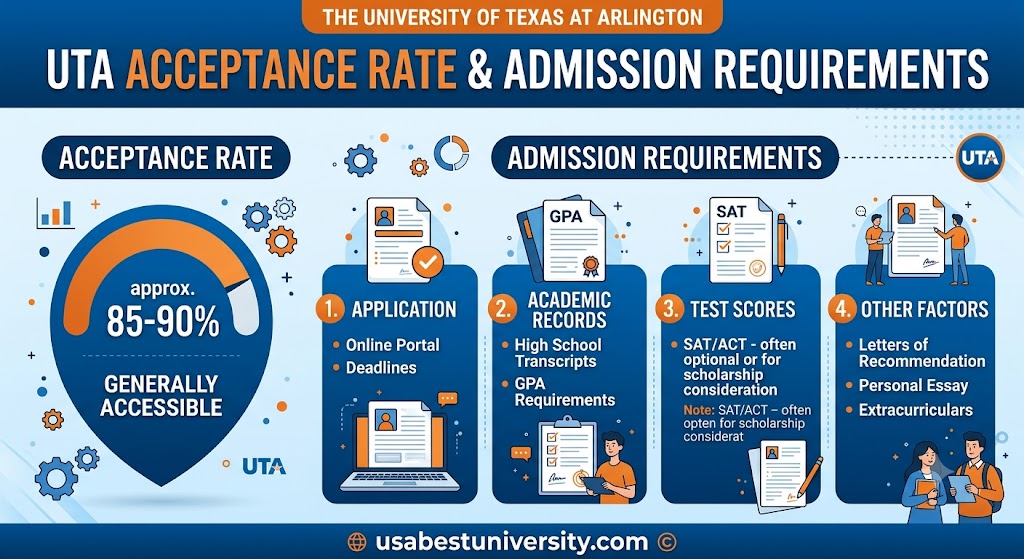
UTA does not officially publish its acceptance rate, but it is estimated to be around 80%. Other sources estimate it between 57–80% depending on program — making UTA one of the more accessible public research universities in Texas. The applicant must have a minimum GPA of 2.75 or higher to get into UTA.

UTA Acceptance Rate and Admission Requirements

International Graduate Admission Requirements

  • Bachelor’s degree from an accredited institution (minimum 3.0 GPA recommended for most programs)
  • TOEFL iBT: 79–83 minimum (varies by program; CS requires 83)
  • IELTS: 6.5 minimum
  • Duolingo: 100–105
  • GRE: 305 minimum (required for MS CS, MS Civil Engineering; some programs waive for strong GPA)
  • GMAT required for MBA and some business programs
  • Academic transcripts (all institutions attended)
  • Statement of purpose
  • 2–3 letters of recommendation
  • Application fee: $75–$90

Key Application Deadlines (International Students)

IntakeDeadline (Most Programs)
 Fall 2026 (August start) March 15, 2026
 Spring 2026 (January start) August 15
 Summer 2026 February 15, 2026
 Spring 2027 (January start) August 15, 2026

UTA accepts spring and summer intakes — unlike UT Austin or Texas A&M, which primarily admit in fall only. This makes UTA one of the most flexible Texas public universities for international students who need to start mid-year.

Career Outcomes and DFW Job Market Access

UTA’s single greatest career advantage is its geographic location at the center of the DFW Metroplex — the #2 job market in the United States by multiple measures, with 23 Fortune 500 company headquarters.

Top DFW Employers Recruiting from UTA

  • Technology — AT&T (Dallas HQ), Texas Instruments, Ericsson, Samsung, Nokia, Cisco, Lockheed Martin, L3Harris
  • Finance — JPMorgan Chase, American Airlines (HQ Fort Worth), Bank of America, Charles Schwab
  • Healthcare — Texas Health Resources, Medical City Healthcare, Baylor Scott & White, UT Southwestern Medical Center
  • Energy — Atmos Energy, Oncor Electric Delivery, Pioneer Natural Resources (now ExxonMobil)
  • Consulting and Services — Deloitte, KPMG, Accenture, PwC, EY — all with major DFW offices

UTA graduates work for leading sectors such as Engineering, Operations, and Education. The placement rate of 75–80% reflects both the quality of the programs and the strength of DFW’s hiring market — one of the most active in the country for engineering, CS, and business analytics graduates.

Campus Life and Indian Student Community

The University of Texas at Arlington has enrolled more than 5,000 Indian students — one of the largest Indian student populations at any Texas university. This creates a practical Indian community infrastructure on and around campus:

  • Indian Student Association (ISA) at UTA — one of the most active cultural student organizations; Diwali celebrations, Holi events, cricket tournaments, cultural shows
  • Telugu Association, Tamil Students Association, Gujarati Students Association — regional language community organizations
  • Indian restaurants and grocery stores in Arlington, Grand Prairie, and Irving — all within 10–20 minutes of campus
  • Hindu temples near UTA — Balaji Temple of Greater Dallas (Irving), DFW Hindu Temple (Irving), BAPS Swaminarayan Mandir (Irving) — all within 20–30 minutes
  • DFW’s Indian-American community — the #3 largest Indian-American metro community in the United States, with dense concentrations in Irving, Plano, Frisco, and Richardson — all accessible from Arlington

With more than 300 student-led organizations, as well as cultural events, and access to the dynamic Dallas–Fort Worth Metroplex, students build leadership skills, lasting relationships, and a sense of belonging that extends far beyond campus.

UTA vs Other Texas Universities

  • For a UT System university in Dallas with higher national ranking, stronger CS ranking, and the AES scholarship to in-state tuition, see UT Dallas in Richardson — UTA’s most direct competitor for international STEM students
  • For the Texas flagship with #30 national ranking and top-10 CS program, see UT Austin — significantly more selective and more expensive
  • For a DFW-area R1 university with easier admission and automatic Excellence Scholarship to in-state tuition, see UNT in Denton
  • For the Texas A&M System flagship with #51 national ranking and Aggie Network, see Texas A&M in College Station
  • For a complete scholarship comparison across Texas universities, see Texas Universities with Full Scholarships 2026.

Is UTA Right for You?

UTA is a strong fit if you:

  • Are pursuing MS Computer Science, MS Software Engineering, or MS Business Analytics in the DFW market — UTA’s programs feed directly into AT&T, Ericsson, Samsung, and dozens of other DFW tech employers
  • Want a large, diverse international campus community with 5,000+ Indian students and 300+ student organizations
  • Need spring or summer intake flexibility — UTA accepts all three intakes while most Texas flagships are fall-only
  • Are seeking online graduate programs — UTA’s 12,000+ online enrollment reflects a well-developed online infrastructure for working professionals
  • Want DFW Metro access from a central Arlington location — equidistant between Dallas and Fort Worth, with I-30, I-20, and TX-360 all accessible from campus
  • Are applying with a moderate academic profile (GPA 3.0–3.5, GRE 305–315) and need a strong R1 university that is more accessible than UTD, UH, or UT Austin

UTA may be less ideal if you want a highly selective university environment, need the strongest possible national brand recognition, or are targeting the very top scholarship waiver mechanisms (UTD’s AES brings tuition lower than UTA’s equivalents).

How To Apply to the University of Texas at Arlington

  1. Apply online at uta.edu/admissions — application fee $75–$90.
  2. Submit official transcripts from all institutions attended.
  3. Submit TOEFL (83+), IELTS (6.5+), or Duolingo (100+) scores.
  4. Submit GRE scores (305+) if required by your program.
  5. Submit GMAT scores if applying to MBA or finance programs.
  6. Submit a statement of purpose and 2–3 letters of recommendation.
  7. Apply by March 15 for Fall 2026 (most programs).
  8. Apply for scholarships through UTA’s scholarship portal after receiving your NetID.
  9. Contact individual departments for TA/RA funding opportunities.
  10. Receive I-20 from UTA’s Office of International Education once admitted.
  11. Pay SEVIS fee ($350) and apply for F-1 visa — allow 3–4 months minimum.

Final Thoughts

The University of Texas at Arlington is one of the most practically positioned universities in Texas for international students targeting the DFW job market. It is not the most selective or highest-ranked Texas university — but its R1 research status, ABET-accredited engineering programs, AACSB-accredited business school, 5,000+ Indian student community, spring/summer intake flexibility, and geographic position at the center of the 23-Fortune-500-headquarters DFW Metroplex create a combination that is genuinely difficult to replicate.

For international engineering and CS students with moderate-to-strong academic profiles who want to work in DFW after graduation, UTA delivers solid outcomes at a realistic price point.

For current tuition, scholarship details, and application requirements, visit uta.edu directly.

Have questions about UTA or comparing it with other Texas options? Drop them in the comments below.

Filed Under: Texas University

Texas vs New York Universities 2026 – Which State Is Better For International Students?

August 3, 2026 Leave a Comment

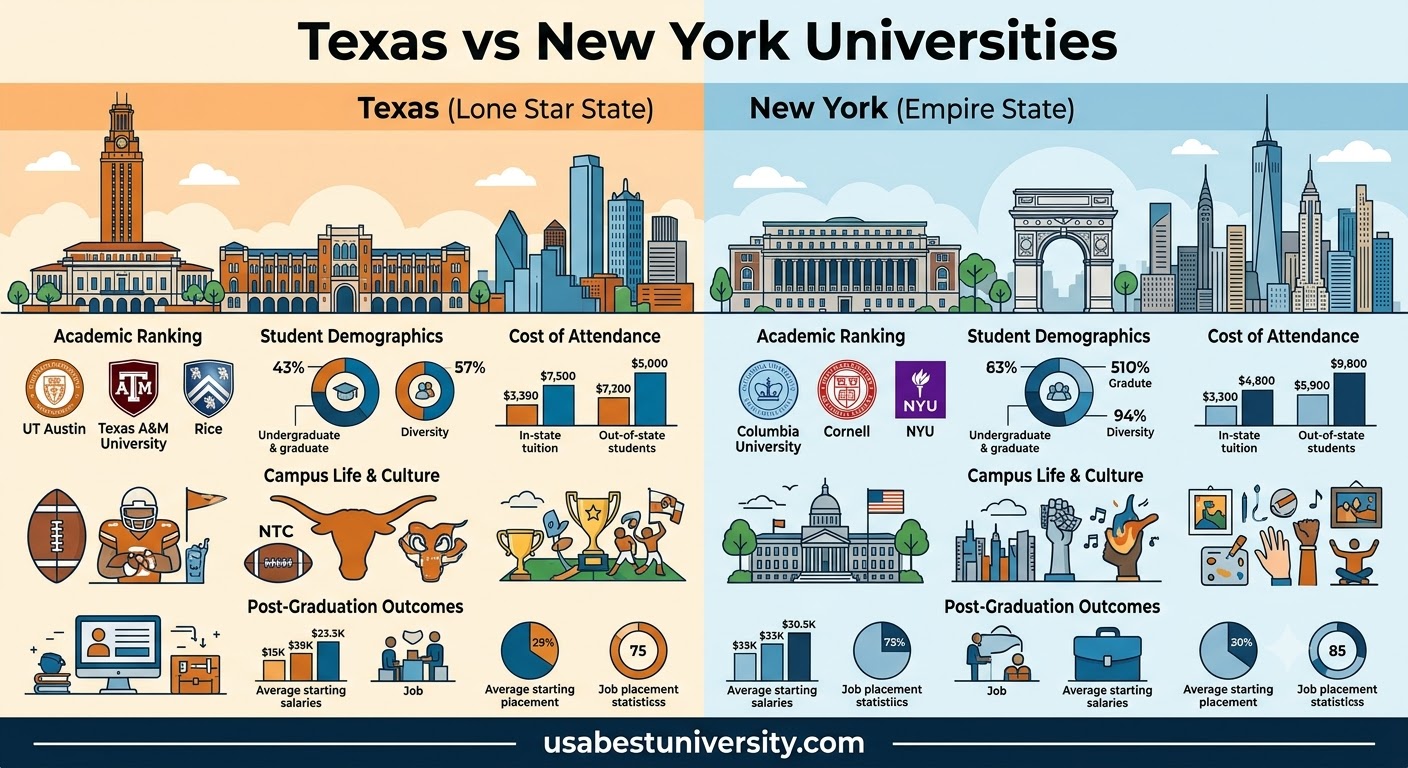
Texas vs New York Universities are the two most internationally diverse education destinations in the United States after California — and they represent two radically different approaches to what studying in America looks like. New York hosts over 135,000 international students.

Texas vs New York Universities

Texas hosts over 85,000. Both states have world-class research universities, vibrant international student communities, and strong post-graduation job markets. But the daily experience — the cost, the culture, the career sector, the quality of life — could not be more different. This guide gives you the honest, data-driven comparison you need to decide which state actually fits your goals.

Quick Comparison — Texas vs New York for International Students 2026

FactorTexasNew York
 International Students 85,000+ 135,000+
 State Income Tax 0% 4%–10.9%
 NYC Rent (near university) N/A $2,500–$5,000+/month
 Texas Major City Rent $800–$1,600/month N/A
 Top Public University Rank UT Austin (#30) SUNY Stony Brook (#93)
 Top Private University Rank Rice (#17) Columbia (#12)
 Public Intl Tuition (flagship) ~$40,582 (UT Austin) ~$32,700–$37,100 (SUNY)
 SUNY/CUNY Affordable Option N/A $7,000–$18,000/yr (CUNY)
 Scholarship Access (Intl) High — automatic merit waivers Limited at public; better at private
 Finance/Wall Street Access Growing (Dallas) Unmatched — global #1
 Tech Job Market Austin + DFW growing rapidly NYC tech growing but smaller than Bay Area
 Energy Job Market Houston = world #1 Very limited
 No Income Tax Benefit ✅ Zero state income tax ❌ Up to 10.9% state + NYC city tax
 Indian Community DFW #3 metro US NYC/NJ #1 metro US
 Cost of Living vs National Avg 10–15% below average NYC: 130%+ above average
 Weather Hot summers, mild winters Cold winters, humid summers
 STEM OPT ✅ 36 months ✅ 36 months

1. Cost — Texas vs New York Is Not a Close Contest

The cost difference between studying in Texas and New York City is the single most important factor for most international students — and it is enormous.

Tuition Comparison

UniversityStateIntl Tuition/yr (2026)
 Columbia University New York ~$68,000+
 NYU (New York University) New York ~$60,000–$65,000
 Cornell University (Ivy) New York ~$64,000+
 Fordham University New York ~$56,000
 SUNY Stony Brook New York ~$32,700–$37,100
 SUNY Buffalo New York ~$31,000–$35,000
 CUNY (City University of NY) New York ~$7,000–$18,000
 UT Austin Texas ~$40,582–$48,712
 Texas A&M Texas ~$40,124 (before waiver)
 Rice University Texas ~$65,475
 UNT (with scholarship) Texas ~$13,506
 UT Dallas (with AES) Texas ~$14,644

At the private flagship level, New York’s Columbia and Cornell are more expensive than Rice University — Texas’s most elite private institution. At the public flagship level, SUNY schools are cheaper than UT Austin in tuition — but the living cost gap more than erases that advantage for anyone studying in New York City.

Living Cost — The Real Game Changer

Add $18,000–$30,000 per year for living expenses, with New York City at the top of that range and upstate cities much cheaper. For context:

CityAvg Monthly Rent (1BR)Monthly Total LivingAnnual Living Cost
 New York City (Manhattan) $3,500–$5,000+ $4,500–$6,500 $54,000–$78,000
 New York City (Brooklyn/Queens) $2,500–$3,800 $3,500–$5,000 $42,000–$60,000
 Buffalo (SUNY Buffalo) $800–$1,200 $1,400–$1,900 $16,800–$22,800
 Stony Brook (SUNY Stony Brook) $1,200–$2,000 $1,800–$2,600 $21,600–$31,200
 Austin (UT Austin) $1,200–$1,600 $1,800–$2,200 $21,600–$26,400
 College Station (TAMU) $800–$1,100 $1,400–$1,800 $16,800–$21,600
 Richardson/Dallas (UTD) $800–$1,200 $1,400–$1,800 $16,800–$21,600
 Houston (UH) $900–$1,400 $1,500–$2,000 $18,000–$24,000

New York is fast-paced and highly dense, with a strong career-driven culture that prioritizes ambition, networking, and constant movement. That energy comes with a price: in cities like New York or Los Angeles, living costs are significantly higher than average. A student at NYU or Columbia in Manhattan typically spends $4,500–$6,500/month on living alone — more than the annual tuition at some Texas universities.

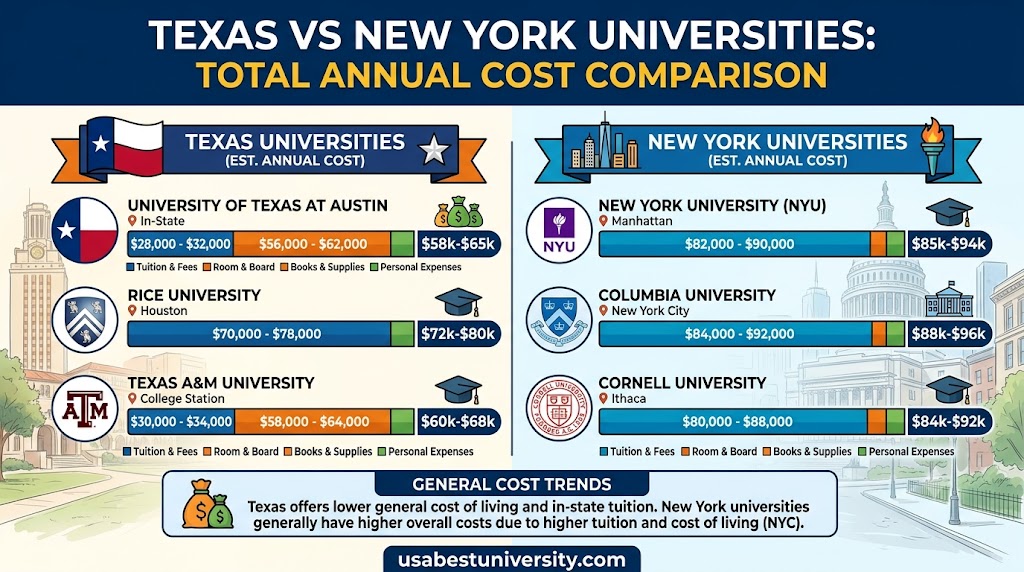
Total Annual Cost Comparison

ScenarioAnnual Total Cost2-yr MS Total (est.)
 NYU (Manhattan, private) $85,000–$110,000 ₹142–184 lakhs
 Columbia (Manhattan, Ivy) $95,000–$120,000 ₹159–201 lakhs
 SUNY Stony Brook (commute/on-campus) $55,000–$70,000 ₹92–117 lakhs
 SUNY Buffalo (affordable NY) $48,000–$58,000 ₹80–97 lakhs
 UT Austin (Texas) $60,000–$72,000 ₹100–120 lakhs
 TAMU (with $4K waiver) $28,000–$36,000 ₹47–60 lakhs
 UTD (with AES scholarship) $32,000–$40,000 ₹54–67 lakhs
 UNT (with Excellence Scholarship) $28,000–$35,000 ₹47–59 lakhs

INR estimates at approximately ₹84/USD. Add ₹1–2 lakhs for international travel, health insurance, and incidentals.

Texas vs New York Universities Total Annual Cost Comparison

State Income Tax — An Often-Ignored Advantage

Texas has zero state income tax. New York State charges 4%–10.9% — and New York City adds 3.078%–3.876% city income tax on top of that. A student working in New York City during OPT and earning $100,000 may pay $13,000–$15,000/year in state and city income taxes alone.

The same student working in Austin pays zero. Over a 3-year STEM OPT period, that difference amounts to $39,000–$45,000 — equivalent to nearly an entire year of tuition at a Texas university.

2. University Rankings — New York’s Private Institutions Lead at the Top

UniversityStateUS News 2026 RankQS World 2026
 Columbia University New York #12 #33
 Cornell University New York #13 #13
 Rice University Texas #17 #122
 NYU New York #35 #58
 UT Austin Texas #30 #67
 SMU Texas #61 —
 Fordham University New York #68 —
 Rensselaer Polytechnic (RPI) New York #53 —
 Texas A&M Texas #51 #169
 SUNY Stony Brook New York #93 #341
 Baylor University Texas #91 —
 SUNY Buffalo New York #94 #601–650
 University of Houston Texas #144 ~#600
 CUNY (system avg) New York Varies —

At the very top, New York wins — Columbia (#12) and Cornell (#13) are Ivy League institutions that Texas simply cannot match. But below the Ivy tier, Texas and New York are broadly comparable: UT Austin (#30) outranks NYU (#35), and Texas A&M (#51) is close to RPI (#53) and above SUNY Stony Brook (#93). At the affordable public university level, SUNY Buffalo (#94) and Texas A&M System universities are in the same tier.

Key insight: For students who are not targeting Columbia or Cornell specifically, the ranking premium of studying in New York is smaller than the cost premium. NYU (#35) costs $85,000–$110,000/year all-in. UT Austin (#30) costs $60,000–$72,000/year all-in. UT Austin is ranked higher than NYU and costs $25,000–$38,000 less per year.

3. Best New York Universities for International Students

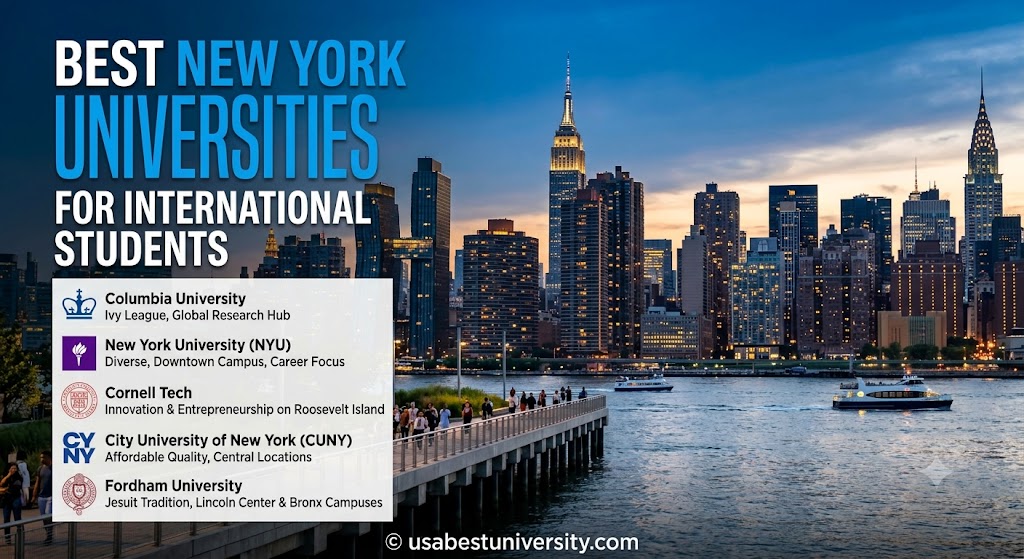
Best New York Universities for International Students

Understanding New York’s university landscape is essential before comparing it to Texas:

Ivy League / Elite Private

  • Columbia University — Manhattan; #12 nationally; ~4% acceptance rate; ~$68,000+ tuition; need-blind for international students (rare and valuable); world-leading finance, journalism, and social science programs
  • Cornell University — Ithaca (upstate NY); #13 nationally; ~8% acceptance rate; ~$64,000+ tuition; strongest engineering, hotel management, and agriculture programs among Ivies; Ithaca’s cost of living is significantly lower than NYC

Large Urban Research Universities

  • NYU (New York University) — Manhattan; #35 nationally; ~12% acceptance rate; ~$60,000–$65,000 tuition; Stern School of Business (#20 MBA), Tisch School of Arts; campus is embedded in NYC with no traditional campus boundary
  • Fordham University — Bronx + Lincoln Center (Manhattan); #68 nationally; ~48% acceptance; ~$56,000 tuition; Gabelli School of Business; Jesuit-affiliated; strong law and business programs
  • Rensselaer Polytechnic Institute (RPI) — Troy; #53 nationally; ~51% acceptance; strong engineering and CS programs; lower cost of living than NYC

SUNY System — Best Public Value in New York

  • SUNY Stony Brook — Long Island; #93 nationally; R1 research; ~$32,700–$37,100 international tuition; strong STEM programs; New York hosts more than 135,000 international students — the second-highest of any US state
  • SUNY Buffalo — Buffalo (upstate NY); #94 nationally; R1 research; ~$31,000–$35,000 international tuition; Buffalo’s cost of living is among the lowest in the northeastern U.S.; strong engineering and pharmacy programs
  • SUNY Binghamton — Binghamton; ranked #80 nationally; R2 research; strong business school (School of Management); lower cost of living than NYC

CUNY System — Most Affordable in New York

  • CUNY (City University of New York) — Multiple campuses across NYC; a public system that charges internationals as little as $7,000–$18,000 a year; CUNY Baruch College (finance, business) and CUNY City College (engineering) are the strongest academically; full NYC career access at dramatically lower tuition than private alternatives

4. Job Market — Finance vs Energy vs Tech

New York’s Unmatched Finance and Media Advantage

New York City’s job market has one sector that is simply not replicated anywhere in the United States — including Texas: Wall Street finance. JPMorgan Chase, Goldman Sachs, Morgan Stanley, Citigroup, BlackRock, Bloomberg — all headquartered in New York City. For students targeting investment banking, asset management, hedge funds, private equity, or financial consulting, proximity to New York City is a genuine, structural advantage that goes beyond networking — it is geography that determines access to the most coveted finance roles in the world.

New York also leads in:

  • Media, entertainment, and publishing — NBCUniversal, ViacomCBS, Condé Nast, The New York Times, Penguin Random House
  • Fashion and luxury — LVMH, Kering, Ralph Lauren, Tapestry
  • Consulting — McKinsey, BCG, Bain, Deloitte, PwC, EY all have major NYC offices
  • Healthcare and biotech — Pfizer, Johnson & Johnson, and a growing biotech corridor in Brooklyn and the Hudson Valley

Texas’s Industry Strengths That New York Cannot Match

  • Energy (Houston) — ExxonMobil, Shell, Chevron, Halliburton, Schlumberger. New York has virtually no petroleum engineering or energy management industry. If energy is your career, Texas is the only answer.
  • Technology (Austin + DFW) — Apple, Dell, Oracle, Tesla, Google, Amazon (Austin); AT&T, Samsung, Ericsson, Texas Instruments (DFW). Austin’s tech sector is growing faster than NYC’s and with lower operating costs.s
  • Aerospace and Defense — Lockheed Martin, Bell Textron, NASA. Texas’s defense-aerospace cluster is among the strongest in the country; New York has limited aerospace presence.ce
  • No State Income Tax — on a $100,000 OPT or post-graduation salary, Texas employees take home $13,000–$15,000 more annually than equivalent New York City workers after state and city taxes

Career Verdict

Career TargetBetter StateWhy
 Investment banking/finance New York Wall Street — no real competition
 Media/entertainment/fashion New York NYC dominates all three
 Petroleum/energy engineering Texas Houston = world energy capital
 Technology (software/hardware) Texas (growing) or NY (established) Austin/DFW faster growth; NYC deeper network
 Consulting (top-tier firms) Comparable Both states have major offices
 Healthcare management Comparable Texas Medical Center vs NYC hospital systems
 Aerospace/defense Texas Lockheed Martin, Bell, NASA in Texas
 Entrepreneurship/startups Texas (Austin) Lower costs, no income tax, VC growing

5. Scholarship Accessibility — Texas Wins for International Students

New York — Limited Public Scholarships for International Students

  • SUNY and CUNY campuses offer very limited merit scholarships for international students — most state-funded aid is restricted to New York residents or U.S. citizens
  • Columbia is need-blind for international students — one of only a handful of U.S. universities with this policy — and meets 100% of demonstrated need. For admitted students, Columbia can be surprisingly affordable regardless of family income
  • Cornell is need-aware for international students and offers need-based financial aid
  • NYU offers limited merit scholarships for international students — the university is known more for its prestige than its generosity with aid
  • Fordham and other mid-tier private New York universities offer merit scholarships ranging from $5,000–$25,000/year

Texas — Multiple Automatic Pathways to Reduced Tuition

  • UT Dallas AES — any level automatically unlocks in-state tuition ($14,644 vs $40,000+) — apply by December 1
  • UNT Excellence Scholarship — automatic by March 1; any tier unlocks in-state tuition
  • Texas A&M $4,000 waiver — competitive scholarships totaling $4,000 unlock in-state rates
  • Texas Tech Presidential Scholarship — automatic; unlocks in-state tuition
  • Lamar University auto grad waiver — most international graduate students receive out-of-state tuition waiver automatically
  • Good Neighbor Scholarship — full non-resident tuition exemption for qualifying Western Hemisphere nationals at all Texas public universities

The contrast is stark: at UT Dallas with AES, an Indian MS student pays approximately $14,644/year in tuition. At SUNY Stony Brook — New York’s best affordable public option — the same student pays $32,700–$37,100/year in tuition, plus significantly higher living costs in the NYC metro area. For most international students, Texas’s scholarship mechanisms provide dramatically better financial access to comparable-quality education.

6. Indian and South Asian Community — New York Leads, Texas Close Behind

New York — Largest South Asian Community on the East Coast

  • New York/New Jersey metro is the #1 U.S. metro for Indian-origin residents by total population — approximately 700,000 Indian Americans in the NYC metro area
  • Jackson Heights (Queens) — called “Little India” and “Little Bangladesh” — is one of the most internationally diverse neighborhoods in the world
  • Edison, NJ (30 minutes from NYC) has a massive South Asian community center — Indian grocery stores, temples, restaurants, and cultural organizations on every block
  • Significant Gujarati, Punjabi, Telugu, Tamil, and Bengali communities across the five boroughs and the tri-state area

Texas — The Fastest-Growing South Asian Hub in the South

  • DFW metro is the #3 U.S. metro for Indian-origin professionals and growing faster than New York’s Indian community as tech company relocations continue
  • Irving — called the “Telugu capital of America” — has 8,360 Telugu speakers; Plano, Richardson, and Frisco have dense South Asian communities
  • Houston’s Hillcroft Avenue “Little India” corridor, Sri Meenakshi Temple (Pearland — one of the largest Hindu temples in the U.S.), and multiple South Indian community organizations
  • In more established states like California and New York, students often find large, international communities with deep-rooted cultural networks. While expansive, these environments can also feel more fragmented and competitive to navigate. Texas’s Indian communities — particularly in DFW — are large enough to be practically supportive but tight-knit enough to be personally meaningful.

7. Quality of Life — A Genuine Tradeoff

FactorTexasNew York
 City Energy Austin, Houston, Dallas — vibrant but manageable NYC — world’s most electric city
 Space per Dollar Excellent — large apartments affordable Very poor in NYC; better upstate
 Public Transit Car-dependent in most cities NYC subway — excellent
 Cultural Access Growing arts, music, food scenes World-class museums, Broadway, galleries
 Weather Hot summers, very mild winters Cold winters (-10°C), humid summers
 Outdoor Recreation Hill Country, Gulf Coast, Big Bend Central Park, Catskills, Hamptons
 Safety Varies by city and neighborhood Varies significantly by NYC neighborhood
 Pace of Life More relaxed Intense, fast-paced, ambitious
 Diversity Growing rapidly Among the world’s most diverse cities

New York is fast-paced and highly dense, with a strong career-driven culture that prioritizes ambition, networking, and constant movement. For students who thrive in that environment, New York City is genuinely transformative. For students who find the density and pace overwhelming — or who cannot absorb the cost — Texas offers a version of American university life that is more spacious, more affordable, and increasingly competitive professionally.

Head-to-Head: Texas vs New York at the Same Level

UT Austin (#30) vs NYU (#35)

FactorUT AustinNYU
 US News Rank #30 #35
 International Tuition ~$40,582–$48,712 ~$60,000–$65,000
 Annual Living Cost ~$21,600–$26,400 ~$42,000–$60,000 (Manhattan)
 Total Annual Cost ~$60,000–$72,000  ~$100,000–$125,000
 2-yr MS Total ~₹100–120 lakhs ~₹168–209 lakhs
 Acceptance Rate ~22.2% ~12%
 Finance Career Access Growing (Austin) Wall Street proximity
 Tech Career Access Apple, Dell, Google nearby NYC tech (growing)

Texas A&M (#51) vs SUNY Stony Brook (#93)

FactorTexas A&MSUNY Stony Brook
 US News Rank #51 #93
 International Tuition ~$40,124 (before waiver) ~$32,700–$37,100
 Tuition with Scholarship ~$12,995 (with $4K waiver) Limited international scholarships
 Annual Living Cost ~$16,800–$21,600 ~$21,600–$31,200
 Alumni Network 500,000+ (strongest in Texas) Smaller

UTD with AES vs CUNY Baruch

FactorUT Dallas (with AES)CUNY Baruch
 Annual Tuition ~$14,644 ~$7,000–$18,000
 Annual Living Cost ~$16,800–$21,600 ~$36,000–$54,000 (NYC)
 Total Annual Cost ~$32,000–$40,000 ~$43,000–$72,000
 AACSB Business School ✅ Jindal School ✅ Zicklin School
 Tech Sector Access Telecom Corridor (on campus) NYC tech (commute)
 Finance Sector Access Growing DFW Wall Street (direct)

Who Should Choose Texas?

  • You are pursuing engineering, technology, or energy careers — Texas’s industry access is unmatched for these sectors
  • You need to manage costs and are targeting a total annual budget under $50,000 — Texas scholarship mechanisms can bring this within reach
  • You want no state income tax on your OPT or post-graduation salary
  • You are targeting Texas-based companies where the Aggie Network, UTD’s Telecom Corridor, or UH’s energy sector connections give direct access
  • You prefer a more spacious, affordable quality of life with lower cost per square foot of living space and lower daily expenses
  • You are an Indian student specifically targeting DFW’s Telugu/Tamil community infrastructure or Houston’s South Indian community

Who Should Choose New York?

  • You are targeting investment banking, asset management, or Wall Street finance careers — New York’s proximity to financial institutions is an irreplaceable structural advantage.e
  • You have been admitted to Columbia or Cornell — the Ivy League prestige and alumni networks justify the premium for specific career trajectories.
  • You are pursuing media, fashion, entertainment, or publishing careers where physical proximity to NYC’s industry hubs matters.
  • You want the most culturally immersive, internationally diverse urban experience in American higher education — New York City is genuinely unlike anywhere else.
  • You qualify for Columbia’s need-blind international admission — which can make Columbia more affordable than you expect
  • You can afford the significantly higher cost of living without it creating unmanageable financial pressure. re

Final Thoughts

Texas and New York offer genuinely different versions of American higher education — and neither is universally better. For finance and media careers, New York’s structural advantages are real and significant. For energy, technology, and aerospace careers, Texas’s industry access is unmatched. For students managing budgets carefully, Texas’s scholarship mechanisms, lower cost of living, and zero state income tax create a financial picture that is dramatically more favorable than anything New York — outside of the CUNY system — can offer.

The honest comparison: for most international students in STEM and business fields who are not specifically targeting Wall Street, Texas offers a better financial return on the investment in education. For students who can access Columbia’s need-blind admission or whose career targets are genuinely Wall Street-specific, New York justifies its premium.

For complete guides on Texas universities, see:

  • 10 Cheapest Texas Universities for International Students
  • Texas Universities with Full Scholarships 2026
  • Best Texas Universities for Indian Students 2026–27
  • Texas vs California Universities 2026
  • F-1 Student Visa Guide for Texas Universities 2026

Deciding between Texas and New York for your studies? Tell us your program, budget, and career goals in the comments — we’ll give you our honest take.

Filed Under: Texas University

How To Get Scholarship at Texas University 2026 – Step-by-Step Guide

July 31, 2026 Leave a Comment

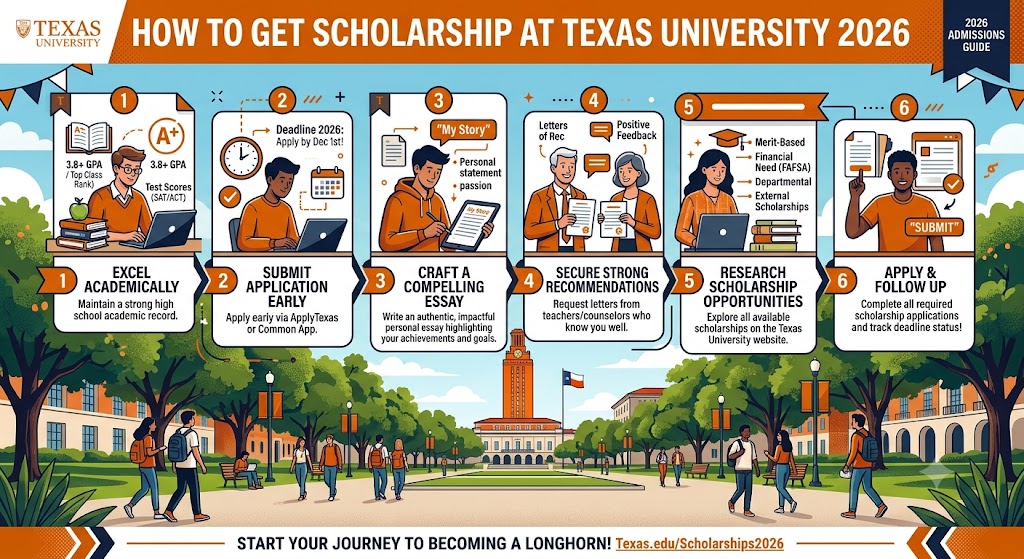
How to Get Scholarship at Texas University is more straightforward than most international students realize — but only if you know the system. The biggest mistake students make is treating scholarships as a separate, competitive process that happens after admission.

How To Get Scholarship at Texas University

At most Texas universities, the most valuable scholarships are automatically considered when you apply for admission — no separate application required. Apply early, submit the right documents, and let the system work for you. This guide explains exactly how to do that, step by step, for every major scholarship type available at Texas universities.

The 5 Types of Texas University Scholarships (And Which One to Target)

TypeAmountAutomatic?Who It’s ForKey Deadline
 Automatic Merit Scholarship $1,000–$12,000/yr ✅ Yes All strong applicants Varies by university
 Non-Resident Tuition Waiver $8,000–$27,000/yr ✅ Triggered by merit scholarship Out-of-state & international Same as merit deadline
 Good Neighbor Scholarship Full non-resident premium ❌ Must apply via THECB Western Hemisphere nationals Contact each university
 Competitive/Departmental Scholarship $500–$52,000/yr ❌ Separate portal application Strong academic profile Nov 1 – March 1
 Need-Based Aid (TASFA/FAFSA) Varies ❌ Must file TASFA or FAFSA Students with financial need March 1–May 1

Step 1 — Apply for Admission EARLY (Most Important Step)

The single most important thing you can do to maximize your scholarship at a Texas university is apply before the scholarship priority deadline. At every Texas university, scholarship consideration is tied directly to your admission application — and priority deadlines determine who gets first access to scholarship funds.

Most students assume they can apply in March or April and still get scholarships. They cannot. By the time late applications are reviewed, most scholarship funds have already been committed to earlier applicants.

Priority Scholarship Deadlines by University

UniversityPriority Scholarship DeadlineWhat Happens If You Miss It
 Texas A&M December 1 Still reviewed but scholarship funds reduced
 UT Dallas (AES) December 1 AES not guaranteed after this date
 Texas Tech December 1 Presidential Scholarship pool diminished
 Baylor University November 1 (ED1) Merit scholarships still available at ED2/RD
 TCU November 1 (ED) Regular Decision scholarships available
 SMU November 1 (ED) Regular Decision by January 15
 UNT March 1 Excellence Scholarship pool reduced
 Midwestern State March 1 Auto merit scholarship still possible
 Tarleton State February 15 600+ scholarships still open but reduced pool
 Sul Ross State January 15 April 1 final deadline — apply anyway
 Sam Houston State November 1 Scholarships4Kats open until funds depleted

Rule of thumb: Apply in October or November for fall admission the following year. This gives you the best possible position for all automatic and competitive scholarship pools.

Step 2 — Understand Automatic Merit Scholarships (No Separate Application)

This is the most underused and misunderstood scholarship mechanism in Texas. At most Texas universities, you are automatically considered for merit scholarships when you submit your admission application. There is nothing additional to do — the scholarship review happens as part of your admission file review.

How Automatic Merit Scholarships Work at Each University

Texas A&M University

Applying for scholarships is a simple two-step process: Complete the admission and scholarship applications on Common App or Apply Texas. Students must provide consent for application data to be used for scholarship consideration at the time of application. Students who decline will not be considered for scholarship opportunities through Texas A&M University.

Texas A&M University

At TAMU, the scholarship process is literally embedded in the admission application. Apply by December 1, provide consent for your data to be used for scholarship consideration, and submit any supplementary materials requested. That’s it. You will receive your scholarship notification alongside or shortly after your admission decision.

UT Dallas — Academic Excellence Scholarship (AES)

Submit a complete admission file by December 1. AES is automatically considered for all applicants. No separate form, no scholarship essay, no additional portal — the AES review is holistic and based on your entire admission file. Recipients also automatically qualify for in-state tuition rates regardless of residency — saving approximately $ 25,000+ per year for international students.

University of North Texas — Excellence Scholarship

Apply by March 1. Excellence Scholarship is automatically considered for all first-time freshmen. No separate application. Awards range from $1,000 (Scrappy Scholarship) to $12,000/year (President’s Elite). Any tier qualifies international students for an in-state tuition waiver. Transfer students apply by June 1.

University of North Texas Campus

Texas Tech University

Texas Tech University is proud to offer a high-quality education at an affordable cost. Merit- and competitive-based scholarships are awarded to exceptional new and continuing students each year. Apply by December 1 for fall freshman priority. Presidential Merit Scholarship requires admission by this deadline. Scholarships are automatically considered — no separate application for most merit awards.

Texas Tech University Campus

Baylor University

Merit scholarships are reviewed holistically with every admission application. Apply by November 1 (Early Decision 1) or January 1 (Early Decision 2) for best scholarship consideration. No application fee for international undergraduates — making Baylor one of the most accessible scholarship targets for international students. Scholarship notification arrives with or shortly after admission decision.

Baylor University

Texas Christian University (TCU)

All applicants are automatically considered for academic merit scholarships through holistic review. Apply Early Decision (November 1) for best scholarship results. International average scholarship: $25,000/year with maximum combined award of $51,570/year. CSS Profile required for need-based aid by February 1.

Texas Christian University

Lubbock Christian University

The F.W. Mattox Presidential Scholar and Cornerstone Scholars (full tuition awards) are nomination-based through the admissions process — automatically identified during your standard application review. Contact LCU Admissions directly and discuss your academic profile to maximize consideration.

Lubbock Christian University

Step 3 — Unlock the Non-Resident Tuition Waiver (Most Valuable for International Students)

This is the single most financially impactful scholarship mechanism for international students at Texas public universities — and very few students understand it.

How it works: Texas law allows any non-resident student (domestic or international) who receives a competitive institutional scholarship of $1,000 or more to pay Texas in-state tuition instead of out-of-state rates. At most Texas public universities, in-state tuition is $8,642–$14,644/year. Out-of-state/international tuition is $19,000–$41,000/year. The difference is the waiver value.

UniversityScholarship Required In-State Tuition (After Waiver) Waiver Value/Year
 Lamar University Auto (grad) / $1,000+ (UG) ~$8,642 ~$11,443
 Sul Ross State $1,000+ ~$7,592 ~$10,080
 Texas Tech Presidential Scholarship ~$11,852 ~$12,599
 Midwestern State $1,000+ ~$9,950 ~$12,960
 Tarleton State $1,000+ ~$10,180 ~$12,300
 UNT Any Excellence Scholarship ~$13,506 ~$7,738–$14,601
 UT Dallas Any AES level ~$14,644 ~$25,500
 Texas A&M (UG) $4,000 combined ~$12,995 ~$27,129
 Texas A&M (Grad) $1,000+ ~$11,748 ~$12,757

Critical rule: The scholarship must be a competitive institutional award open to both Texas residents and non-residents. Scholarships specifically designated for international students only (like ITPEG or IEFS at TAMU) do NOT qualify for this waiver. Always confirm waiver eligibility with the Financial Aid Office after receiving your scholarship notification.

Step 4 — Apply for the Good Neighbor Scholarship (Western Hemisphere Students)

If you are a citizen of a Western Hemisphere country (excluding Cuba and the U.S.), you may qualify for the Good Neighbor Scholarship — a state-administered program providing a full non-resident tuition exemption at any Texas public university.

Good Neighbor Scholarship — Key Facts

  • Who administers it: Texas Higher Education Coordinating Board (THECB)
  • What it covers: Full non-resident tuition premium — you pay in-state tuition only
  • Where available: All Texas public universities
  • Annual awards: 235 statewide across all universities
  • Key requirement: Must intend to return to home country after completing degree
  • Visa status: Must be in non-immigrant visa status (F-1 qualifies)
  • Note: TAMU requires completion of at least one full academic semester before Good Neighbor eligibility; other universities may have different requirements

How to Apply for Good Neighbor Scholarship

  1. Be admitted to a Texas public university
  2. Contact your university’s International Student Services office and ask specifically about the Good Neighbor Scholarship process
  3. Submit the THECB Good Neighbor application along with your university’s supplemental materials
  4. Demonstrate academic merit and intent to return home after graduating

Since only 235 awards are made statewide annually, the Good Neighbor is competitive. Apply at the university with the lowest in-state tuition to maximize financial benefit — Sul Ross State University ($7,592 in-state) or Midwestern State University ($9,950 in-state) give the highest value per award.

Step 5 — Apply Through the Scholarship Portal (Competitive Departmental Awards)

Beyond automatic merit scholarships, every Texas university has a scholarship portal where you can apply for additional competitive, departmental, and special-interest scholarships. These require a separate application — but one general application typically matches you against dozens or hundreds of available awards.

Scholarship Portals by University

UniversityPortal NamePriority Deadline
 Texas A&M University Scholarship Application (USA Portal) February 1
 UT Dallas Artemis Scholarship Portal (utdallas.academicworks.com) After admission (open year-round)
 UNT Eagle Scholarship Portal (ESP) March 31 (academic achievement)
 Texas Tech Scholarship Application Portal (scholarships.ttu.edu) December 1 (fall priority)
 Tarleton State Tarleton Scholarship Portal February 15
 Sam Houston State Scholarships4Kats (shsu.academicworks.com) November 1
 Texas State BOSS (Bobcat Online Scholarship System) December 15
 Angelo State RamPort Scholarship Application January 15
 Sul Ross State Sul Ross Scholarship Application February 1
 UT Austin Texas Exes Scholarships (texasexes.academicworks.com) March 1

Entering Freshmen — Application opens September 1. Deadline: March 1 at 11:59 pm CST. Recipients are chosen by the Texas Exes scholarship selection committees each spring.

How to maximize portal scholarships:

  • Complete your profile thoroughly — most portals auto-match you to relevant awards based on your profile fields
  • Do not skip optional fields — scholarship committees use all available data
  • Write strong essays even for small awards — essay quality is often the differentiating factor
  • Apply immediately after gaining portal access — don’t wait until the deadline
  • Check the portal regularly — new scholarships are often added throughout the academic year

Step 6 — File TASFA for Need-Based Aid (International Students)

The Texas Application for State Financial Aid (TASFA) is the Texas equivalent of FAFSA for students who are not U.S. citizens or eligible non-citizens. International students in Texas can use TASFA to apply for state-funded and institutional need-based grants and scholarships.

Beginning the 2026–2027 academic year, the TASFA will replace the ISFAA for international students at Texas A&M University. International student financial aid is based on financial need, not academic performance. This aid is intended to supplement a student’s existing funds and does not cover all educational costs.

TASFA Basics for International Students

DetailInformation
 Who should file International students with financial need at Texas public universities
 What it unlocks ITPEG (up to $4,000), institutional need-based grants, some scholarships requiring demonstrated need
 When to file As early as possible each academic year — October 1 recommended start date
 TAMU priority deadline May 1 (2026–27 academic year)
 Most Texas universities March 1–May 1 priority deadlines
 Available at tasfa.thecb.texas.gov
 Annual filing Must be filed every academic year — not a one-time application

Important: Funding for international aid is limited and not guaranteed. Eligibility requirements for specific types of aid are listed below. Not all students who are eligible will receive this funding. TASFA-based aid is supplemental — it does not cover full tuition and living costs. Think of it as additional funding that stacks with your merit scholarships.

Step 7 — Submit SAT/ACT/GRE/GMAT Scores Voluntarily

Most Texas universities are test-optional for admission — but submitting standardized test scores can move you into a higher scholarship tier even when they’re not required.

UniversityTest Score Benefit
 UNT SAT/ACT submission earns an additional $1,000/year bonus award (stackable on Excellence Scholarship)
 ACU ACU superscores all tests; higher scores = higher merit tier; Presidential Scholarship requires test score
 Texas Lutheran SAT 1100+ or ACT 22+ earns additional $1,000–$3,000 stackable award
 Dallas Baptist SAT 1140+ or ACT 25+ may qualify for Founders-level scholarship
 Tarleton State ACT/SAT scores considered alongside GPA for highest scholarship tiers
 Sul Ross ACT 25+ or SAT 1150+ required for President’s Endowed Scholars Program

Strategy: If you have strong SAT/ACT scores — submit them voluntarily at every Texas university. The upside is real (higher scholarship tier, bonus awards), and there is no downside since test-optional policies mean scores only help, never hurt your admission chances.

Step 8 — Stack Your Scholarships

One of the most important Texas university scholarship strategies is stacking — combining multiple awards that can be held simultaneously. Most Texas universities allow multiple scholarship types to stack up to the total cost of attendance.

Stackable Award Combinations That Work

  • Automatic Merit Scholarship + Non-Resident Tuition Waiver — most powerful combination. At UTD: AES ($2,000–$10,000) + in-state tuition waiver ($25,500 saving) = dramatic total cost reduction
  • Merit Scholarship + Departmental Scholarship — apply through both the admission process and the scholarship portal to stack awards from different sources
  • Merit Scholarship + Texas Exes Scholarship (UT Austin) — alumni-funded awards stack with institutional merit
  • Merit Scholarship + Church Matching Scholarship (HBU) — if your Christian church donates scholarship funds, HBU matches dollar-for-dollar up to $1,000
  • PTK Membership + Transfer Scholarship (multiple universities) — Phi Theta Kappa honor society membership unlocks additional transfer scholarship tiers at Tarleton, Concordia Texas, and others
  • Music/Art/Theatre Talent Award + Academic Merit — performing arts and studio arts scholarships at most Texas universities stack with academic merit awards
  • Honors College Award + Academic Merit — being admitted to the Honors College at UT Dallas, UNT, or Angelo State typicallyadds aa scholarship layer.

Important rule: Combined scholarship awards generally cannot exceed the total cost of attendance. If you are awarded more than COA, excess funds are typically returned or reduced. Always verify stacking policies with the Financial Aid Office before counting on combined totals.

Step 9 — Apply for External Scholarships

External scholarships — from government agencies, corporations, foundations, and community organizations — can supplement your Texas university institutional awards. Key sources for international students:

Government-Funded External Scholarships

  • Fulbright Foreign Student Program — U.S. government scholarship for graduate study; covers tuition, fees, living stipend, and health insurance; highly competitive; apply in your home country 1–2 years before intended start
  • AAUW International Fellowships — for women pursuing graduate study in the U.S.; $18,000–$30,000 fellowships
  • Rotary Foundation Global Grants — for graduate students pursuing studies aligned with Rotary’s areas of focus (peace, disease prevention, water, education); contact your local Rotary club to apply
  • Joint Japan/World Bank Graduate Scholarship Program — for development-focused graduate studies; covers tuition, living costs, and travel
  • Your home country government scholarships — India (ICCR scholarships), China (CSC scholarships), Nigeria (PTDF scholarships), Pakistan (HEC scholarships) all fund international study in the U.S.

Texas-Specific External Awards

  • Terry Foundation Scholarship — available at UT Austin, Texas A&M, Texas Tech, UT Dallas, and other Texas universities; covers full COA for top Texas high school graduates
  • Texas Exes Scholarships (UT Austin) — application opens September 1; deadline March 1 at 11:59 pm CST; alumni-funded awards for incoming UT Austin students
  • TASSP Scholarships — for student council leaders
  • National Merit Scholarship — for National Merit Finalists who designate specific Texas universities; TAMU pays $10,000/year, UT Dallas pays competitively, Baylor and Texas Lutheran offer strong packages

Corporate Scholarships

  • Texas Instruments Foundation Scholarships
  • ExxonMobil Education Foundation
  • AT&T Aspire Program
  • IEFA Scholarship Search Engine (iefa.org) — searchable database by country of origin

Step 10 — Maintain Your Scholarship (Renewal Requirements)

Getting the scholarship is only half the battle. Losing it for failing to meet renewal requirements can be a financial catastrophe. Every Texas university scholarship has renewal conditions — know them before you arrive on campus.

UniversityTypical Renewal GPACredit Hours RequiredOther Conditions
 Texas A&M 3.0+ 24 per academic year Consent to data use maintained
 UT Dallas (AES) 3.0+ 12 per semester Full-time enrollment
 UNT 3.0+ 12 per semester; 24/yr Full-time enrollment
 Texas Tech Varies by award Full-time enrollment Annual FAFSA/TASFA recommended
 Baylor Merit varies Full-time enrollment Continued good standing
 Midwestern State 2.0+ 12 per semester Full-time enrollment
 Tarleton State 2.5+ Full-time enrollment Annual application through portal

Warning signs that put your scholarship at risk:

  • Dropping below full-time enrollment (12 UG / 9 Grad credit hours) without DSO and Financial Aid approval
  • GPA falling below the scholarship renewal threshold even for one semester
  • Changing majors to a different department that has different scholarship conditions
  • Taking a leave of absence without formally notifying the Financial Aid Office
  • Failing to file TASFA annually when it is required for your scholarship

If your GPA drops below the renewal threshold in any semester, immediately contact the Financial Aid Office — most Texas universities have a scholarship appeal process that can restore scholarships lost due to extenuating circumstances (illness, family emergency, etc.).

Complete Scholarship Calendar for Texas University Applicants

MonthAction
 August–September Submit admissions applications to Texas universities (aim to be submitted by October)
 September 1 Texas Exes Scholarship application opens (UT Austin); TASFA available at many schools
 October 1 FAFSA opens (domestic students); RamPort scholarship portal opens (Angelo State)
 November 1 Early Decision deadline — Baylor (ED1), TCU (ED), SMU (ED); Sam Houston State Scholarships4Kats priority deadline
 December 1 Texas A&M scholarship priority deadline; UT Dallas AES deadline; Texas Tech fall priority deadline; Baylor ED2
 December 15 Texas State University (BOSS) freshman scholarship deadline; UT Austin Regular Decision
 January 1 Sul Ross scholarship application opens; Baylor ED2 deadline; TCU Regular Decision
 January 15 Sul Ross early scholarship co.nsideration; Angelo State (RamPort) priority deadline
 February 1 TAMU USA Portal scholarship deadline; TCU CSS Profile deadline; Sul Ross early consideration
 February 15 Tarleton State scholarship priority deadline; TLU Early Deposit Discount deadline
 March 1 UNT Excellence Scholarship priority deadline; Texas Exes deadline; Midwestern State priority; Sul Ross general deadline; UNT ESP Academic Achievement deadline; SMU Regular Decision
 March 15 FAFSA priority deadline (most Texas universities)
 March 31 UNT Eagle Scholarship Portal (Academic Achievement) deadline
 April 1 Sul Ross final scholarship deadline; LCU Priddy Scholars deadline; ACU Departmental scholarship deadlines
 May 1 TASFA priority deadline at TAMU; Midwestern State fall deadline

The 7 Biggest Scholarship Mistakes International Students Make at Texas Universities

  1. Applying too late — applying in March for August enrollment means 90% of scholarship funds are already committed. Apply in October or November
  2. Not consenting to scholarship consideration — at Texas A&M specifically, you must actively consent to scholarship data use. Students who skip this are never reviewed
  3. Not submitting test scores voluntarily — if you have strong SAT/ACT/GRE scores, submitting them voluntarily can unlock higher scholarship tiers and bonus awards at UNT, TLU, and others
  4. Ignoring the scholarship portal after admission — automatic merit is just the start. Log into the scholarship portal (Artemis, BOSS, Scholarships4Kats, RamPort, ESP) immediately after receiving your NetID/student ID
  5. Not filing TASFA — international students with financial need who skip TASFA leave need-based grants and ITPEG funds on the table
  6. Assuming the Non-Resident Waiver is automatic — it is not. You must receive a qualifying competitive scholarship first, and you must confirm waiver application with the Financial Aid Office
  7. Not maintaining renewal GPA — losing a scholarship mid-degree due to a GPA drop is far more financially damaging than not getting one. Know your renewal terms from day one

Final Thoughts

The Texas university scholarship system rewards students who understand how it works and act early. Apply before November or December for maximum scholarship access. Let automatic merit systems work in your favor. Apply through the scholarship portal for additional competitive awards. If you are from a qualifying Western Hemisphere country, pursue the Good Neighbor Scholarship. File TASFA for need-based supplemental aid. And if you have strong test scores — submit them.

For the full scholarship breakdowns at individual Texas universities, see our complete guides:

  • Texas Universities with Full Scholarships 2026
  • 10 Cheapest Texas Universities for International Students
  • Best Texas Universities for Indian Students 2026–27
  • F-1 Student Visa Guide for Texas Universities 2026

Have questions about Texas university scholarships or which award you qualify for? Drop them in the comments below — we’ll give you our honest assessment.

Filed Under: Texas University

Best Texas Universities For MBA 2026 – Complete Rankings Guide

July 30, 2026 Leave a Comment

Best Texas Universities For MBA is one of the best states in the United States to earn an MBA — and the reasons go beyond rankings. Houston has 26 Fortune 500 headquarters. Dallas–Fort Worth has 23 Fortune 500 company headquarters — more than any other metro except New York.

Best Texas Universities For MBA

Austin is home to the fastest-growing technology sector in the American South. And the state’s combination of zero income tax, lower cost of living than competing MBA markets like Boston, Chicago, or San Francisco, and strong industry diversity across energy, technology, healthcare, finance, and aerospace creates career pipelines for MBA graduates that are genuinely exceptional.

This guide ranks the best Texas universities for MBA in 2026 — by national rankings, salary outcomes, AACSB accreditation, program format, tuition, and value for international students.

Quick Comparison — Best Texas MBA Programs 2026

SchoolUniversityUS News MBA RankTuition (Total)Avg Starting SalaryAACSB
 McCombs UT Austin #18 Full-Time; #8 Part-Time ~$60,000–$70,000 $110,000–$130,000 ✅
 Jones Rice University #25 Full-Time ~$57,000–$70,000/yr Strong energy/finance ✅
 Mays Texas A&M #1 Online MBA (US News) ~$30,000–$50,000 $133,075 avg ✅
 Neeley TCU Top 25 nationally ~$50,000–$65,000 $109,000+ avg ✅
 Cox SMU Strong regional ~$60,000–$75,000 High — Dallas focus ✅
 Jindal UT Dallas Affordable value leader ~$15,200–$30,000 (in-state) Strong DFW placement ✅
 Bauer U of Houston #25 Professional MBA (public) ~$30,000–$50,000 Strong energy sector ✅
 Hankamer Baylor Strong regional ~$50,000–$65,000 94.8% placement rate ✅

1. McCombs School of Business (UT Austin) — Best Prestige and Highest Salary

UT Austin’s McCombs School of Business is the most nationally recognized MBA program in Texas and one of the top business schools in the United States. The McCombs School of Business at The University of Texas at Austin is a top-ranked MBA program, often in the top 10 for Executive MBA and top 20 for full-time MBA.

McCombs School of Business

Key Rankings and Facts

  • #18 nationally for Full-Time MBA (US News)
  • #8 nationally for Part-Time MBA (US News)
  • Top 10 Executive MBA nationally
  • Average GMAT: 704 | Average GRE: 160V/161Q
  • Average work experience: 5.9 years
  • Average GPA of entering class: 3.46
  • Program length: 21 months (full-time)

MBA Formats at McCombs

  • Full-Time MBA — 21 months; on-campus Austin; most career-switching oriented
  • Part-Time MBA (Evening Program) — 2–3 years; Austin campus; for professionals continuing to work
  • Executive MBA (EMBA) — Weekend format; Austin campus; for senior professionals
  • MBA/MS Dual Degrees — paired with Law, Information Studies, and others

Career Outcomes

Most MBA graduates in Austin secure full-time jobs within three months, with starting salaries from $110,000 to $130,000. Top recruiting industries include technology (Apple, Dell, Google, Amazon), consulting (McKinsey, Deloitte, BCG), finance, and energy. Austin’s tech corridor gives McCombs graduates immediate access to one of the fastest-growing job markets in the U.S.

Tuition

The full-time MBA program costs between $60,000 and $70,000 in tuition and fees. Texas residents pay approximately $52,000 total; out-of-state and international students pay $60,000–$70,000. Expect to pay around $18,000 per year in tuition and fees if you’re an in-state student pursuing an MBA in Austin, specifically at the McCombs School of Business at the University of Texas at Austin.

For International Students

International students pay out-of-state tuition rates at McCombs — approximately $30,000–$35,000/year. Scholarships are available through the McCombs scholarship process — apply early and with strong GMAT/GRE scores. GMAT requirement: 650–740. GRE: 156–165 Verbal, 154–169 Quantitative. The McCombs MBA is STEM-designated in its Business Analytics track, qualifying graduates for 36-month OPT.

2. Jones Graduate School of Business (Rice University) — Best For Energy and Finance

Rice University’s Jones Graduate School of Business is consistently ranked in the national top 25 and offers what may be the most distinctive MBA in Texas: a 6:1 student-to-faculty ratio with a 94.6% graduation rate, signaling intensive mentorship and strong completion outcomes.

Rice University

Key Rankings and Facts

  • #25 nationally for Full-Time MBA (US News)
  • QS World MBA ranking: consistently top 100 globally
  • 94% placement rate within 3 months of graduation
  • 6:1 student-to-faculty ratio — the lowest at any Texas MBA program
  • Average class size: approximately 120 students (full-time)
  • Program length: 3 semesters (full-time); 4 semesters available

MBA Formats at Jones

  • Full-Time MBA — 3 or 4 semesters; Houston campus; intensive small cohort experience
  • MBA for Professionals (evening/weekend) — 2.5–3 years; Houston; for working professionals
  • Executive MBA — weekend format for senior leaders
  • MBA with Healthcare Specialization — leverages Texas Medical Center proximity directly across the street

Career Outcomes

Houston is home to 26 Fortune 500 headquarters, the world’s largest medical center, and the highest volume of U.S. international trade by tonnage. Those three facts shape MBA hiring pipelines in ways few other metros can match.

Jones graduates enter careers in energy (ExxonMobil, Shell, Chevron), healthcare management (Texas Medical Center), finance, consulting, and technology. The MBA with Healthcare Specialization is particularly distinctive — no other Texas MBA program places students adjacent to the world’s largest medical complex during their studies.

Tuition

Rice Jones tuition runs approximately $57,000–$70,000/year — among the highest of any Texas MBA program. However, Rice’s endowment-funded scholarships can significantly reduce net cost for competitive applicants. Rice meets 100% of demonstrated financial need for all admitted students through institutional grants.

For International Students

Rice Jones is need-aware for international applicants. Merit scholarships are available and competitive. The CSS Profile must be submitted for financial aid consideration. All MBA programs at Rice are STEM-eligible for relevant specializations. Rice Jones and University of Houston Bauer lead Houston’s MBA rankings, with strong ties to energy and healthcare employers.

3. Mays Business School (Texas A&M) — #1 Online MBA Nationally

Texas A&M’s Mays Business School holds the most unusual distinction of any Texas MBA program: #1 Online MBA in the United States according to US News (2025) — including the #1 Online MBA for Veterans. For working professionals who cannot pause their careers for a full-time residential program, Mays offers nationally recognized credentials at a price point that is genuinely competitive.

Mays Business School

Key Rankings and Facts

  • #1 Online MBA in the USA (US News 2025)
  • #1 Online MBA for Veterans (US News 2025)
  • AACSB-accredited since 1960
  • Average MBA starting salary: $133,075
  • Program lengths: 16–20 months (accelerated) to 3 years (part-time)
  • Multiple specializations: Finance, Marketing, Business Analytics, Supply Chain, International Business, Strategic Leadership

MBA Formats at Mays

  • Full-Time MBA — on-campus College Station; cohort-based; case-heavy curriculum
  • Professional MBA (Online) — TAMU’s #1-ranked online format; 100% online; flexible pacing
  • Executive MBA — weekend format; Dallas/Fort Worth campus; for senior professionals
  • MS in Business Analytics — STEM-designated; separate from MBA but often chosen by international students

Career Outcomes

Mays MBA graduates benefit from the Aggie Network — 500,000+ dues-paying alumni, the largest active alumni association in the United States. Aggies hire Aggies — this is not a cliché but a documented feature of TAMU employment networks across Texas’s energy, agriculture, aerospace, and business sectors. Graduates from Texas A&M’s Mays Business School often share how their investment felt worthwhile due to strong alumni networks and flexible program structures.

Tuition

Mays MBA tuition is among the most affordable of the nationally ranked Texas programs — approximately $30,000–$50,000 total depending on format and residency status. Texas MBA graduates report salary increases of 30–50% within three years of graduation, with a median starting salary between $90,000 and $110,000.

For International Students

The $4,000 competitive scholarship waiver at TAMU applies to MBA students as well — graduate students earning a $1,000+ competitive scholarship pay in-state tuition rates instead of out-of-state rates. TA/RA positions are available in some programs. The online Professional MBA is available to international students with F-1 visas subject to enrollment requirements — verify current policy with Mays Admissions.

4. Neeley School of Business (TCU) — Best For Operations and Leadership

TCU’s Neeley School of Business is AACSB-accredited and one of the most career-effective MBA programs in Texas. The Princeton Review recognizes its MBA program as the best for Operations in Texas, while its 2023 MBA graduate placement rate stands at an impressive 97%.

Neeley School of Business

Key Rankings and Facts

  • 97% MBA graduate placement rate (Class of 2023)
  • MBA average starting salary: $109,000+
  • Neeley BBA employment within 3 months: 94.1%
  • AACSB-accredited
  • Princeton Review: Best MBA for Operations in Texas
  • Strong focus on leadership development and experiential learning

MBA Formats at Neeley

  • Full-Time MBA — Fort Worth campus; small cohort; intensive
  • Working Professional MBA — evening/weekend; Fort Worth; for professionals
  • Executive MBA — for senior professionals
  • MS in Finance, MS in Supply Chain Management, MS in Accounting — specialized master’s alternatives

Career Outcomes

Neeley’s Fort Worth location puts graduates inside the DFW Metroplex — the #2 job market in the U.S. by multiple metrics. Top recruiting employers include American Airlines, BNSF Railway, Lockheed Martin, Charles Schwab, JPMorgan Chase, and hundreds of mid-market DFW companies. By prioritizing experiential learning, future Neeley School graduates will be equipped with business strategies, financial analysis, and critical thinking.

Tuition

Neeley MBA total tuition runs approximately $50,000–$65,000. TCU’s average financial aid package for MBA students includes merit scholarships, graduate assistantships, and need-based grants. Apply early for maximum scholarship consideration.

For International Students

TCU is need-aware for international applicants. Average international student financial aid at TCU is $25,000/year with a maximum combined award of $51,570/year. CSS Profile required for need-based aid consideration by February 1. STEM OPT available for qualifying MS programs.

5. Cox School of Business (SMU) — Best for Finance and Dallas Career Access

SMU’s Cox School of Business is AACSB-accredited and positioned in University Park, Dallas — the heart of one of America’s most affluent corporate environments. Cox is particularly strong for finance, consulting, and technology careers in the DFW market.

Cox School of Business

Key Rankings and Facts

  • AACSB-accredited since 1947
  • Strong rankings for Full-Time and Part-Time MBA in US News
  • SMU is an R1 university (Carnegie 2025) — adding research depth to business programs
  • Top recruiters: Apple, Pfizer, Bank of Texas, JPMorgan Chase, Deloitte, AT&T
  • 93% of SMU graduates employed within 2 years
  • Median salary at 10 years: $73,000 — highest of any Texas private university

MBA Formats at Cox

  • Full-Time MBA — Dallas campus; 21 months
  • Professional MBA (Evening/Weekend) — Dallas and Plano; for working professionals
  • Executive MBA — senior leaders; Dallas campus
  • MS in Finance, MS in Business Analytics, MS in Management — specialized alternatives

Career Outcomes

Cox’s location in Dallas — the #1 U.S. metro for STEM jobs and home to major finance, technology, and consulting firms — creates strong recruiting pipelines. The Hegi Family Career Development Center connects Cox students with employers through on-campus recruiting, networking events, and alumni introductions throughout the program.

Tuition

Cox MBA total tuition runs approximately $60,000–$75,000 depending on format. SMU is need-aware for international applicants — students must demonstrate ability to contribute at least $40,000/year. Merit scholarships are automatically considered with the admissions application.

6. Naveen Jindal School of Management (UT Dallas) — Best Value MBA in DFW

UT Dallas’s Naveen Jindal School of Management is AACSB-accredited and offers 15 MBA concentrations — one of the broadest MBA specialization menus in Texas. Located in Richardson, UT Dallas is the only top-ranked school physically inside the DFW metroplex, giving students direct access to the region’s corporate employers, alumni base, and recruiting events without relocating. In-state tuition near $15,200 makes it one of the most affordable paths to a DFW-connected MBA.

Naveen Jindal School of Management

Key Rankings and Facts

  • AACSB-accredited
  • 15 MBA concentrations — Business Analytics, Finance, Healthcare Management, IT Management, Marketing, Project Management, Strategy, Supply Chain, and more
  • Double-degree options: MBA + MS in Information Technology and Management
  • Online Executive MBA option for working professionals
  • 4,300+ students placed in internships annually across the school

MBA Formats at Jindal

  • Full-Time MBA — Richardson campus (inside DFW); flexible concentrations
  • Part-Time MBA — evening format; Richardson; for DFW working professionals
  • Online Executive MBA — 100% online; for senior professionals
  • MS in Business Analytics — STEM-designated; popular alternative to traditional MBA for international students

Career Outcomes

Jindal’s DFW location is its strongest career advantage — students can complete internships and build employer relationships at Samsung, AT&T, Ericsson, Cisco, Texas Instruments, and hundreds of DFW companies while enrolled. The Telecom Corridor immediately surrounding UTD’s Richardson campus is one of the most concentrated technology employer clusters in the country.

Tuition — Best Value in Texas

With in-state tuition near $15,200/year and AES scholarship qualifying international students for in-state rates, UTD Jindal offers an AACSB-accredited MBA at a price point dramatically below its DFW competitors. Total MBA cost at UTD with AES scholarship: approximately $30,000–$45,000 — compared to $60,000–$75,000 at SMU Cox or $60,000–$70,000 at McCombs.

For International Students

Best value MBA option in Texas for international students. AES scholarship (apply by December 1) unlocks in-state tuition of ~$14,644/year. Business Analytics and Information Technology concentrations are STEM-designated. 36-month STEM OPT available for qualifying graduates. The large established Indian student community at UTD’s Richardson campus is an additional practical advantage for South Asian students.

7. Bauer College of Business (University of Houston) — Best For Energy Sector MBA

University of Houston’s C.T. Bauer College of Business is AACSB-accredited and ranked #25 nationally for Professional MBA among public schools (US News). Programs like UH Bauer offer significantly lower tuition than Rice Jones, but Rice’s institutional net price and post-graduation earnings can shift the ROI equation substantially.

Bauer College of Business

Key Rankings and Facts

  • #25 Professional MBA among public schools (US News)
  • AACSB-accredited
  • Located in Houston — home to 26 Fortune 500 headquarters
  • Energy Finance and Energy Management specializations — unique to Houston’s economy
  • Healthcare Management specialization — Texas Medical Center access

Career Outcomes

Bauer’s Houston location is its defining career advantage. No other Texas MBA program places graduates inside a city with 26 Fortune 500 headquarters, the world’s largest medical complex, and the highest volume of U.S. international trade by tonnage. For students targeting energy, healthcare, or international trade careers, Bauer’s location is genuinely irreplaceable.

Tuition

Total MBA tuition at Bauer ranges from approximately $30,000–$50,000 depending on residency status. International students may qualify for competitive scholarship waivers bringing tuition toward in-state rates of ~$13,506/year. Graduate TA/RA positions available in some concentrations.

8. Hankamer School of Business (Baylor) — Best For Entrepreneurship and Ethics

Baylor University’s Hankamer School of Business is AACSB-accredited and one of the only Texas MBA programs that explicitly integrates entrepreneurship and ethics as core curriculum pillars — not electives. The Hankamer School of Business at Baylor University offers undergraduate, MBA, Executive MBA, and PhD programs. The school is known for its strong focus on entrepreneurship, ethics, and faith-based education.

Hankamer School of Business

Key Rankings and Facts

  • AACSB-accredited since 1953
  • Baylor University overall placement rate: 94.8% within 6 months
  • Griggs Center for Entrepreneurship and Philanthropy — nationally recognized
  • Wildcat Ventures program — students launch real businesses during their MBA
  • Faith-integrated curriculum — unique among major Texas MBA programs

MBA Formats at Hankamer

  • Full-Time MBA — Waco campus; entrepreneur and leadership focus
  • MBA in Entrepreneurship and Corporate Innovation — distinctive specialization
  • Online MBA — flexible format for working professionals
  • Executive MBA — for senior professionals

Career Outcomes

Baylor’s location between Austin (100 miles) and Dallas (100 miles) gives MBA graduates access to both tech-forward Austin and corporate Dallas without living in either. Major recruiters include AT&T, Dell, KPMG, Deloitte, EY, and PwC. Waco’s lower cost of living (10% below national average) means MBA students can manage program costs more effectively than counterparts in Dallas or Houston.

Tuition

Hankamer MBA tuition runs approximately $50,000–$65,000 total. No application fee for international undergraduate students at Baylor (verify for MBA applicants). Merit scholarships are available through the holistic admissions process.

MBA Salary Expectations in Texas — By Industry (2026)

IndustryAvg MBA Starting Salary (Texas)Best MBA for This Industry
 Technology (Austin/DFW) $110,000–$130,000 McCombs (UT Austin), Jindal (UTD)
 Consulting $115,000–$140,000 McCombs, Rice Jones
 Finance $100,000–$130,000 Rice Jones, Cox (SMU)
 Energy (Houston) $100,000–$140,000 Rice Jones, Bauer (UH)
 Healthcare Management $90,000–$115,000 Rice Jones (TMC), Bauer (UH)
 Supply Chain / Operations $90,000–$115,000 Neeley (TCU), Mays (TAMU)
 Entrepreneurship Variable Hankamer (Baylor)

On average, Texas MBA graduates report salary increases of 30–50% within three years of graduation, with a median starting salary between $90,000 and $110,000.

Online vs Full-Time MBA in Texas — Which Is Right for You?

FactorFull-Time MBAOnline/Part-Time MBA
 Best For Career switchers, maximizing network Working professionals, lower opportunity cost
 Duration 21–24 months 2–3 years (flexible pacing)
 Cost Higher (lost income + tuition) Lower (continue earning during program)
 Network Quality Deeper cohort relationships Employer network + alumni connections
 Best Texas Option McCombs, Rice Jones, Neeley Mays (#1 Online), Jindal, Bauer
 ROI Timeline 4–6 years payback 5–7 years (but no income gap)

Choosing between an online and on-campus MBA in Texas feels like picking your own adventure. Part-time and online formats may extend this timeframe by one to two years, but offer immediate income stability. For international students on F-1 visas, full-time enrollment requirements under F-1 status make the full-time residential MBA the most straightforward format. Online programs may have specific enrollment rules for F-1 students — verify with your program’s DSO before enrolling.

Which Texas MBA Should You Choose?

If Your Goal Is…Best Choice
 Highest national prestige McCombs (UT Austin) — #18 Full-Time MBA
 Energy/finance career in Houston Rice Jones — best energy/TMC access
 Online MBA (working professional) Mays (TAMU) — #1 Online MBA nationally
 Best value in DFW (international) Jindal (UTD) — in-state tuition with AES
 Operations/supply chain career Neeley (TCU) — #1 for Operations (Princeton Review)
 Finance/consulting in Dallas Cox (SMU) — highest 10-year median salary
 Energy sector in Houston (affordable) Bauer (UH) — #25 Professional MBA, public
 Entrepreneurship + faith environment Hankamer (Baylor) — Wildcat Ventures program
 Highest salary outcomes McCombs — $110,000–$130,000 avg starting
 Best Aggie Network career access Mays (TAMU) — $133,075 avg starting salary

Final Thoughts

Texas has more AACSB-accredited MBA programs with strong career outcomes than almost any other state in the country — and the range of options, from McCombs’s #18 national ranking to UTD Jindal’s $15,200 in-state tuition, means there is a genuinely good fit for almost every budget and career goal. The key is matching the program to your specific industry target, budget, and career-switching or career-advancing intent.

For the complete guides on Texas universities and scholarships, see:

  • Texas Universities with Full Scholarships 2026
  • 10 Cheapest Texas Universities for International Students
  • Best Texas Universities for Indian Students 2026
  • F-1 Student Visa Guide for Texas Universities 2026

Have questions about Texas MBA programs or which school fits your profile? Drop them in the comments below.

Filed Under: Texas University

  • « Previous Page
  • 1
  • 2
  • 3
  • 4
  • 5
  • Next Page »

Recent Posts

  • Texas vs Florida Universities 2026 – Which State Is Better For International Students?
  • Best Texas Universities For Data Science 2026 – MS Programs Ranked
  • Best Texas Universities For Computer Science 2026 – Complete Rankings Guide
  • Best Texas Universities For Nigerian Students 2026-27 – Complete Guide
  • Texas A&M International University (TAMIU) – Programs & Admissions

Categories

  • Study in USA
  • Texas University
  • USA University

Copyright © 2026