Best Universities In USA

  • Home
  • About Us
  • Contact Us
  • Privacy Policy
  • Disclaimer
  • USA University

Texas State University (TXST) – Tuition, Programs & Admissions 2026

July 20, 2026 Leave a Comment

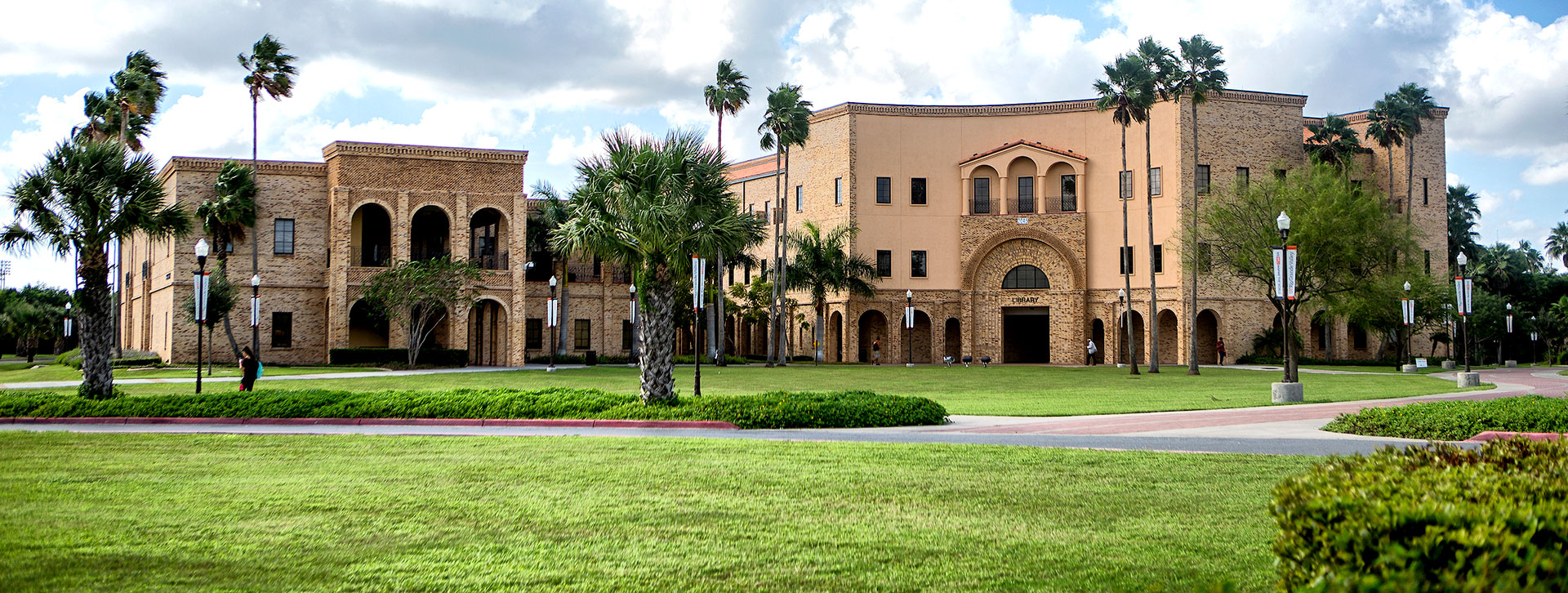
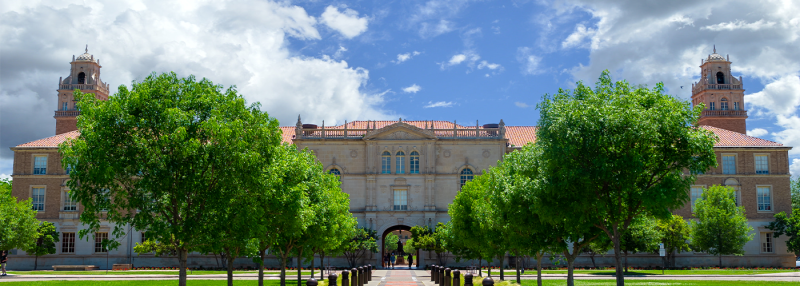
Texas State University (TXST) is a public R2 research university in San Marcos, Texas — the 5th largest university in Texas and one of the fastest-growing in the United States — with 40,674 students, an 89% acceptance rate, and in-state tuition of $11,450/year.

Texas State University

International students who receive an Assured Scholarship of $1,000+ qualify for the non-resident tuition waiver, paying in-state rates instead. The Terry Foundation Scholarship covers the full cost of attendance. Located halfway between Austin and San Antonio on I-35, TXST sits in one of the most strategically positioned spots in Texas for career access. Here’s everything you need to know.

What Is Texas State University?

Texas State University was authorized by the Texas Legislature in 1899 and opened its doors in 1903 as the Southwest Texas State Normal School — a teacher-training institution in the Texas Hill Country. Over the following century, it transitioned from a normal school to a state college, then to a regional university, and finally received its current name — Texas State University — in 2013.

That progression from normal school to comprehensive research university mirrors the arc of many of the great American public universities, and TXST’s growth story is ongoing: enrollment has grown from fewer than 10,000 students in the 1980s to over 40,000 today, making it one of the fastest-growing major universities in the country.

TXST is located in San Marcos, Texas — a city of approximately 70,000 people positioned exactly halfway between Austin (30 miles north) and San Antonio (50 miles south) on the I-35 corridor. This location is not incidental — it places Texas State students within commuting distance of two of Texas’s three largest cities and their combined job markets. The campus sits along the San Marcos River, creating a scenic natural backdrop unusual among large Texas public universities.

The university is classified as a Carnegie R2 Doctoral University — High Research Activity and is a member of the Texas State University System — the same system as Lamar University and Sam Houston State University. It is fully accredited by SACSCOC, with AACSB (McCoy College of Business), ABET (engineering), ACEJMC (journalism), and NASM (music) among its program-level accreditations.

One notable alumnus: Lyndon B. Johnson, the 36th President of the United States, attended what was then Southwest Texas State University. The LBJ Student Center on campus is named in his honor — a reminder that Texas State has been shaping Texas and national leaders for over a century.

Texas State University at a Glance — Key Facts

DetailInformation
 Founded 1899 (authorized); 1903 (opened)
 Location San Marcos, Texas (on the San Marcos River)
 University System Texas State University System
 Type Public R2 Research University
 Total Enrollment 40,674 students
 Undergraduate ~34,000 students
 Graduate ~6,600 students
 International Students Students from 87+ countries
 Acceptance Rate ~89%
 Median SAT Score 1,100
 Median ACT Score 22
 Student-to-Faculty Ratio 21:1
 Campus Size 492 acres (main) + Round Rock campus
 In-State Tuition $11,450/year
 Out-of-State Tuition $22,930/year
 International Tuition ~$22,503–$27,130/year
 Graduate In-State Tuition $8,997/year
 Graduate Out-of-State $16,377/year
 Average Aid (recipients) $9,539 (60% of undergrads receive aid)
 US News Ranking (2026) #131 National Universities; #11 in Texas
 Times Higher Education #1201 World
 Notable Alumni Lyndon B. Johnson (36th U.S. President)
 Texas Size Rank 5th largest university in Texas
 Athletics NCAA Division I, Sun Belt Conference
 Mascot Boko the Bobcat
 Accreditation SACSCOC, AACSB, ABET, ACEJMC, NASM
 Website txst.edu

Programs and Colleges at Texas State University

Texas State offers over 200 undergraduate and graduate degree programs across nine colleges — a catalog that has grown significantly as the university has expanded its research profile and enrollment over the past two decades.

The nine colleges include:

  1. McCoy College of Business (AACSB) — BBA, MBA, MS in Accounting, MS in Information Systems, MS in Finance; AACSB-accredited; strong regional business placement record
  2. College of Liberal Arts — Communication Studies, English, History, Political Science, Philosophy, Sociology, International Studies, Geography
  3. College of Science and Engineering (ABET) — Computer Science, Electrical Engineering, Civil Engineering, Biochemistry, Mathematics, Physics, Environmental Science, Geographic Information Systems (GIS)
  4. College of Applied Arts — Criminal Justice and Criminology, Social Work, Journalism, Mass Communication, Recreation Administration, Digital Media Innovation
  5. College of Education — Teacher Certification, Counseling and Guidance, Educational Leadership
  6. College of Health Professions — Health Information Management, Clinical Laboratory Science, Physical Therapy, Respiratory Care, Radiation Therapy
  7. College of Fine Arts and Communication (NASM) — Music, Theatre, Dance, Art, Graphic Design; NASM-accredited
  8. Graduate College
  9. Emmett and Miriam McCoy College of Business (graduate business programs)

Standout Programs at TXST

Mass Communication and Journalism (ACEJMC) — One of Texas State’s most nationally recognized programs. The School of Journalism and Mass Communication holds ACEJMC accreditation — the gold standard for journalism programs, held by fewer than 120 schools nationwide. Texas State’s journalism graduates enter the Austin and San Antonio media markets with credentials from a program ranked among the best in the South.

Criminal Justice and Criminology — TXST’s School of Criminal Justice and Criminology is nationally respected and offers programs from bachelor’s through doctoral levels. The school’s geographic positioning between Austin (state government, law enforcement agencies) and San Antonio (military law enforcement, federal agencies) gives criminal justice students internship access that few programs can match.

Geographic Information Systems (GIS) — Texas State’s geography and GIS programs are among the most recognized in the country. The university’s Department of Geography and Environmental Studies has strong faculty research in GIS, remote sensing, and spatial analysis — fields with growing demand across government, technology, and environmental sectors.

Business (McCoy College AACSB) — The AACSB accreditation places McCoy in the top 6% of business schools globally. The MBA program has an 80% placement rate within months of graduation. Programs in Finance, Accounting, and Information Systems are the most enrolled at the graduate level.

Computer Science and Engineering (ABET) — Growing programs aligned with the Austin tech corridor. San Marcos’ proximity to Austin’s technology sector — Apple, Dell, Google, Tesla, Oracle all have major Austin operations — creates direct internship pathways for TXST CS and engineering graduates.

Health Professions — Physical Therapy, Respiratory Care, Clinical Laboratory Science, and Radiation Therapy programs serve the healthcare needs of the Central Texas corridor. TXST’s Round Rock campus (in the northern Austin suburbs) specifically serves health professions students with clinical placements in Austin’s rapidly growing healthcare sector.

Round Rock Campus

In addition to the main San Marcos campus, Texas State operates a significant Round Rock campus in the northern Austin suburbs. The Round Rock campus focuses on upper-division and graduate programs — particularly in health professions, education, and business — serving students who live and work in the greater Austin area and cannot relocate to San Marcos. This dual-campus structure extends TXST’s reach into Austin’s job market in a practical way that few Texas universities match.

Texas State Tuition and Cost of Attendance

Student TypeTuition & FeesTotal COA (Est.)
 Texas Residents $11,450/year ~$24,000–$26,000/year
 Out-of-State (U.S.) $22,930/year ~$36,000–$38,000/year
 International Students ~$22,503–$27,130/year ~$35,000–$40,000/year

Graduate Tuition

Student TypeTuition & Fees
 Texas Residents $8,997/year
 Out-of-State / International $16,377/year

Cost of Living in San Marcos

San Marcos is one of the most affordable college towns in Texas — and one of the most livable. Off-campus housing near Texas State runs approximately $700–$1,000/month for apartments. The Bobcat Shuttle is a free bus service running throughout campus and surrounding areas, reducing the need for a car. CARTS Transit connects San Marcos to Austin and San Antonio for students who need city access without a vehicle.

The San Marcos River runs through campus — students tube, kayak, and swim in it during spring and fall. The Guadalupe River (popular for tubing) is nearby. Outdoor recreation is genuinely part of Texas State’s campus culture in a way that urban campuses cannot replicate.

Financial Aid Overview

  • 60% of undergraduates receive grants or scholarships averaging $9,539.
  • Federal Pell Grants available for qualifying domestic students.
  • FAFSA priority deadline: March 15 each year.
  • Texas Public Education Grant (TPEG) and TEXAS Grant are available to qualifying Texas residents.
  • Graduate College scholarships and fellowships are available through the BOSS portal.

Texas State Scholarships — Key Programs

Assured Scholarships — Automatic + Non-Resident Tuition Waiver

Texas State’s Assured Scholarships are automatically awarded to qualifying incoming freshmen based on admission credentials — no separate application required:

  • Eligibility: Submit admission application, official high school transcript, and official SAT or ACT scores
  • Awards are guaranteed to all qualified residents AND non-residents (including international students) who meet minimum scholarship qualifications before their first semester
  • KEY FOR INTERNATIONAL STUDENTS: Non-residents receiving any Assured Scholarship may also qualify to pay the in-state tuition rate for the same period covered by the scholarship — saving approximately $11,480/year
  • Students applying without ACT/SAT scores and ranked in the top 35% of their class are eligible for Merit Scholarship consideration through academic review

Competitive Scholarship Non-Resident Tuition Waiver

Any student qualifying for at least $1,000 in Texas State competitive merit scholarships (National or Assured) may receive a non-resident tuition waiver — paying in-state tuition of $11,450/year regardless of residency. Key requirements:

  • Must be lawfully present in the United States
  • Must be registered with Selective Service (if applicable)
  • Waiver administered through the department that awarded the scholarship
  • NOT available to students in Accelerated Online Programs (AOP) or specific gateway programs

National Merit Scholarship — $40,000 Total

Texas State awards a $40,000 National Merit Scholarship ($10,000/year for 4 years) to National Merit Finalists who designate TXST as their first-choice institution with the National Merit Scholarship Corporation. This is one of the most generous National Merit packages at any Texas public university in absolute dollar terms. Automatically pairs with Assured Scholarship eligibility and non-resident tuition waiver for qualifying students.

Terry Foundation Scholarship — Full Ride

The Terry Foundation provides full-ride scholarships renewable up to four years to qualifying incoming Texas State freshmen. Selection is competitive and based on academic excellence, leadership, and extracurricular achievement. Apply through BOSS by the December 15 deadline for freshman applicants. Terry Foundation scholars at TXST join a statewide cohort of Terry Scholars at multiple Texas universities.

Bobcat Online Scholarship System (BOSS) — All Competitive Scholarships

Texas State’s primary scholarship portal is BOSS — the Bobcat Online Scholarship System. Most competitive scholarships require a BOSS application by specific deadlines:

  • Freshman BOSS deadline: December 15 for the following fall semester
  • Transfer BOSS deadline: varies — check onestop.txst.edu for current dates
  • Continuing student scholarships: typically November–April window
  • International scholarship application: submit through BOSS by March 1 for the following academic year
  • Departmental scholarships (Criminal Justice, International Studies, Mass Communication, etc.) are all accessed through BOSS

International Student Scholarships — Competitive, via BOSS

Texas State offers competitive scholarships specifically for international students through the One Stop Financial Aid portal:

  • Apply annually via BOSS by March 1
  • A new application must be submitted each academic year — scholarships are not automatically renewed.
  • Graduate College scholarships and fellowships are also available to international graduate students — check gradcollege.txst.edu for current opportunities.s
  • Graduate College scholarship offer letters can be used for I-20 purposes and may specify in-state tuition eligibility.

Good Neighbor Program

Texas State participates in the Texas Good Neighbor Program — providing tuition assistance to academically talented students from Western Hemisphere nations (excluding Cuba and the U.S.) who plan to return to their home countries after completing their education. Contact Texas State’s International Student and Scholar Services (ISSS) office for eligibility and application details through THECB.

Graduate College Scholarships and Fellowships

The Graduate College offers several funding programs for new and continuing graduate students:

  • Texas State Merit Fellowships — for highest-quality incoming master’s or doctoral students; not available for fully online programs
  • Thesis Research Support Fellowships — up to $2,000 per award for master’s thesis research expenses; two rounds of funding annually
  • Teaching Assistantships (TAs) and Research Assistantships (RAs) available through individual departments typically provide a stipend plus a tuition waiver.
  • Graduate College “Shop Talks” — professional development sessions advising students on external fellowship and grant opportunities

Texas State Acceptance Rate and Admission Requirements

Texas State University has an acceptance rate of approximately 89% — one of the most accessible large public universities in Texas. The university’s open-access mission ensures qualified students across a broad academic range can pursue a Texas State degree.

Undergraduate Requirements

  • Apply via Common App or ApplyTexas
  • Application fee: $90 for international students
  • Official high school transcript
  • SAT or ACT scores (required for Assured Scholarship eligibility; test-optional for admission consideration)
  • Median SAT: 1,100; Median ACT: 22
  • English proficiency: TOEFL iBT 80+, IELTS 6.5+, PTE 52+, Duolingo 110+, Cambridge C1 Advanced
  • International application deadlines:
    • Fall: May 1 (priority); July 1 (final)
    • Spring: October 1 (priority); November 1 (final)
    • Summer: March 1 (priority)
  • Financial documentation: bank statement or sponsor letter showing sufficient funds
  • For BOSS scholarship consideration: submit BOSS application by December 15

Graduate Requirements

  • Bachelor’s degree from an accredited institution
  • Minimum GPA of 2.75 (varies by program — some require 3.0)
  • GRE/GMAT scores (varies by program)
  • Letters of recommendation (typically 2–3)
  • Statement of purpose
  • TOEFL iBT 80+, IELTS 6.5+, PTE 52+, or Duolingo 110+ for international applicants
  • Graduate application deadlines vary by program — check gradcollege.txst.edu

Campus Life at Texas State University

San Marcos — A Genuine College Town

San Marcos is a college town in the truest sense — the city’s culture, economy, and social life are deeply intertwined with Texas State University. With 40,000+ students in a city of 70,000 people, Bobcats are everywhere. The San Marcos River, which runs directly through the edge of campus, gives students outdoor recreation access — tubing, kayaking, swimming — that no urban university campus can match. Sewell Park on the river is a beloved gathering spot for students year-round.

San Marcos’ downtown square has evolved into a genuinely active social and dining district, with local restaurants, coffee shops, and live music venues catering to the student population. The city sits on the Edwards Aquifer, one of the most significant freshwater ecosystems in Texas — giving environmental science and geography students a living research laboratory practically on campus.

Student Organizations — 400+

Texas State has over 400 student organizations covering academic departments, Greek life, cultural organizations, professional societies, faith-based groups, and recreational clubs. The university’s diversity — students from 87+ countries — means cultural organizations are active and well-attended. The International Student and Scholar Services (ISSS) office coordinates dedicated orientation, advising, and community programs for international students.

NCAA Division I Athletics — Sun Belt Conference

The Texas State Bobcats compete at the NCAA Division I level in the Sun Belt Conference. Bobcat Stadium (capacity 30,000+) on campus hosts home football games. TXST also fields teams in basketball, baseball, softball, soccer, cross country, tennis, track and field, and golf. The football program has grown significantly since transitioning to FBS competition, and game days in San Marcos bring the campus community together in a college-town atmosphere that smaller or urban universities rarely achieve.

The LBJ Connection

Lyndon B. Johnson, the 36th President of the United States, attended what was then Southwest Texas State University — graduating in 1930. The LBJ Student Center on campus honors this connection. Johnson’s presidency (1963–1969) brought landmark legislation including the Civil Rights Act, the Voting Rights Act, and Medicare — a legacy that connects Texas State to American political history in a tangible way. For students interested in politics, public policy, or government careers, this connection adds a layer of institutional identity that is genuinely meaningful.

Career Outcomes

Texas State’s career outcomes reflect the practical focus of its programs and the geographic advantage of its location:

  • MBA placement rate: 80% within months of graduation
  • Access to Austin’s job market (30 miles north) and San Antonio’s (50 miles south) — two of Texas’s top three cities for employment — without living in either
  • Major employers recruiting from TXST include H-E-B (headquartered in San Antonio), Texas state government agencies (Austin), major healthcare systems, tech companies in the Austin corridor, and military/federal agencies near San Antoni.o
  • Journalism graduates enter a regional media market that includes Austin’s growing media sector and San Antonio’s established broadcast market
  • Criminal justice graduates have pathways into Texas law enforcement, state and federal agencies, and corrections.

For international students on F-1 visas, Texas State supports OPT (12 months) and STEM OPT (36 months) post-graduation for qualifying STEM programs including Computer Science, Engineering, Mathematics, and Biology.

How Texas State Compares

  • For a smaller public university in the same Texas State System with top engineering ROI in Southeast Texas, see Lamar University.
  • For a similarly sized public university in North Texas with a stronger COPLAC liberal arts identity, see Midwestern State University.
  • For a private university between San Antonio and Austin with a lower enrollment, see Texas Lutheran University in Seguin.
  • For the UT System flagship in Austin with higher rankings and the Texas Advance Commitment free tuition program, see University of Texas at Austin.
  • For a full comparison of Texas university scholarship options, see Texas Universities with Full Scholarships.

Is Texas State Right for You?

Texas State University is a strong fit if you:

  • Want a large public university between Austin and San Antonio with access to two major job markets
  • Are you pursuing journalism, mass communication, criminal justice, business, education, health professions, or GIS
  • Are an international student who can earn an Assured Scholarship ($1,000+) to unlock in-state tuition rates ($11,450/year)
  • Want a genuine college-town experience with outdoor river recreation and an active student community in a small city
  • Are a National Merit Finalist who wants the $40,000 TXST National Merit package
  • Are pursuing graduate education at a price point that makes post-graduate ROI genuinely manageable

TXST may not be ideal if you need the highest-ranked programs in your field, want a highly urban campus experience in a major metro, or are pursuing highly specialized programs not available across TXST’s nine colleges. The 89% acceptance rate means TXST is accessible to most qualified applicants — but the large student body (40,000+) means some students take time to find their community and academic direction.

How to Apply to Texas State University

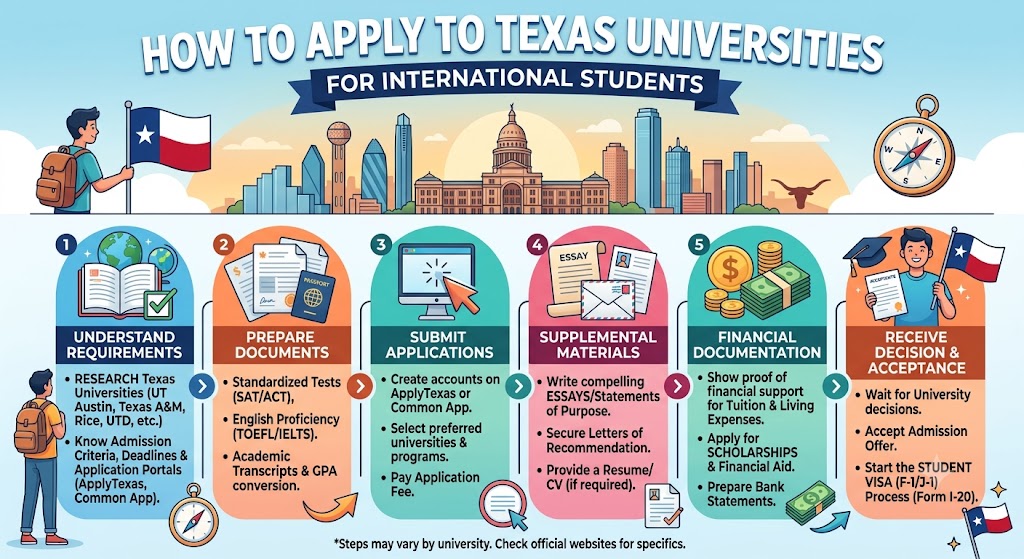
  1. Apply via Common App or ApplyTexas — pay the $90 international application fee.
  2. Submit official high school transcripts and official SAT or ACT scores (required for Assured Scholarship eligibility)
  3. Submit English proficiency scores: TOEFL iBT 80+, IELTS 6.5+, PTE 52+, Duolingo 110+
  4. Submit financial documentation showing adequate support for one year
  5. Apply by December 15 via BOSS for freshman scholarship consideration — including competitive departmental awards
  6. Apply for international scholarships via BOSS by March 1 for the following academic year
  7. File FAFSA (domestic students) by March 15 for priority need-based aid
  8. Apply forthe  Good Neighbor Program through THECB if from a qualifying Western Hemisphere country
  9. Receive the I-20 from Texas State ISSS once admitted, and begin the F-1 visa application
  10. Allow 2–3 months minimum for F-1 visa processing

Final Thoughts

Texas State University delivers a combination that is hard to find anywhere else in Texas: a large, affordable public research university with AACSB business accreditation, nationally recognized journalism and criminal justice programs, a scenic river campus in a genuine college town, and one of the most strategically positioned locations in the state — halfway between Austin and San Antonio with access to both job markets. For students who value location, affordability, and program breadth in roughly equal measure, TXST consistently over-delivers relative to its sticker price.

For current tuition, scholarship details, and application requirements, visit txst.edu directly.

Have questions about Texas State University or comparing it with other Texas options? Drop them in the comments below.

Filed Under: USA University

Concordia University Texas – Tuition, Programs & Admissions 2026

July 11, 2026 Leave a Comment

Concordia University Texas (CTX) is a small private Lutheran university in Austin, Texas — affiliated with the Lutheran Church–Missouri Synod — with 1,396 students, a 91% acceptance rate, and tuition of $32,778/year.

Concordia University Texas

95% of full-time students receive institutional grants averaging $18,614; the average total aid per student is $27,174; and CTX offers a locked-in tuition guarantee and a Tornado Textbook Program that includes textbooks at no additional cost. The campus sits on a 250-acre protected nature preserve in northwest Austin — one of the most distinctive campuses of any university in Texas. Here’s everything you need to know.

What Is Concordia University Texas?

Founded in 1926 as a high school on a 20-acre plot north of Austin, Concordia University Texas has grown steadily into a private liberal arts university offering undergraduate and graduate degrees across seven colleges and schools. CTX is affiliated with the Lutheran Church–Missouri Synod (LCMS) and is a member of the Concordia University System — a ten-university network of LCMS institutions across the United States enrolling a combined 22,000+ students. This affiliation connects CTX students to a nationwide network of Lutheran higher education alumni and partner institutions.

CTX’s mission — to develop Christian leaders equipped with both professional skills and spiritual grounding — shapes everything from curriculum design to campus culture. The university’s seven colleges integrate faith, learning, and service as complementary rather than competing values, and students consistently describe the campus as a genuinely welcoming community where professors know students by name from the first semester.

What makes CTX’s campus genuinely distinctive is its physical setting: 250 acres of protected nature preserve in the hills of northwest Austin, including hot springs, wetlands, and ecological habitats that serve both as a scenic campus environment and as an active outdoor research facility for environmental science students. The combination of a nature preserve campus inside one of America’s fastest-growing cities is unusual enough to be worth noting — most Austin universities occupy dense urban plots, while CTX offers students something rare: genuine natural surroundings within the city limits.

CTX is fully accredited by SACSCOC, with additional accreditations from ACEN (nursing) and other professional bodies.

Concordia University Texas at a Glance — Key Facts

DetailInformation
 Founded 1926
 Location Northwest Austin, Texas (250-acre nature preserve campus)
 Address 11400 Concordia University Drive, Austin, TX 78726
 Affiliation Lutheran Church–Missouri Synod (LCMS)
 University System Concordia University System (10 universities, 22,000+ students)
 Type Private Liberal Arts University (M1 Carnegie Classification)
 Total Enrollment 1,396 students (2024–25)
 Undergraduate 1,188 students
 Graduate 208 students
 Online Students 378 fully online
 Acceptance Rate ~91%
 Average Admitted GPA 3.3
 Student-to-Faculty Ratio 16:1
 Tuition & Fees (2024–25) $32,778/year
 Total COA (Est.) ~$53,020/year (on-campus)
 Avg Total Aid Per Student $27,174
 Average Net Price ~$20,208–$23,621/year
 Students Receiving Aid 95% of full-time students
 Median Graduate Salary (6 yrs) $48,058
 1st-Year Retention Rate 58.3%
 6-Year Graduation Rate 44.6%
 Athletics NAIA, Red River Athletic Conference
 Mascot Tornado
 Accreditation SACSCOC, ACEN (Nursing)
 Website concordia.edu

Programs and Colleges at CTX

CTX offers programs across seven colleges and schools in more than 30 areas of study, covering undergraduate and graduate levels. The catalog is intentionally focused — CTX prioritizes depth over breadth, consistent with its liberal arts and faith-formation mission.

  1. College of Business & Communication — BBA, Business Administration, Marketing, Communication, Organizational Leadership; MBA (online and on-campus)
  2. College of Education — Teacher certification tracks, MEd (Master of Education) in multiple specializations; graduates consistently achieve high pass rates on Texas Education Agency (TEA) certification exams
  3. College of Health Sciences — BSN (Bachelor of Science in Nursing), Accelerated BSN (ABSN); ACEN-accredited nursing program with high first-time NCLEX pass rates
  4. School of Ministry — Biblical Studies, Christian Ministry, Youth Ministry; serves students preparing for church leadership, chaplaincy, and mission careers
  5. School of Fine Arts — Music, Visual Arts, Theatre; students benefit from Austin’s vibrant arts and music scene with direct access to live performance venues and arts employers
  6. School of Humanities and Social Sciences — Psychology, Criminal Justice, History, English, Sociology
  7. School of Natural and Applied Sciences — Biology, Environmental Science (with hands-on fieldwork in CTX’s 250-acre protected nature preserve), Computer Science

Nursing — CTX’s Most In-Demand Program

Nursing is CTX’s most enrolled undergraduate program and its most professionally recognized. The BSN program is ACEN-accredited and consistently produces graduates with high first-time NCLEX pass rates — a direct reflection of the program’s clinical preparation quality. CTX’s nursing program integrates faith and service values with clinical excellence: as CTX describes it, “nursing is more than a career — it’s a calling.”

The Accelerated BSN (ABSN) program is designed for students who already hold a bachelor’s degree in another field and want to transition into nursing. The ABSN runs at an accelerated pace and includes full-time clinical placements in the Austin healthcare market — one of the most rapidly expanding in Texas. ABSN tuition is $785 per credit hour, with textbooks included through CTX’s Tornado Textbook Program ($25 per credit hour).

Austin’s healthcare sector is growing substantially — driven by population growth, the expansion of major hospital systems (Ascension Seton, St. David’s, Dell Seton Medical Center at UT), and the influx of technology workers creating demand for employer-sponsored healthcare. CTX nursing graduates enter this market with clinical credentials earned in Austin facilities, which is a direct employment advantage.

Business and MBA

The College of Business & Communication offers a BBA covering business administration, marketing, and communication, plus an MBA program available both on-campus and fully online. MBA tuition at CTX is per credit hour — contact an admissions counselor for current rates. The MBA program can be completed in approximately 20–24 months. For students who want to pursue graduate business education while working in Austin’s tech and startup ecosystem, CTX’s online MBA provides flexible credential access without requiring full-time campus enrollment.

Environmental Science — Nature Preserve Research

One of CTX’s most distinctive academic offerings is its Environmental Science program — built around the university’s 250-acre protected nature preserve. The preserve includes wetlands, hot springs, and diverse ecological habitats that serve as outdoor field research sites for environmental science students.

This is genuine hands-on fieldwork, not simulated lab exercises — students conduct real ecological research in a protected natural area within the Austin city limits. For students interested in conservation, ecology, or environmental policy, CTX’s campus offers immediate research access that urban universities simply cannot replicate.

Computer Science — Austin Tech Partnership

CTX’s Computer Science program integrates foundations in Python, Java, JavaScript, and R with a capstone project developed alongside Austin-area tech partners. The program covers AI, cloud computing, data science, and cybersecurity — fields with strong demand in Austin’s growing technology sector. The Concordia Texas Excellence Award specifically targets high-achieving Computer Science majors with additional scholarship funding, reflecting the university’s investment in building this program’s profile.

CTX Tuition and Cost of Attendance

ExpenseAnnual Cost
 Tuition & Fees (Undergraduate) $32,778/year
 On-Campus Housing (Regents Hall) Varies — contact housing office
 Meal Plan Varies by plan selection
 Tornado Textbook Program Included in tuition (no additional textbook cost)
 Total COA (On-Campus, Est.) ~$53,020/year

Graduate Tuition (2026–27 Rates)

ProgramPer Credit Hour
 MBA (online or ground) ~$767/credit hour
 MEd (Master of Education) $900/credit hour
 MCS (Master of Computer Science) $767/credit hour
 ABSN (Accelerated BSN) $785/credit hour + $25/credit hour (Textbooks)
 General Services Fee $275/semester (2026–27)

Locked-In Tuition Guarantee

CTX offers a locked-in tuition guarantee for enrolled students — your tuition rate is fixed from the year you enroll and does not increase during your time at CTX. This is a significant financial planning advantage, particularly given Austin’s rapidly rising cost of living. Knowing your tuition rate will not change allows students to budget accurately across all four years without factoring in annual tuition increases — a stress most university students deal with each year.

Tornado Textbook Program

CTX’s Tornado Textbook Program includes required textbooks in tuition costs for most programs at a flat rate of $25 per credit hour. For a full-time student taking 15 credit hours per semester, this adds $375 per semester — but eliminates the typically $600–$1,200 per semester in textbook costs that students at other universities pay separately. This is a genuine cost reduction, not just a marketing claim.

Financial Aid Overview

  • 95% of full-time students receive local or institutional grants averaging $18,614
  • Average total aid per student (grants + scholarships): $27,174
  • Average net price after all aid: $20,208–$23,621/year
  • 40% of students receive federal grants averaging $5,134
  • Federal Pell Grant (up to $7,395/year) is available to eligible domestic students with demonstrated need
  • CTX uses a simplified, transparent financial aid process with counselors available for personalized appointments

CTX Scholarships — Stackable Awards

CTX’s scholarship system is built around stackable awards — most scholarships can be combined with each other and with need-based grants, up to the total cost of attendance. Merit and need-based scholarships are automatically considered for all students; institutional scholarships may require a separate application or counselor conversation.

Distinguished Scholar Award

CTX’s flagship merit award, recognizing exceptional academic achievement among first-year students. Stackable with other merit, need-based, and programmatic scholarships. Contact your admissions counselor — amount varies based on academic profile.

Concordia Texas Promise — Need-Based Coverage for Travis/Williamson/Hays Counties

High-achieving students from Travis, Williamson, and Hays counties (the Austin metro area) with significant financial need may qualify for the Concordia Texas Promise — covering the remaining cost of tuition after all other federal and state aid is applied. This is a last-dollar scholarship program that, for qualifying Austin-area students, can effectively bring tuition to zero after Pell Grant and state grants are factored in.

Direct Entry Nursing Student Scholarship

Recognizes exceptional academic performance and commitment among students entering CTX’s nursing program. Honors outstanding academic dedication and leadership in healthcare and service. Stackable with merit and need-based scholarships. Contact your admissions counselor for current award amounts and eligibility criteria.

Concordia Texas Excellence Award — Computer Science

A competitive scholarship specifically for high-achieving Computer Science majors in the on-ground CS program. Designed to attract top students and foster innovation, leadership, and academic excellence. Stackable with other scholarships.

Early Deposit Discount

Admitted first-time and transfer students who submit their enrollment deposit by February 15 receive an Early Deposit Discount — a stackable award that rewards early commitment. Contact an admissions counselor for the current discount amount.

Partners in Christian Education Award

For children of full-time Christian church workers pursuing degrees at CTX. Stackable with other scholarships. Reflects CTX’s Lutheran heritage and its commitment to supporting ministry families — similar to awards available at Lubbock Christian University and Abilene Christian University.

Honors Program Scholarship

Students accepted into CTX’s Honors Program receive $500/year for two years ($250 per semester). Stackable with other awards. The Honors Program offers enriched coursework and a dedicated academic community for high-achieving students.

Music Student Award

For students who participate in University Singers (Choir) or Symphonic Winds (Band). $250/year ($125 per semester), renewable for up to four years. Open to all majors — not restricted to music students. Stackable with other scholarships.

Esports Award

For students recruited as Concordia Texas Esports athletes. $250/year ($125 per semester), stackable with other scholarships. CTX’s competitive Esports program participates in collegiate leagues and represents an increasingly common path to scholarship support for students with gaming skills.

Trailblazers Program Scholarship

For students enrolled in CTX’s Trailblazers Program — a leadership and personal development cohort for students who show strong leadership potential and commitment to growth. Stackable with other awards.

PTK Competitive Transfer Scholarship

Multi-year support specifically for Phi Theta Kappa (PTK) members transferring to CTX who demonstrate both high academic achievement and financial need. PTK is the national honor society for community college students — if you are transferring from a community college and are a PTK member, this scholarship is worth pursuing actively.

IDEA Public School Scholarship

For students who attended and graduated from an IDEA Public School and demonstrate commitment to leadership, service, and excellence. Stackable with merit and need-based awards.

CTX Acceptance Rate and Admission Requirements

Concordia University Texas has an acceptance rate of approximately 91% — broadly accessible. The average admitted student has a GPA of 3.3, reflecting a student body that is academically engaged rather than narrowly selective.

Undergraduate Requirements

  • Apply at concordia.edu/admissions/apply.html
  • Application fee: $50 for international students
  • Test-optional — SAT/ACT considered but not required for admission; middle 50% range: SAT 860–1100, ACT 15–24
  • Average admitted GPA: 3.3
  • Minimum GPA of 2.5 (on a 4.0 scale) recommended
  • Official high school transcript
  • English proficiency for international students: TOEFL, IELTS, or PTE (verify minimum scores at concordia.edu)
  • Rolling admissions — apply early for Early Deposit Discount (February 15 deadline) and scholarship consideration
  • Contact: admissions@concordia.edu

Graduate Requirements

  • Bachelor’s degree from an accredited institution
  • Minimum GPA of 2.5 (undergraduate) for most programs
  • Program-specific requirements vary — contact Graduate Admissions at concordia.edu
  • TOEFL or IELTS for international applicants
  • ABSN applicants must hold a completed bachelor’s degree in any field

Campus Life at CTX

The Nature Preserve Campus

CTX’s most distinctive feature is its 250-acre protected nature preserve campus in northwest Austin. The preserve includes wetlands, hot springs, ecological habitats, and trail systems that give students a genuinely unique living and learning environment. Students consistently cite the campus’s natural beauty as one of CTX’s most compelling qualities — it creates a sense of calm and community that urban campuses in dense city settings rarely achieve.

At the same time, CTX is emphatically in Austin — not a remote rural campus. Residential neighborhoods, shopping centers, restaurants, and tech company offices surround Northwest Austin. The university’s location provides natural beauty without isolation, and Austin’s full cultural and economic resources are accessible within 20–30 minutes.

Student Life in Austin

Austin is one of the most culturally rich and economically dynamic cities in the United States. Known as the “Live Music Capital of the World,” Austin offers CTX students access to:

  • Live music venues (6th Street, Red River Cultural District, Stubb’s Amphitheater)
  • Tech sector employers (Apple, Dell, Google, Meta, Tesla, Oracle — all with major Austin operations)
  • A growing healthcare ecosystem (Ascension Seton, Dell Medical School, St. David’s)
  • The Texas State Capitol and the policy sector
  • Outdoor recreation (Barton Springs, Colorado River, Zilker Park, Lake Travis)
  • The South by Southwest (SXSW) annual festival — a global hub of music, film, and technology

For students at a small faith-based university who want access to a world-class city, CTX’s location is one of the strongest selling points of the institution.

Student Organizations and Athletics

CTX has over 20+ student clubs and organizations covering academic, faith, cultural, professional, and recreational interests. The Esports program is active and competitive. Ministry and missions opportunities are integrated into campus life for students interested in service and faith-based engagement.

CTX competes at the NAIA level in the Red River Athletic Conference. Varsity sports include basketball, baseball, softball, soccer, cross country, and golf. NAIA athletics allows student-athletes to pursue both competitive sports and rigorous academics without the time demands of NCAA Division I programs.

Career Outcomes

The median salary for CTX graduates six years after enrollment is $48,058 — above the national median for comparable private university graduates. Nursing and business graduates typically earn above this figure; education, ministry, and humanities graduates generally earn below it.

CTX’s Austin location is a genuine career accelerator for graduates who pursue careers in the city’s tech, healthcare, and business sectors. The university’s Career Services office connects students with Austin-area employers, internship opportunities, and alumni mentors. Nursing graduates achieve consistently high TEA certification exam pass rates and enter the Austin healthcare market with clinical credentials earned locally.

For international students on F-1 visas, CTX supports Optional Practical Training (OPT) after graduation — 12 months for most programs, 36 months for STEM graduates including Computer Science and Environmental Science. Contact the International Student Services office for I-20 issuance and OPT advising.

How CTX Compares to Other Texas Universities

  • For a larger private Lutheran university between San Antonio and Austin with 100% of freshmen receiving aid and full-tuition merit awards, see Texas Lutheran University in Seguin
  • For a private Christian university in West Texas with similar faith mission and lower tuition, see Lubbock Christian University in Lubbock
  • For a private Christian university in Abilene with nuclear engineering research and 80–90% pre-med acceptance, see Abilene Christian University
  • For a large public R1 university in Austin with lower tuition and greater program breadth, UT Austin is the primary comparison — though its acceptance rate (~31%) is dramatically lower than CTX’s 91%
  • For a full comparison of Texas university scholarship options, see Texas Universities with Full Scholarships.

Is CTX Right for You?

Concordia University Texas is a strong fit if you:

  • Want a small, faith-integrated Christian university education in one of America’s most vibrant cities
  • Are pursuing nursing (BSN or ABSN), business (MBA), education (MEd), environmental science, or computer science
  • Value a 16:1 student-to-faculty ratio where professors know your name and learning is genuinely personal
  • Want the benefits of Austin’s career market and cultural scene from a campus that feels removed from urban density
  • Are an Austin-area student from Travis, Williamson, or Hays County with financial need who may qualify for the Concordia Texas Promise
  • Are a church worker’s dependent who qualifies for the Partners in Christian Education Award
  • Are a PTK honor society member transferring from a community college

CTX may not be the best fit if you want a large research university, require programs not in CTX’s focused catalog, need the widest possible range of extracurricular options, or are looking for the lowest possible tuition (CTX’s sticker price is higher than Texas public universities, though the net price after aid is competitive). The 44.6% six-year graduation rate is below average — worth discussing with current students and the admissions team during a campus visit to understand retention patterns in context.

How to Apply to Concordia University Texas

  1. Apply at concordia.edu/admissions/apply.html — rolling admissions
  2. Pay the $50 international application fee
  3. Submit enrollment deposit by February 15 to qualify for the Early Deposit Discount
  4. Submit official high school or college transcripts
  5. Submit English proficiency scores (TOEFL, IELTS, or PTE) for international applicants
  6. Complete FAFSA to qualify for need-based aid, Pell Grant, and Concordia Texas Promise (if applicable)
  7. Contact your admissions counselor to discuss scholarship eligibility — many CTX scholarships are determined through the counselor relationship rather than a standalone portal
  8. Receive your I-20 from International Student Services once admitted
  9. Apply for your F-1 visa — allow 2–3 months minimum for processing

Final Thoughts

Concordia University Texas occupies a genuinely distinctive niche: a small Lutheran liberal arts university on a 250-acre nature preserve in the heart of Austin, Texas — one of America’s most dynamic cities.

The locked-in tuition guarantee, Tornado Textbook Program, 95% financial aid coverage, and stackable scholarship system make the financial picture more accessible than the sticker price suggests. For students who want a faith-centered, personally connected university experience with access to Austin’s career market, outdoor environment, and cultural scene, CTX delivers a combination that no other university in this guide can replicate.

For current tuition, scholarship details, and application requirements, visit concordia.edu directly.

Have questions about Concordia University Texas or comparing it with other Texas options? Drop them in the comments below.

Filed Under: USA University

Sam Houston State University – Tuition, Programs & Admissions 2026

July 10, 2026 Leave a Comment

Sam Houston State University (SHSU) is a public R2 research university in Huntsville, Texas — part of the Texas State University System — with 21,403 students, a 90% acceptance rate, and in-state tuition of $9,228/year.

Sam Houston State University

SHSU is nationally ranked #4 for Online Criminal Justice programs by US News and home to the Southeast Texas Applied Forensic Science Facility (STAFS) — one of only a handful of outdoor forensic research facilities in the world.

The Smith-Hutson Scholarship covers the full cost of attendance for qualifying Texas students. Located 60 miles north of Houston, SHSU gives students access to one of the country’s largest job markets. Here’s everything you need to know.

What Is Sam Houston State University?

Founded in 1879 as Sam Houston Normal Institute — one of the oldest public universities in Texas — SHSU was named after General Sam Houston, the hero of the Battle of San Jacinto and first President of the Republic of Texas. From its origins as a teacher-training school, it has grown into a comprehensive public research university, achieving Carnegie R2 classification (Doctoral University — High Research Activity) and offering programs from undergraduate through doctoral levels across eight colleges.

SHSU operates from a 316-acre main campus in Huntsville, Texas — a city of about 45,000 people in the Piney Woods region of East Texas, 60 miles north of Houston on Interstate 45. The university is the third-largest university in Texas by enrollment, reflecting decades of consistent growth driven by affordable tuition, strong career-focused programs, and proximity to the Houston metro job market.

SHSU is a member of the Texas State University System — the same system as Lamar University in Beaumont and Texas State University in San Marcos — and is fully accredited by SACSCOC, with program-level accreditations from AACSB (business), CAEP (education), NASM (music), and other professional bodies.

Sam Houston State University at a Glance — Key Facts

DetailInformation
 Founded 1879 (as Sam Houston Normal Institute)
 Location Huntsville, Texas (316-acre campus)
 University System Texas State University System
 Type Public R2 Research University
 Total Enrollment 21,403 students
 Texas Enrollment Rank 3rd largest university in Texas
 Acceptance Rate ~85–90%
 Average Admitted GPA Strong academic record recommended
 Median SAT Score 1,040
 Median ACT Score 20
 Student-to-Faculty Ratio 20:1
 Campus Size 316 acres
 In-State Tuition $9,228/year
 Out-of-State Tuition $19,068/year
 Graduate In-State $8,954/year
 Graduate Out-of-State $16,334/year
 Average Net Price ~$15,134–$15,345/year
 US News Ranking #255 National Universities; #31 in Texas
 Online Criminal Justice Rank #4 in the USA (US News)
 Forensic Science Rank #61 globally (EduRank)
 Education School Rank #158 (US News)
 Athletics NCAA Division I, Western Athletic Conference (WAC)
 Mascot Bearkat (Sammy)
 Accreditation SACSCOC, AACSB, CAEP, NASM
 Website shsu.edu

Programs and Colleges at SHSU

SHSU offers over 90 undergraduate programs and 60+ graduate programs — including 137 undergraduate majors — across eight colleges:

  1. College of Criminal Justice — SHSU’s most famous and highly ranked college
  2. College of Business Administration (AACSB)
  3. College of Education (CAEP)
  4. College of Fine Arts and Mass Communication
  5. College of Health Sciences
  6. College of Humanities and Social Sciences
  7. College of Sciences
  8. Elliott T. Bowers Honors College

Criminal Justice — SHSU’s Most Distinctive Program

The College of Criminal Justice (CoCJ) at SHSU is nationally and internationally recognized as one of the finest in the world. Key facts:

  • #4 in the USA for Online Criminal Justice (US News)
  • #61 globally for Forensic Science (EduRank)
  • #86 globally for Criminology and Criminal Justice (EduRank)
  • Home to the Southeast Texas Applied Forensic Science Facility (STAFS) — a state-of-the-art outdoor forensic anthropology research facility. Bodies donated to STAFS are used for research in decomposition, taphonomy, and forensic identification — the same type of facility that pioneered forensic science research at the Body Farm at the University of Tennessee. SHSU’s STAFS is one of only a handful of such facilities in the world and provides research opportunities for students, law enforcement, and international forensic science professionals
  • Programs include Criminal Justice (BA/BS), Forensic Science, Criminology, Victim Studies, and doctoral programs in Criminal Justice.
  • Graduates enter careers in law enforcement, federal agencies (FBI, DEA, ATF), forensic laboratories, courts, corrections, and policy — with SHSU alumni throughout law enforcement agencies across Texas and nationally.y

For students interested in careers in criminal justice, forensics, or law enforcement, SHSU’s CoCJ is one of the most career-relevant programs available at any Texas university — and significantly more affordable than comparable programs at private institutions.

Business — AACSB Accredited

The College of Business Administration carries AACSB accreditation — top 6% of business schools globally — and offers undergraduate programs in Accounting, Finance, Management, Marketing, and Economics. The MBA program and MS programs in Business Analytics, Accounting, and Project Management are available online and on campus.

The MBA is ranked #74 nationally for Online Master’s in Business programs (excluding MBA) by US News. For students who want AACSB credentials at a public university tuition, SHSU’s business programs are highly competitive in value.

Education — CAEP Accredited, #158 Nationally

The College of Education at SHSU is ranked #158 nationally by US News for graduate education programs. It offers teacher certification tracks across multiple subject areas and grade levels, plus graduate programs in Educational Leadership and Counseling. Education in-state tuition at SHSU is charged at $320 per credit hour (in-state) — one of the most affordable graduate education programs in Texas.

Health Sciences

The College of Health Sciences offers programs in Nursing, Health Sciences, Kinesiology, and Public Health. SHSU nursing graduates enter the Houston-area healthcare market — one of the largest in the country — with the advantage of affordable education and regional employer connections built through the university’s East Texas and Houston-area alumni networks.

Fine Arts and Mass Communication

The NASM-accredited music program and mass communication programs serve students interested in performance, journalism, digital media, and communication careers. Houston’s media market — one of the largest in the U.S. — is accessible from Huntsville, giving SHSU communication graduates natural internship pathways into a major metro media environment.

Elliott T. Bowers Honors College

The Bowers Honors College provides an enriched academic track for high-achieving students with smaller seminar-style courses, research opportunities, and a dedicated Honors community. Honors College students are eligible for additional scholarship funding through the Honors scholarship program — making Honors application a key step for students seeking maximum financial aid at SHSU.

SHSU Tuition and Cost of Attendance

Student TypeTuition & FeesTotal COA (Est.)
 Texas Residents $9,228/year ~$22,000–$24,000/year
 Out-of-State (U.S.) $19,068/year ~$32,000–$34,000/year
 International Students ~$19,068–$22,000/year ~$32,000–$36,000/year (est.)

Graduate Tuition

Student TypeTuition & Fees
 Texas Residents $8,954/year
 Out-of-State / International $16,334/year

Education graduate courses: $320/credit hour in-state; $725/credit hour out-of-state. Program-specific fees may apply — verify at shsu.edu.

Guaranteed Tuition Price Plan (GPP)

SHSU offers a unique Guaranteed Tuition Price Plan (GPP) for first-time Texas resident students. The GPP locks in your tuition rate for 12 consecutive terms (including summers) — protecting you from tuition increases for the duration of your undergraduate study.

This is a significant financial planning tool; students who enter SHSU in Fall would be guaranteed their tuition rate through Summer 2029. Only Texas residents entering SHSU for the first time are eligible. Deadlines apply — review the FAQ on the Student Account Services website before selecting this option.

Financial Aid Overview

  • 68% of undergraduates receive grants or scholarships averaging $8,724
  • Average net price for need-based aid recipients: $15,134–$15,345/year
  • FAFSA school code: 003606
  • Priority FAFSA deadline: March 15 for fall and spring
  • State aid programs available: TEXAS Grant, Texas Public Education Grant (TPEG), TEACH Grant

SHSU Scholarships — Key Programs

Scholarships4Kats (S4K) — One Application, All Scholarships

SHSU’s primary scholarship portal is Scholarships4Kats (S4K), available at shsu.academicworks.com. After being admitted to SHSU, students complete one General Application that automatically matches them against all relevant institutional scholarships. Key details:

  • Priority deadline: November 1 for maximum scholarship consideration
  • Applications after November 1 are still reviewed for remaining funds
  • Students must be accepted to SHSU before applying for scholarships
  • S4K imports key information from your student record automatically — reducing redundant data entry
  • Departmental scholarships (including Criminal Justice scholarships) are also accessed through S4K

Smith-Hutson Scholarship Program — Full Cost of Attendance

The Smith-Hutson Scholarship is SHSU’s most prestigious and generous award — one of the most comprehensive scholarship programs at any Texas public university. Key facts:

  • Covers full cost of attendance — tuition, fees, housing, dining, books, and personal expenses
  • Targeted toward Texas high school graduates with demonstrated financial need and strong academic potential
  • Dedicated to providing opportunities to students who otherwise may not have had a chance to earn a bachelor’s degree
  • Highly competitive — limited number of awards made annually
  • Apply through Scholarships4Kats after admission

National Merit Scholarship — $10,000/Year ($40,000 Total)

SHSU offers a dedicated National Merit Scholarship valued at $10,000/year for four years ($40,000 total) to National Merit Finalists who select SHSU as their first college choice with NMSC by May 31 before their first semester. Apply through Scholarships4Kats. This is one of the most generous National Merit packages at a Texas public university in absolute dollar terms.

Bearkat Promise — Need-Based Coverage for Texas Residents

The Bearkat Promise program is SHSU’s commitment to Texas resident students with significant financial need. When combined with state grants (TEXAS Grant, TPEG) and federal aid (Pell Grant), the Bearkat Promise helps ensure that high-need Texas students can afford SHSU’s already-low tuition. Contact Financial Aid (936-294-1774) for a personalized estimate of how Bearkat Promise applies to your situation.

SHSU Local Scholarship — $1,000/Year + Non-Resident Waiver

A key scholarship for out-of-state and international students: any student receiving an SHSU competitive institutional scholarship of $1,000 or more qualifies to pay Texas in-state tuition under the competitive scholarship waiver.

The SHSU Local Scholarship ($1,000/year, renewable for 4 years, $4,000 total) unlocks this waiver for out-of-state recipients. Combined with the $9,228 in-state rate, this is one of the most direct paths to affordable tuition at SHSU for non-Texas students.

Competitive Scholarship Tuition Waiver — In-State Rate for Non-Residents

Like all Texas public universities, SHSU allows non-resident (domestic and international) students who receive a competitive institutional scholarship of $1,000+ to pay Texas in-state tuition of $9,228/year. The Honors scholarship, National Merit award, Smith-Hutson, SHSU Local, and qualifying S4K departmental awards all trigger this waiver. For out-of-state students who receive any of these scholarships, the tuition savings are approximately $9,840/year — more than enough to justify pursuing SHSU scholarships aggressively.

Good Neighbor Scholarship

SHSU participates in the Texas Good Neighbor Scholarship program — providing a full non-resident tuition exemption to eligible students from Western Hemisphere countries (excluding Cuba and the U.S.) who plan to return home after completing their degree. 235 awards statewide annually. Contact SHSU’s International Programs office for eligibility details.

STAFS Excellence Prize

A unique scholarship specific to SHSU: the STAFS Excellence Prize, established by the Director of the Southeast Texas Applied Forensic Science Facility, recognizes outstanding students engaged in forensic science research through the STAFS facility. Available through Scholarships4Kats for students participating in STAFS research programs. This scholarship reflects SHSU’s commitment to rewarding genuine research engagement — not just academic performance on paper.

Study Abroad Scholarships — $100,000 Annual Pool.

SHSU’s Global Engagement Center awards approximately $100,000 in study abroad scholarships annually. Awards are merit-based and distributed on a first-come, first-served basis from a limited fund. Requirements: 2.75+ SHSU GPA (undergraduate) or 3.5+ (graduate), enrollment in an authorized study abroad program for academic credit. Apply early — funds run out quickly each year.

SHSU Acceptance Rate and Admission Requirements

SHSU has an acceptance rate of approximately 85–90% — one of the most accessible public universities in Texas. The university uses a clear admissions framework based on class rank and test score combinations:

Undergraduate Requirements

  • Apply via Common App or shsu.edu/apply
  • Application fee: $50 (non-refundable)
  • Automatic admission for students in the top 10% of their high school class — no minimum test scores required
  • Other admission paths:
    • GPA 2.5–2.99 with ACT 22+ or SAT 1110+
    • GPA 2.25–2.49 with ACT 25+ or SAT 1210+
    • Dual Credit students with a 2.5+ GPA and at least 12 transferable hours
  • Test-optional for top-10% applicants — but test scores help scholarship consideration
  • English proficiency for international students: TOEFL, IELTS, Duolingo, or PTE (verify minimums at shsu.edu/international)
  • Application deadlines: Fall — August 1; Spring — December 15; Summer — May 15

Graduate Requirements

  • Bachelor’s degree from an accredited institution
  • Minimum GPA of 2.75 (on a 4.0 scale) for most graduate programs
  • GRE/GMAT scores (varies by program)
  • Letters of recommendation (typically 2–3)
  • Statement of purpose
  • TOEFL or IELTS for international applicants
  • Graduate application deadline for fall: approximately December 1

Scholarship Priority Deadline

November 1 — complete the Scholarships4Kats General Application by this date for maximum scholarship consideration. FAFSA priority deadline: March 15 for fall and spring semesters.

Campus Life at SHSU

Bearkat Country — A Genuine College Town Feel

Huntsville is a city where SHSU is the dominant cultural and economic presence — a true college town in the way that San Angelo or Lubbock partially are, but with the added character of the Piney Woods East Texas landscape. The Sam Houston National Forest, Lake Livingston, and Huntsville State Park are all within easy reach, providing outdoor recreation options that larger urban universities simply cannot offer.

The campus itself is defined by its mature pine trees and the distinctive Bearkat mascot traditions. Bearkat statue, the central campus landmark, is a meeting point and photo stop for every incoming class. The university’s connection to Sam Houston’s legacy — the Gibbs-Powell Home (Houston’s final residence), a National Historic Landmark on the edge of campus — gives SHSU a genuine historical identity that differentiates it from newer Texas institutions.

Student Organizations

SHSU has over 250 student organizations — a strong range for its enrollment size — covering academic departments, Greek life, cultural organizations, professional societies, faith-based groups, and special interest clubs. The international student community is served by the Global Engagement Center, which also coordinates study abroad programs and international student orientation.

Athletics — NCAA Division I, WAC Conference

SHSU competes at the NCAA Division I level in the Western Athletic Conference (WAC). The Bearkats field teams in football, basketball (men’s and women’s), baseball, softball, golf, tennis, cross country, track and field, and soccer. SHSU football plays in Bowers Stadium — a 14,000-seat on-campus facility that creates an intimate, intense game-day atmosphere at the Division I level. SHSU athletics has produced NFL players and professional athletes across multiple sports.

The Houston Advantage — 60 Miles South

SHSU’s location 60 miles north of Houston is one of its most practical assets for career-focused students. The I-45 corridor connecting Huntsville to Houston means students can access Houston internships, networking events, and part-time employment without living in the city — keeping their housing costs in the much more affordable Huntsville market while building Houston career connections. Major Houston employers who recruit from SHSU include law enforcement agencies (Houston PD, Harris County Sheriff, FBI Houston field office), healthcare systems, energy companies, and business and finance firms in the Houston central business district.

Research and Career Outcomes

SHSU’s R2 research classification is driven primarily by the College of Criminal Justice’s research output — including the STAFS facility’s forensic science research — and growing doctoral programs. The university’s research profile in criminal justice and forensic science is nationally recognized, with STAFS hosting training for law enforcement agencies, forensic scientists, and international investigators.

The median salary for SHSU graduates six years after enrollment is $45,337 — reflecting the salary profiles of criminal justice, education, business, and health science graduates in the Texas market. Criminal justice graduates entering federal law enforcement or forensic science roles typically earn above this median.

For international students on F-1 visas, SHSU supports Optional Practical Training (OPT) — 12 months for most graduates, up to 36 months for STEM degree holders. The Global Engagement Center assists with OPT documentation and employer verification.

How SHSU Compares to Other Texas Universities

  • For a smaller public university in Southeast Texas with top-5 engineering ROI and a graduate tuition waiver for international students, see Lamar University in Beaumont.
  • For a large public R1 in Houston with NASA and energy sector career access, see the University of Houston.
  • For a public R1 near Dallas with automatic Excellence Scholarship and in-state tuition waiver, see the University of North Texas.
  • For a private university in Houston with 100% financial aid for freshmen and Texas Medical Center access, see Houston Baptist University.
  • For a full comparison of Texas university scholarship options, see Texas Universities with Full Scholarships.

Is SHSU Right for You?

Sam Houston State University is a strong fit if you:

  • Are pursuing criminal justice, forensic science, criminology, or law enforcement — SHSU’s nationally #4-ranked criminal justice program and STAFS facility are among the best in the country
  • Want an AACSB-accredited business education at a public university tuition rate with proximity to the Houston job market
  • Are a Texas resident who qualifies for the Guaranteed Tuition Price Plan — locking in your tuition rate for 12 consecutive terms
  • Want the Smith-Hutson Scholarship’s full cost coverage if you have demonstrated financial need and strong academic potential.
  • Are an out-of-state student who can qualify for a competitive scholarship to access the in-state tuition waiver
  • Want a genuine college town experience in the Piney Woods with Houston career access 60 miles away?y

SHSU may not be the best fit if you need daily metro access, want a small university setting, or are pursuing highly specialized programs not in SHSU’s catalog. The 36% four-year graduation rate is below average, though 90%+ of students who persist through the program are employed or in graduate school within a reasonable timeframe after completing their degrees.

How To Apply to Sam Houston State University

  1. Apply via Common App or shsu.edu/apply — pay the $50 application fee
  2. Submit an official high school transcript showing class rank
  3. Submit test scores if not in the top 10% of the class — ACT/SAT required for non-top-10% admission paths
  4. Submit English proficiency scores (TOEFL/IELTS/Duolingo/PTE) for international applicants
  5. Get admitted first — SHSU scholarship applications require prior admission
  6. Complete the Scholarships4Kats General Application by November 1 at shsu.academicworks.com for priority scholarship consideration
  7. File FAFSA by March 15 for priority access to state grants (TEXAS Grant, TPEG) and need-based aid
  8. Apply for Guaranteed Tuition Price Plan (GPP) if you are a first-time Texas resident entering SHSU — lock in your tuition rate for 12 terms
  9. Contact the Global Engagement Center for Good Neighbor Scholarship eligibility and international student services
  10. Receive the I-20 from the International Programs office once admitted, and begin the F-1 visa application

Final Thoughts

Sam Houston State University sits in a specific and valuable niche among Texas public universities: nationally ranked criminal justice and forensic science programs, AACSB business accreditation, R2 research status, affordable in-state tuition, and a location that gives students access to Houston’s job market without paying Houston prices. For students focused on careers in criminal justice, forensics, business, or education — and who want to study in a genuine college town environment with outdoor access and real community — SHSU consistently delivers at a price point that keeps post-graduation debt manageable.

For current tuition, scholarship details, and application requirements, visit shsu.edu directly.

Have questions about Sam Houston State University or comparing it with other Texas options? Drop them in the comments below.

Filed Under: USA University

Abilene Christian University – Tuition, Programs & Admissions 2026

July 10, 2026 Leave a Comment

Abilene Christian University (ACU) is a private R2 research university in Abilene, Texas, affiliated with the Churches of Christ, with 5,219 students, a 66% acceptance rate, and tuition of $44,200/year.

Abilene Christian University

97% of undergraduates receive grants or scholarships averaging $28,342 — bringing the average net price to approximately $23,507/year. ACU offers a President’s International Scholarship of $5,000/year plus a Wildcat Housing Grant of $3,000/year specifically for international students, and National Merit Finalists receive guaranteed full tuition.

It’s also one of the very few universities in the world where undergraduates work on fourth-generation molten salt nuclear reactor technology. Here’s everything you need to know.

What Is Abilene Christian University?

Founded in 1906 as the Childers Classical Institute — a small boarding school established by members of the Churches of Christ in Abilene — ACU has grown over 119 years into the largest private university in the American Southwest. It earned university status in 1976 and has steadily expanded its research profile, achieving Carnegie R2 classification (Doctoral University — High Research Activity) — a designation that reflects growing doctoral programs and research output while maintaining ACU’s fundamentally student-centered identity.

ACU operates from a 225-acre campus in Abilene — a West Texas city of approximately 120,000 people — with a second significant presence through ACU Online, one of the most developed online university divisions in Texas. The university serves 5,219 students from 46+ countries and all 50 U.S. states, with international students making up a meaningful portion of the graduate student body in particular.

ACU’s faith affiliation is active and visible — chapel programs, campus ministries, and biblical studies courses are woven into the student experience. But ACU welcomes students of all backgrounds, and its academic programs in pre-health, business, engineering, and the sciences are evaluated on their rigor alongside their faith context. For the third consecutive year, ACU was ranked as the highest-ranking university in Texas by US News in benchmarks focused on programs that lead to student success — a distinction that reflects outcomes, not just prestige.

ACU is fully accredited by SACSCOC, with program-level accreditations from AACSB (business), ABET (engineering), ACEN (nursing), and other professional bodies.

Abilene Christian University at a Glance — Key Facts

DetailInformation
 Founded 1906 (as Childers Classical Institute)
 Location Abilene, Texas (225-acre campus)
 Affiliation Churches of Christ
 Type Private R2 Research University
 Total Enrollment 5,219 students
 Undergraduate 3,496 students
 Graduate 1,797 students (incl. online)
 International Students Students from 46+ countries
 Acceptance Rate ~61–70%
 Student-to-Faculty Ratio 13:1
 Median SAT Score 1,180
 Median ACT Score 25
 Tuition & Fees $44,200/year
 Total COA (On-Campus) ~$59,400/year
 Avg Grants/Scholarships $28,342 (97% of undergrads)
 Average Net Price ~$23,507/year
 US News Ranking #249 National Universities; #13 in Texas
 Texas Student Success Ranking #1 in Texas (US News, 3rd consecutive year)
 Pre-Health Acceptance Rate 80–90% to professional schools
 Graduate Employment (6 yrs) 93% employed
 Median Graduate Salary (6 yrs) $46,727
 Athletics NCAA Division I, Southland Conference
 Mascot Wildcat
 Accreditation SACSCOC, AACSB, ABET, ACEN
 Website acu.edu

Programs and Colleges at ACU

ACU offers 87 baccalaureate majors across 135 areas of study, 71 master’s and specialist degree programs, and 4 doctoral programs — organized across 10 schools and colleges. The breadth is notable for a university with just over 5,000 students, and several programs are genuinely distinctive at the national level.

The 10 colleges include:

  1. College of Business Administration (AACSB) — Accounting, Finance, Management, Marketing, Information Systems, Entrepreneurship; MBA program
  2. College of Education and Human Services — Teacher certification, Educational Leadership, Social Work, Kinesiology
  3. College of Arts and Sciences — Biology, Chemistry, Physics, Mathematics, Psychology, English, History, Political Science, Sociology, Communication
  4. College of Engineering and Computer Science (ABET) — Computer Science, Electrical Engineering, Mechanical Engineering, Engineering Management
  5. College of Biblical Studies — Bible, Ministry, Christian Education, Missions
  6. Honors College
  7. College of Nursing and Health Sciences (ACEN)
  8. College of Graduate and Professional Studies
  9. ACU Online
  10. School of Social Work

Pre-Health Professions — ACU’s Most Distinctive Pipeline

ACU’s Center for Pre-Health Professions (CPHP) is one of the most impressive undergraduate pre-medical pipelines in Texas. Key facts:

  • 80–90% professional school acceptance rate for recent ACU pre-health graduates — far above the national average of approximately 40%
  • Students receive structured faculty mentorship, medical mission experiences, shadowing coordination, and mock interview preparation
  • Programs serve pre-medicine, pre-dentistry, pre-pharmacy, pre-optometry, pre-physician assistant, pre-physical therapy, and pre-veterinary tracks
  • The small 13:1 ratio means pre-health students get the individualized faculty mentorship that competitive medical school applications require

For students aiming at medical school, dental school, or other health professional programs, ACU’s CPHP pipeline is one of the most compelling arguments for choosing a smaller private university over a large public institution where pre-med students compete anonymously for research spots and recommendation letters.

Nuclear Engineering — Fourth-Generation Reactor Research

ACU has one of the most unusual undergraduate research programs of any university in the country. The university is home to the NEXT Lab (Nuclear Energy eXperimental Testing Laboratory) — a research facility where undergraduate and graduate students work on fourth-generation molten salt nuclear reactor technology.

A US News reviewer described it directly: “I know of no undergraduate program as advanced… students at Brookhaven, FermiLab, Los Alamos, or on campus developing fourth-generation nuclear reactor molten salt technology.” This is not simulated research or lab coursework — it is real, funded, cutting-edge nuclear technology research that students at the world’s most elite universities would be competing for access to.

ACU received a $30 million grant from the U.S. Department of Energy to support this research program — funding that reflects how seriously the federal government takes ACU’s nuclear engineering work. For students interested in nuclear engineering, energy systems, or advanced physics, ACU’s NEXT Lab is a genuinely once-in-a-generation opportunity.

Business — AACSB Accredited with Entrepreneurship Focus

The College of Business Administration carries AACSB accreditation — top 6% of business schools globally — and integrates entrepreneurship throughout its programs through the Griggs Center for Entrepreneurship and Philanthropy. The Wildcat Ventures program is nationally recognized, allowing students to launch and run actual businesses during their undergraduate years — not as simulations, but as real ventures. The ACU COBA MBA is available on campus and online.

Engineering and Computer Science

ACU’s engineering programs are ABET-accredited and particularly strong in electrical engineering and computer science. The connection to the NEXT Lab nuclear research program gives engineering students research access that few programs anywhere can match.

Computer science and information systems programs benefit from ACU’s early adoption of technology in education — ACU was one of the first universities in the world to require every student to have an iPhone, reflecting a culture of technology integration that has shaped the CS program’s practical focus.

Nursing and Health Sciences

The nursing program is ACEN-accredited and serves the healthcare needs of Abilene and West Texas. Nursing students benefit from clinical placements at Hendrick Medical Center and other regional healthcare facilities. ACU’s occupational therapy program (accredited by ACOTE) is one of several allied health programs that complement the nursing and pre-health tracks.

ACU Online

ACU Online is one of the most developed online university divisions in Texas. Programs span undergraduate and graduate levels across business, education, ministry, nursing, and behavioral sciences. Online tuition rates are different from residential rates — contact ACU Online at 855-219-7300 for current per-credit-hour pricing. Alumni who earned a bachelor’s or master’s from ACU receive a 20% tuition discount on any ACU Online graduate program.

ACU Tuition and Cost of Attendance

ExpenseAnnual Cost
 Tuition & Fees $44,200/year
 Room (on-campus) ~$7,200/year
 Board (meal plan) ~$6,400/year
 Books & Supplies ~$700/year
 Travel ~$1,500/year
 Personal Expenses ~$1,830/year
 Total COA (On-Campus) ~$61,830/year

Graduate tuition: $26,424/year. Per credit hour: $779 for master’s programs. Some professional programs charge differently — verify at acu.edu.

Net Price — What Students Actually Pay

  • 97% of full-time undergraduates receive local or institutional grants averaging $18,599
  • Average total grants and scholarships: $28,342 per student
  • Average net price: $23,507/year
  • 84% of first-year students receive need-based financial aid
  • Average net price for need-based aid recipients: $27,916/year
  • ACU uses a block tuition model — students taking 12–18 credit hours pay the same flat rate per semester, rewarding full-time enrollment
  • No-interest payment plans available — contact the Student Accounts Office

Cost of Living in Abilene

Abilene is an affordable West Texas city. Off-campus apartments near ACU typically run $650–$950/month. The Wildcat Wheels free shuttle service runs for ACU students on Monday and Wednesday afternoons, connecting campus to Walmart and surrounding areas. CityLink public bus service covers most of Abilene with fares starting at $1.25. For students managing tight budgets, Abilene’s cost of living is a genuine advantage over larger Texas cities.

ACU Scholarships — International and Domestic

Merit-Based Academic Scholarships — Automatic Consideration

All admitted students are automatically considered for merit-based academic scholarships — no separate application required. Awards are based on GPA, class rank, and academic profile. Merit scholarships range up to $22,000/year for the highest-achieving students. Key details:

  • Priority deadline for scholarship consideration: December 1 (early) and March 1 (regular)
  • ACU superscores ACT, SAT, and CLT — your best subscores across test sittings are used for scholarship calculation
  • Test-optional applicants are still considered for merit awards — but the Presidential Scholarship requires a qualifying test score
  • Most merit awards can stack with need-based aid — total institutional aid typically cannot exceed full tuition
  • Renewable for 4 years with required GPA maintenance

Presidential Scholarship — $5,000/Year

The Presidential Scholarship recognizes students who demonstrate high extracurricular involvement, leadership experience, faith-based participation, and strong academic performance. Value: $5,000/year, awarded in addition to other academic scholarships (stackable). A qualifying test score is required. Application materials include admission application, Honors College application, recommendations, test scores, and high school transcript.

National Merit Scholarship — Full Tuition Guaranteed

ACU offers one of the most generous National Merit packages available:

  • National Merit Finalists and Semi-Finalists: Guaranteed full tuition when coordinated with federal, state, and institutional grants, plus a $1,500/year stipend for room, board, and books
  • National Merit Commended Scholars: $2,000/year scholarship that stacks with other merit awards
  • No separate application required — submit FAFSA and provide a copy of your National Merit Certificate to your admissions counselor

President’s International Scholarship — For International Students

Amount: $5,000/year for four years
Specifically designed for international undergraduate students. Awarded at admission — no separate application required beyond the standard admissions process. This scholarship stacks with other merit awards up to the total tuition ceiling.

Wildcat Housing Grant — For International Students Living On-Campus

Amount: $3,000/year for up to two years
International students required to live on campus are eligible for the Wildcat Housing Grant. Combined with the President’s International Scholarship, international students can receive $8,000/year in guaranteed institutional support through these two programs alone — before any additional merit or need-based awards are applied.

Honors Fellow Scholarship — Competitive, Stackable

Students admitted to ACU’s Honors College are eligible for additional Honors Fellow funding on top of their standard merit awards. The Honors College application is part of the admissions process — students who demonstrate strong academic profiles should complete it to be considered for this additional layer of support.

Departmental Scholarships

Multiple academic departments offer scholarships to incoming freshmen who declare specific majors. These are competitive and require separate applications after admission:

  • Agriculture and Environmental Science — for Agribusiness, Animal Science, or Environmental Science majors
  • Art and Design — merit scholarships and study abroad/travel vouchers; requires portfolio submission (10-15 works) by March 1; recipients announced April 1
  • Bible, Missions and Ministry — for ministry-track students; requires FAFSA
  • College of Business Administration — for Marketing, Management, Information Systems, Accounting, or Finance majors
  • Communication and Sociology
  • Music — performance-based; audition required
  • Nursing
  • Science (Physics, Pre-Med, Chemistry) — for students in physics, pre-medicine, or chemistry tracks
  • Theatre — audition required

Valedictorian and Salutatorian Award — $1,000 One-Time

Graduating valedictorians and salutatorians from accredited high schools receive a one-time $1,000 scholarship in addition to their merit-based award. Submit your official final high school transcript to your admissions counselor to receive this award.

Texas Tuition Equalization Grant (TEG) — Up to $6,405/Year

Texas resident students with demonstrated financial need attending private non-profit Texas universities may qualify for the TEG:

  • Base award: up to $4,270/year
  • Exceptional need award: up to $6,405/year
  • Determined via FAFSA and ACU’s financial aid office
  • Not available to international students

ACU Online Scholarships

Online students have access to specific scholarship programs:

  • Certificate in Practical Ministry: 75% scholarship in Summer 2026, reducing tuition from $499 to $125 per credit hour
  • Corporate Partner Discount: 10% tuition reduction for employees of ACU Online’s corporate partner network
  • Alumni Discount: 20% tuition reduction on any ACU Online graduate program for ACU bachelor’s or master’s degree holders

ACU Acceptance Rate and Admission Requirements

ACU has an acceptance rate of approximately 61–70% — moderately selective. The average admitted student has a median SAT of 1,180 and ACT of 25. ACU superscores all standardized tests, which benefits students who have taken the ACT or SAT multiple times.

Undergraduate Requirements

  • Apply via Common App (acu.edu/apply)
  • Application fee: $50 after September 1; free before September 1
  • Test-optional — SAT/ACT/CLT not required for admission; submit voluntarily for Presidential Scholarship consideration and higher merit tiers; ACU superscores all tests
  • At least one letter of recommendation
  • Essay (Common App essay)
  • English proficiency for international students: TOEFL iBT 80+, IELTS 6.5+, Duolingo accepted
  • Immunization records required
  • Priority deadlines: December 1 (early) and March 1 (regular) for scholarship consideration

Graduate Requirements

  • Apply through the ACU graduate admissions portal
  • Bachelor’s degree from an accredited institution
  • GPA requirements vary by program
  • GRE/GMAT scores (varies by program)
  • Letters of recommendation (typically 2)
  • Statement of purpose
  • TOEFL iBT 80+ or IELTS 6.5+ for international applicants
  • Graduate assistantships available through individual departments — contact your target department directly

Campus Life at ACU

Faith-Integrated Campus Culture

ACU’s Churches of Christ affiliation is genuine and visible in daily campus life. Chapel programs, campus ministries, mission trips, and biblical studies form part of the fabric of the student experience. Students who visit ACU consistently describe the campus community as authentically supportive — built around shared values rather than merely shared geography. The faith environment is active without being coercive, and students of different backgrounds find it welcoming.

Campus Facilities

ACU’s 225-acre campus includes:

  • NEXT Lab — nuclear energy research facility, home to the fourth-generation molten salt reactor project
  • Hunter Welcome Center — the main admissions and visitor hub
  • Moody Coliseum — the main athletics and events venue, hosting Wildcat basketball and major campus events
  • Elmer Gray Stadium — football facility upgraded as part of ACU’s Division I transition
  • ACU Recreation and Wellness Center — fitness equipment, group classes, pool, and intramural coordination
  • Brown Library — the main academic library with research databases and study spaces
  • Griggs Center for Entrepreneurship — home to Wildcat Ventures and business competition programs

Student Organizations

ACU has over 100 student organizations, including academic clubs, Greek life (social clubs — ACU’s version of fraternities and sororities that align with its faith culture), honor societies, cultural organizations, ministry groups, and professional associations. The international student community is supported by dedicated organizations and the international student services office.

NCAA Division I Athletics

ACU competes at the NCAA Division I level in the Southland Conference. The Wildcats field teams in football, basketball (men’s and women’s), baseball, softball, soccer, cross country, track and field, tennis, and golf. ACU’s basketball program has been the most nationally visible — the Wildcats made the NCAA Tournament in 2019, 2021, and 2022, earning significant national attention for a program that had only recently moved to Division I. Those tournament runs established ACU on the national college basketball map and energized campus athletics culture significantly.

Abilene — A Practical West Texas City

Abilene is a mid-sized West Texas city with practical amenities and an affordable cost of living. The Wildcat Wheels free shuttle and CityLink public bus system make getting around campus accessible without a car. Abilene Regional Airport connects to Dallas/Fort Worth, providing reasonable travel access for out-of-state and international students. The city’s cultural offerings include the Abilene Philharmonic Orchestra, several museums, and a growing restaurant scene energized by the university’s presence.

Career Outcomes

93% of ACU graduates are employed within 6 years of graduation — a strong outcome rate reflecting the practical, career-focused orientation of ACU’s programs. The median graduate salary six years after enrollment is $46,727. For pre-health graduates who successfully enter medical, dental, or pharmacy school, career outcomes are substantially above this median.

ACU’s Career Center uses Handshake and Career Explorer to connect students with internship and employment opportunities. The university’s alumni network — built across 119 years of graduates in West Texas, the broader Southwest, and national ministry and business communities — provides mentoring and employment connections throughout the career development process.

For international students on F-1 visas, ACU supports Optional Practical Training (OPT) — 12 months for most graduates, 36 months for STEM degree holders, including engineering, computer science, and physics graduates. On-campus employment is available for international students as an alternative to off-campus work, which is restricted under F-1 visa rules.

How ACU Compares to Other Texas Universities

  • For a similar private Churches of Christ university in West Texas with lower tuition and NAIA athletics, see Lubbock Christian University in Lubbock.
  • For a private Baptist university in West Texas with Pioneer Scholarship and global campuses, see Wayland Baptist University in Plainview.
  • For a private university in Fort Worth with a $21,000 automatic international scholarship and DFW career access, see Texas Wesleyan University.
  • For a private Lutheran university between San Antonio and Austin with 100% aid for freshmen, see Texas Lutheran University.
  • For a comparison of full scholarship opportunities across Texas, see Texas Universities with Full Scholarships.

Is ACU Right for You?

Abilene Christian University is a strong fit if you:

  • Are pursuing pre-medicine, pre-dentistry, or other health professional programs — ACU’s 80–90% professional school acceptance rate is one of the best in Texas
  • Are interested in nuclear engineering or energy research — NEXT Lab is a genuinely once-in-a-career undergraduate research opportunity
  • Want a faith-integrated campus environment built around the Churches of Christ tradition
  • Are an international student who qualifies for the President’s International Scholarship ($5,000/year) and Wildcat Housing Grant ($3,000/year)
  • Are a National Merit Finalist or Semi-Finalist — ACU’s full tuition guarantee for these students is one of the most generous packages in Texas
  • Want an AACSB-accredited business school with entrepreneurship programs in a smaller university setting
  • Being a student with a 13:1 faculty ratio and direct mentorship access matters more than institutional prestige

ACU may not be ideal if you need a secular campus environment, want access to a major metro job market daily, prefer a large public university setting, or are looking for programs not offered in ACU’s catalog. The 49% four-year graduation rate is below average — though 93% employment within 6 years suggests that students who take longer to complete degrees ultimately succeed in their careers.

How To Apply to Abilene Christian University

  1. Apply via Common App at commonapp.org — apply before September 1 for a free application; $50 fee after September 1
  2. Apply by December 1 for early scholarship consideration or March 1 for regular scholarship priority
  3. Submit test scores voluntarily (ACT/SAT/CLT) if you have strong scores — ACU superscores; Presidential Scholarship requires qualifying test score
  4. Complete the Honors College application alongside your admissions application if you are academically competitive — unlocks Honors Fellow Scholarship consideration
  5. Submit English proficiency scores: TOEFL iBT 80+, IELTS 6.5+, or Duolingo for international applicants
  6. File FAFSA annually — required for National Merit Scholarship coordination, TEG (Texas residents), and need-based aid
  7. Contact your admissions counselor about departmental scholarship applications after admission — the Art & Design portfolio deadline is March 1
  8. International students: confirm eligibility for President’s International Scholarship ($5,000/yr) and Wildcat Housing Grant ($3,000/yr) with International Admissions
  9. Receive your I-20 from the International Office and begin the F-1 visa application — allow 2–3 months minimum

Final Thoughts

Abilene Christian University is more than its faith affiliation suggests to casual observers. The NEXT Lab nuclear research program is world-class. The pre-health pipeline’s 80–90% professional school acceptance rate speaks directly.

The AACSB business school, ABET engineering accreditation, and 13:1 student-to-faculty ratio create an academic environment where students have access they simply cannot get at larger institutions. And for the third consecutive year, ACU ranks as the top Texas university by US News benchmarks focused on programs that lead to student success — a data point that matters more than a raw prestige ranking for students focused on outcomes over reputation.

For current tuition, scholarship details, and application requirements, visit acu.edu directly.

Have questions about Abilene Christian University or comparing it with other Texas options? Drop them in the comments below.

Filed Under: USA University

Angelo State University – Tuition, Programs & Admissions 2026

July 9, 2026 Leave a Comment

Angelo State University (ASU) is a public university in San Angelo, Texas — part of the Texas Tech University System — with 11,542 students, an 83% acceptance rate, and in-state tuition of just $8,460/year.

Angelo State University

ASU is ranked #1 in Texas for affordability by College Consensus, awarded over $75.5 million in financial aid, and its flagship Distinguished Scholarship can provide up to $52,000 over four years — automatically considered at admission with no separate application needed. Here’s everything you need to know.

What Is Angelo State University?

Founded in 1928 as San Angelo College — a two-year institution established by the city of San Angelo — Angelo State University has grown from a small local college into the second-largest campus in the Texas Tech University System, serving over 11,500 students across undergraduate, graduate, and doctoral programs. The university received university status in 1967 and has expanded steadily since, adding programs in health sciences, business, engineering, and the arts while retaining the personalized education focus that defines smaller Texas public universities.

ASU operates from a 268-acre campus at 2601 West Avenue N in San Angelo — a West Texas city of about 100,000 people that serves as the commercial and healthcare hub for a large surrounding region. San Angelo is known for its outdoor recreation (Concho River, lake access, state parks), mild climate, and low cost of living — factors that make it a practical and comfortable location for students managing budgets carefully.

As a member of the Texas Tech University System, ASU benefits from system-wide resources, research infrastructure, and employer networks while maintaining the smaller campus scale that produces the 19:1 student-to-faculty ratio and personal faculty relationships ASU is known for. The university is designated as a Hispanic-Serving Institution (HSI), reflecting its commitment to serving the diverse communities of West Texas and beyond.

ASU is fully accredited by SACSCOC, with additional program-level accreditations in nursing, business, education, physical therapy, and other professional fields.

Angelo State University at a Glance — Key Facts

DetailInformation
 Founded 1928 (as San Angelo College)
 Location San Angelo, Texas (268-acre campus)
 University System Texas Tech University System
 Type Public University — Hispanic-Serving Institution (HSI)
 Total Enrollment 11,542 students
 Online Students 2,302 (fully online)
 Acceptance Rate ~79–83%
 Average Admitted GPA 3.70
 Median SAT Score 1,030
 Median ACT Score 21
 Student-to-Faculty Ratio 19:1
 Faculty Members 441 full-time
 Campus Size 268 acres
 In-State Tuition $8,460/year
 Out-of-State Tuition $18,300/year
 Graduate In-State $7,509/year
 Graduate Out-of-State $14,889/year
 Avg Net Price (need-based) ~$12,255–$14,244/year
 Total Financial Aid Awarded $75.5 million+
 US News Ranking #72 Regional Universities West
 Texas Affordability Rank #1 in Texas (College Consensus)
 Athletics NCAA Division II, Lone Star Conference
 Mascot Rammy the Ram (Blue and Gold)
 Accreditation SACSCOC + multiple program accreditations
 Website angelo.edu

Programs and Colleges at ASU

Angelo State offers 96 academic programs, including 48 undergraduate majors, 36 master’s programs, and a doctoral program (Doctor of Physical Therapy), organized across six colleges:

  1. College of Arts and Sciences — Biology, Chemistry, Physics, Mathematics, English, History, Political Science, Psychology, Sociology, Modern Languages, Music, Theatre, Communication
  2. College of Business — Business Administration (BBA), Accounting, Finance, Management, Marketing, International Business; MBA program available
  3. College of Education — Teacher certification tracks, Educational Leadership, Kinesiology, Physical Education
  4. College of Health and Human Services — Nursing (BSN), Health Science Professions, Social Work, Physical Therapy (doctoral), Exercise Science
  5. College of Sciences — Agricultural Sciences, Animal Science, Environmental Science, Geology
  6. College of Graduate Studies and Research

Standout Programs

Agriculture and Animal Science are ASU’s most distinctive programs — rooted in the ranching and agricultural economy of West Texas. The university’s animal science program gives students hands-on access to working livestock operations in the surrounding region, and graduates enter one of the most agriculture-intensive job markets in the country. ASU’s Rodeo team is active and competitive, reflecting the deep cultural connection between the university and West Texas ranch life.

Nursing (BSN) is consistently among ASU’s most enrolled programs. The nursing program serves a regional healthcare market with significant demand — San Angelo is the healthcare hub for a large surrounding rural area, and ASU nursing graduates have immediate pathways into the Shannon Medical Center and other regional healthcare employers.

Doctor of Physical Therapy (DPT) is ASU’s only doctoral program and one of its most prestigious offerings. Graduating physical therapists who serve the healthcare-underserved communities of West Texas and beyond. Entry to the DPT program is competitive and requires a completed undergraduate degree before application.

Business Administration and the MBA program serve students entering the West Texas business, energy, and agricultural economy. The BBA in International Business is particularly popular among international students, and the MBA is available in both on-campus and online formats.

Online Programs — ASU offers 30 fully online programs, making it accessible for working professionals and students who cannot relocate to San Angelo. Online enrollment accounts for 2,302 of ASU’s 11,542 students — a significant and growing portion of the university’s reach.

ASU Tuition and Cost of Attendance

Student TypeTuition & FeesTotal COA (Est.)
 Texas Residents $8,460/year ~$22,000–$24,000/year
 Out-of-State (U.S.) $18,300/year ~$32,000–$34,000/year
 International Students ~$21,910/year ~$34,000–$36,000/year (est.)

Graduate Tuition

Student TypeTuition & Fees
 Texas Residents $7,509/year
 Out-of-State / International $14,889/year

Cost of Living in San Angelo

San Angelo is one of the most affordable mid-sized cities in Texas. On-campus housing options include Concho Hall, Texan Hall, Massie Halls, Plaza Verde, and the Vanderventer Apartments, with costs varying by room type. A single room with a standard meal plan runs approximately $7,090 per semester.

Off-campus apartments in San Angelo typically rent for $600–$850/month, and general living costs are well below the Texas state average. For students maximizing value per dollar, San Angelo’s cost of living is a genuine advantage.

Financial Aid Overview

ASU’s commitment to affordability is backed by real numbers:

  • 9 out of 10 ASU students receive some form of financial aid
  • Total financial aid awarded: $75.5 million+.
  • 89% of full-time students receive local or institutional grants averaging $6,792
  • Average net price after aid: $12,255–$14,244/year
  • Average total aid package per student: $21,456
  • ASU ranked #1 in Texas for affordability by College Consensus

ASU Scholarships — Up to $52,000 Over 4 Years

ASU Distinguished Scholarship — Automatic, Up to $52,000 Total

The Distinguished Scholarship is ASU’s flagship merit award — and one of the most generous automatic scholarship programs at any Texas public university. Key facts:

  • Automatic consideration — every admitted student is automatically reviewed based on academic performance. No separate scholarship application is required for this award.
  • Awards are tiered based on GPA, class rank, and (optionally) ACT/SAT scores.
  • Maximum award: $52,000 over four years for the highest-achieving students.
  • Renewable annually with continued academic performance and full-time enrollment.
  • Both Texas residents and out-of-state students are eligible.

Students who want to maximize their Distinguished Scholarship tier should submit SAT or ACT scores even though ASU is test-optional — scores can move you into a higher scholarship bracket. The strongest applicants with ACT 25+ or SAT 1200+ and top-quartile class rank have the best chance at the highest Distinguished Scholarship tiers.

350+ Scholarships — One Application

Beyond the Distinguished Scholarship, ASU offers access to over 350 different scholarship programs through a single application. Key details:

  • Application available in RamPort (ASU’s student portal) starting October 1 each year
  • Priority deadline: January 15
  • Applications after January 15 are still reviewed for remaining funds — always submit even after the priority date
  • Many scholarships require FAFSA — submit FAFSA annually to maintain eligibility
  • Scholarships span all academic departments, merit levels, and financial need levels
  • Departmental scholarships include awards for biology, kinesiology, music, modern languages, animal science, and many others
  • Awards are automatically accepted once offered — students receive notifications to their angelo.edu email

Competitive Scholarship Tuition Waiver

Like all Texas public universities, ASU allows non-resident students (domestic and international) who receive a competitive scholarship of $1,000 or more to pay Texas in-state tuition rates instead of out-of-state rates. Given ASU’s $8,460 in-state rate, this waiver can save international students approximately $13,450/year. Combined with ASU’s merit scholarships, international students can potentially study at close to in-state cost — contact ASU’s Financial Aid Office to confirm eligibility and verify current waiver policy.

Good Neighbor Scholarship

ASU participates in the Texas Good Neighbor Scholarship — a state program providing a full non-resident tuition exemption to eligible students from Western Hemisphere countries (excluding Cuba and the U.S.) who plan to return to their home country after completing their degree. 235 awards are made statewide annually. Contact ASU’s International Office to discuss eligibility and the application process through the Texas Higher Education Coordinating Board.

Free Tuition for Qualifying Texas Residents

ASU offers a grant program covering free tuition for Texas resident students with significant demonstrated financial need (as determined by FAFSA). Students who qualify for the maximum Pell Grant and demonstrate high financial need may find their tuition effectively covered through a combination of federal grants, state grants, and ASU institutional aid. Contact the Financial Aid Office (financial.aid@angelo.edu | 325-942-2246) for a personalized estimate.

Athletic Scholarships

ASU competes at the NCAA Division II level in the Lone Star Conference. Athletic scholarships are available across all varsity sports — contact the specific coaching staff directly for scholarship availability and tryout information. Athletic awards are coordinated with the Financial Aid Office.

Military and Veteran Benefits

ASU’s VETS Center provides dedicated support for active duty military, veterans, and military dependents navigating education benefits. ASU accepts GI Bill (Chapter 33), MyCAA (military spouses), and other military education programs. Students with military education benefits receive priority advising to ensure maximum benefit utilization across all available programs.

ASU Acceptance Rate and Admission Requirements

Angelo State University has an acceptance rate of approximately 79–83% — making it broadly accessible. The average admitted student has a GPA of 3.70 and a median ACT of 21, reflecting a student body that is academically motivated rather than narrowly selective.

Undergraduate Requirements

  • Apply via Common App or ASU’s online portal (angelo.edu)
  • Application fee: check current amount at angelo.edu (fees vary)
  • Test-optional — SAT/ACT not required for admission; submit voluntarily for Distinguished Scholarship tier consideration
  • Official high school transcript
  • English proficiency for international students: TOEFL, IELTS, Duolingo, or PTE (minimum scores listed at angelo.edu/international)
  • Official Financial Statement Form + original bank statement or letter (international students)
  • Rolling admissions — apply early for best scholarship consideration
  • Contact: admissions@angelo.edu | 325-942-2041

Graduate Requirements

  • Bachelor’s degree from an accredited institution
  • Minimum undergraduate GPA (varies by program — check specific requirements)
  • Official transcripts from all prior institutions
  • GRE/GMAT scores (varies by program)
  • Letters of recommendation
  • Statement of purpose
  • TOEFL or IELTS for international applicants
  • Official Financial Statement Form + bank documentation (international students)

Key Scholarship Deadlines

DateAction
 October 1 Scholarship application opens in RamPort
 January 15 Priority scholarship deadline — apply by this date for maximum consideration
 After Jan 15 Still apply — remaining funds reviewed on a rolling basis
 ASAP each year Submit FAFSA — required for many scholarships and need-based grants

Campus Life at ASU

The Ram Family Culture

ASU is known for a campus culture it calls the “Ram Family” — a genuine community identity shaped by the university’s size, West Texas roots, and emphasis on personal relationships between students and faculty. With 441 full-time faculty and 11,542 students, the 19:1 ratio means professors are accessible — and the university’s emphasis on undergraduate research gives students opportunities to work directly with doctoral-level faculty on research projects.

Alumni describe ASU’s education as “on par or superior” to larger, more prestigious universities — particularly in programs where hands-on learning and faculty mentorship matter more than institutional prestige. Multiple alumni reviews note that the quality of education and the strength of career preparation surprised them relative to ASU’s lower profile.

Campus Facilities

ASU’s 268-acre campus is modern and well-equipped despite its regional university size. Key facilities include:

  • Houston Harte University Center — the social hub of campus, featuring dining, recreation areas, student meeting spaces, and fitness amenities
  • New Student Recreation Center — climbing wall, free weights, modern exercise machines, studio fitness classes, indoor jogging track, intramural gym, and swimming pool
  • ASU Planetarium — a genuine academic and public outreach resource for astronomy and physics students
  • ASU Museum — fine arts and cultural collections integrated into campus academic life
  • Porter Henderson Library — the main academic library with research databases, study spaces, and special collections

Student Organizations and Activities

ASU has over 100 registered student organizations and 20 intramural and club sports teams — a strong range for a university of its size. Cultural organizations, academic clubs, Greek life, faith-based groups, honor societies, and professional associations all operate actively on campus. The international student community is supported by dedicated organizations and cultural events throughout the academic year.

NCAA Division II Athletics

ASU’s Rams and Rambelles compete at the NCAA Division II level in the Lone Star Conference — the same conference as several other universities covered in this guide, including Midwestern State University and Sul Ross State University. Sports include football, basketball (men’s and women’s), baseball, softball, soccer, cross country, track and field, tennis, and golf. ASU athletics is competitive at the D2 level and provides student-athletes with opportunities to compete nationally without the intensity of Division I programs.

The rodeo program at ASU reflects the university’s West Texas identity — competitive at the NIRA (National Intercollegiate Rodeo Association) level and deeply embedded in the campus culture.

San Angelo — A Practical West Texas Base

San Angelo offers a genuine quality of life for students willing to embrace West Texas. The city features:

  • Concho River Walk — a beautifully developed urban riverfront
  • San Angelo State Park — hiking, camping, fishing, and mountain biking within the city
  • Lake Nasworthy — boating, fishing, and water recreation minutes from campus
  • San Angelo Museum of Fine Arts — one of the best regional art museums in West Texas
  • A growing restaurant and cultural scene driven partly by the university’s presence

San Angelo Regional Airport (Mathis Field) provides connections to Dallas/Fort Worth and other Texas hubs, making travel manageable for out-of-state and international students.

Career Outcomes

The median salary for ASU graduates six years after enrollment is $41,050 — reflecting the salary profiles of the agriculture, education, healthcare, and public service careers that ASU’s programs primarily prepare students for. Health sciences, business, and nursing graduates typically earn above this median; education and arts graduates often earn below it.

ASU’s location in San Angelo — the healthcare, agricultural, and commercial hub for a vast surrounding region — creates local employment pathways that are direct and accessible for graduates who want to serve West Texas communities. For students with ambitions beyond the region, the Texas Tech University System affiliation and ASU’s academic credentials travel well across Texas and nationally.

For international students on F-1 visas, ASU supports Optional Practical Training (OPT) after graduation — 12 months for most graduates, up to 36 months for STEM degree holders. The International Office assists with I-20 issuance, visa advising, and OPT documentation.

How ASU Compares to Other Texas Universities

  • For a larger Texas Tech System university with R1 research status and more programs, see Texas Tech University in Lubbock.
  • For a comparable small public university in North Texas with a COPLAC liberal arts designation, see Midwestern State University in Wichita Falls.
  • For the lowest in-state tuition of any university in this guide in a dramatic West Texas setting, see Sul Ross State University in Alpine.
  • For a private faith-based option in West Texas with full-tuition scholarship potential, see Lubbock Christian University in Lubbock.
  • For a full comparison of Texas university scholarship options, see Texas Universities with Full Scholarships.

Is ASU Right for You?

Angelo State University is a strong fit if you:

  • Want genuinely affordable public university tuition — $8,460/year in-state, ranked #1 for affordability in Texas
  • Are you pursuing agriculture, animal science, nursing, business, education, physical therapy, or kinesiology
  • Want a Distinguished Scholarship that can provide up to $52,000 over four years — automatic consideration at admission
  • Value a close-knit Ram Family campus culture with direct faculty access and undergraduate research opportunities
  • Want access to 350+ scholarships through a single annual application
  • Are a Texas resident with significant financial need who may qualify for free tuition through grant programs

ASU may not be ideal if you need a large research university environment, want access to a major metro job market daily, require programs not in ASU’s 96-program catalog, or prefer a highly urban campus setting. The 30% four-year graduation rate is below average — a figure that reflects both the working-student population and the financial challenges some students face, rather than solely academic difficulty.

How to Apply to Angelo State University

  1. Apply via Common App or angelo.edu — rolling admissions, apply early for scholarship priority
  2. Submit an official high school transcript showing GPA and class rank
  3. Submit ACT or SAT scores voluntarily if you scored well — boosts Distinguished Scholarship tier consideration
  4. Submit English proficiency scores (TOEFL, IELTS, Duolingo, or PTE) for international applicants
  5. Submit Official Financial Statement Form + bank documentation (international students)
  6. Log into RamPort starting October 1 and complete the General Scholarship Application by January 15 for priority consideration
  7. File FAFSA annually — required for many ASU scholarships and all need-based grants
  8. Contact the Financial Aid Office for a personalized aid estimate: financial.aid@angelo.edu | 325-942-2246
  9. Receive your I-20 from the International Office once admitted, and begin the F-1 visa application

Final Thoughts

Angelo State University delivers exactly what it promises: a quality public university education at a price point that doesn’t require decades of loan repayment to justify.

The $8,460 in-state tuition, combined with the Distinguished Scholarship’s potential $52,000 over four years, the Good Neighbor waiver for qualifying international students, and the $75.5 million annual financial aid investment, makes ASU one of the most financially accessible universities in the Texas Tech System — and the most affordable public university in Texas by College Consensus’s reckoning. For students pursuing agriculture, nursing, business, education, or physical therapy in a personalized, West Texas community setting, ASU consistently over-delivers relative to its cost.

For current tuition, scholarship details, and application requirements, visit angelo.edu directly.

Have questions about Angelo State University or comparing it with other Texas options? Drop them in the comments below.

Filed Under: USA University

  • 1
  • 2
  • 3
  • …
  • 5
  • Next Page »

Recent Posts

  • Texas State University (TXST) – Tuition, Programs & Admissions 2026
  • University of Texas at Dallas (UTD) – Programs & Admissions 2026
  • Baylor University (BU) – Tuition, Programs & Admissions 2026
  • UT Austin vs Texas A&M 2026 – Which Is Right For You?
  • Texas A&M University (TAMU) – Programs & Admissions 2026

Categories

  • Study in USA
  • Texas University
  • USA University

Copyright © 2026