Angelo State University (ASU) is a public university in San Angelo, Texas — part of the Texas Tech University System — with 11,542 students, an 83% acceptance rate, and in-state tuition of just $8,460/year.
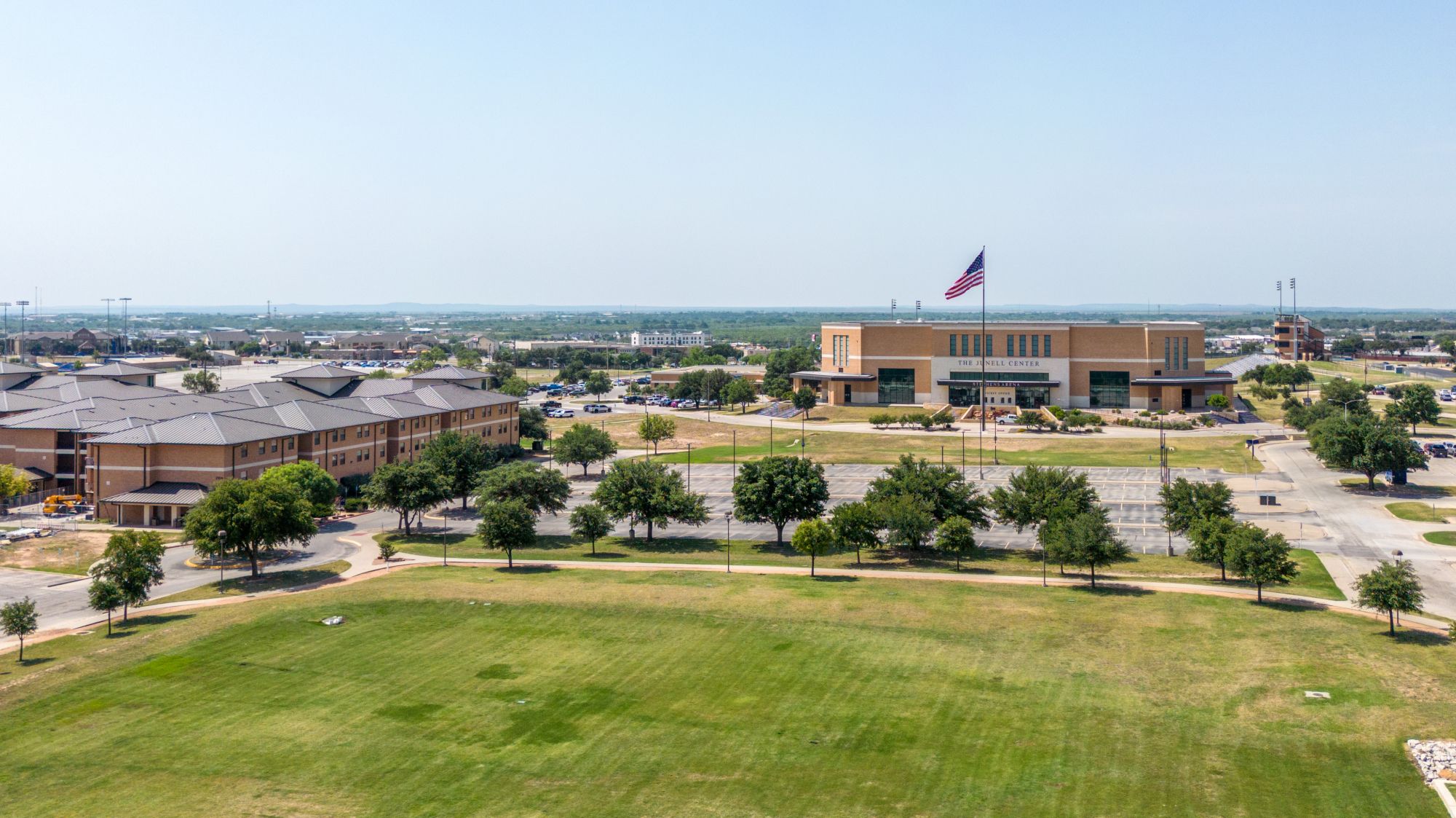
ASU is ranked #1 in Texas for affordability by College Consensus, awarded over $75.5 million in financial aid, and its flagship Distinguished Scholarship can provide up to $52,000 over four years — automatically considered at admission with no separate application needed. Here’s everything you need to know.
What Is Angelo State University?
Founded in 1928 as San Angelo College — a two-year institution established by the city of San Angelo — Angelo State University has grown from a small local college into the second-largest campus in the Texas Tech University System, serving over 11,500 students across undergraduate, graduate, and doctoral programs. The university received university status in 1967 and has expanded steadily since, adding programs in health sciences, business, engineering, and the arts while retaining the personalized education focus that defines smaller Texas public universities.
ASU operates from a 268-acre campus at 2601 West Avenue N in San Angelo — a West Texas city of about 100,000 people that serves as the commercial and healthcare hub for a large surrounding region. San Angelo is known for its outdoor recreation (Concho River, lake access, state parks), mild climate, and low cost of living — factors that make it a practical and comfortable location for students managing budgets carefully.
As a member of the Texas Tech University System, ASU benefits from system-wide resources, research infrastructure, and employer networks while maintaining the smaller campus scale that produces the 19:1 student-to-faculty ratio and personal faculty relationships ASU is known for. The university is designated as a Hispanic-Serving Institution (HSI), reflecting its commitment to serving the diverse communities of West Texas and beyond.
ASU is fully accredited by SACSCOC, with additional program-level accreditations in nursing, business, education, physical therapy, and other professional fields.
Angelo State University at a Glance — Key Facts
| Detail | Information |
|---|---|
| Founded | 1928 (as San Angelo College) |
| Location | San Angelo, Texas (268-acre campus) |
| University System | Texas Tech University System |
| Type | Public University — Hispanic-Serving Institution (HSI) |
| Total Enrollment | 11,542 students |
| Online Students | 2,302 (fully online) |
| Acceptance Rate | ~79–83% |
| Average Admitted GPA | 3.70 |
| Median SAT Score | 1,030 |
| Median ACT Score | 21 |
| Student-to-Faculty Ratio | 19:1 |
| Faculty Members | 441 full-time |
| Campus Size | 268 acres |
| In-State Tuition | $8,460/year |
| Out-of-State Tuition | $18,300/year |
| Graduate In-State | $7,509/year |
| Graduate Out-of-State | $14,889/year |
| Avg Net Price (need-based) | ~$12,255–$14,244/year |
| Total Financial Aid Awarded | $75.5 million+ |
| US News Ranking | #72 Regional Universities West |
| Texas Affordability Rank | #1 in Texas (College Consensus) |
| Athletics | NCAA Division II, Lone Star Conference |
| Mascot | Rammy the Ram (Blue and Gold) |
| Accreditation | SACSCOC + multiple program accreditations |
| Website | angelo.edu |
Programs and Colleges at ASU
Angelo State offers 96 academic programs, including 48 undergraduate majors, 36 master’s programs, and a doctoral program (Doctor of Physical Therapy), organized across six colleges:
- College of Arts and Sciences — Biology, Chemistry, Physics, Mathematics, English, History, Political Science, Psychology, Sociology, Modern Languages, Music, Theatre, Communication
- College of Business — Business Administration (BBA), Accounting, Finance, Management, Marketing, International Business; MBA program available
- College of Education — Teacher certification tracks, Educational Leadership, Kinesiology, Physical Education
- College of Health and Human Services — Nursing (BSN), Health Science Professions, Social Work, Physical Therapy (doctoral), Exercise Science
- College of Sciences — Agricultural Sciences, Animal Science, Environmental Science, Geology
- College of Graduate Studies and Research
Standout Programs
Agriculture and Animal Science are ASU’s most distinctive programs — rooted in the ranching and agricultural economy of West Texas. The university’s animal science program gives students hands-on access to working livestock operations in the surrounding region, and graduates enter one of the most agriculture-intensive job markets in the country. ASU’s Rodeo team is active and competitive, reflecting the deep cultural connection between the university and West Texas ranch life.
Nursing (BSN) is consistently among ASU’s most enrolled programs. The nursing program serves a regional healthcare market with significant demand — San Angelo is the healthcare hub for a large surrounding rural area, and ASU nursing graduates have immediate pathways into the Shannon Medical Center and other regional healthcare employers.
Doctor of Physical Therapy (DPT) is ASU’s only doctoral program and one of its most prestigious offerings. Graduating physical therapists who serve the healthcare-underserved communities of West Texas and beyond. Entry to the DPT program is competitive and requires a completed undergraduate degree before application.
Business Administration and the MBA program serve students entering the West Texas business, energy, and agricultural economy. The BBA in International Business is particularly popular among international students, and the MBA is available in both on-campus and online formats.
Online Programs — ASU offers 30 fully online programs, making it accessible for working professionals and students who cannot relocate to San Angelo. Online enrollment accounts for 2,302 of ASU’s 11,542 students — a significant and growing portion of the university’s reach.
ASU Tuition and Cost of Attendance
| Student Type | Tuition & Fees | Total COA (Est.) |
|---|---|---|
| Texas Residents | $8,460/year | ~$22,000–$24,000/year |
| Out-of-State (U.S.) | $18,300/year | ~$32,000–$34,000/year |
| International Students | ~$21,910/year | ~$34,000–$36,000/year (est.) |
Graduate Tuition
| Student Type | Tuition & Fees |
|---|---|
| Texas Residents | $7,509/year |
| Out-of-State / International | $14,889/year |
Cost of Living in San Angelo
San Angelo is one of the most affordable mid-sized cities in Texas. On-campus housing options include Concho Hall, Texan Hall, Massie Halls, Plaza Verde, and the Vanderventer Apartments, with costs varying by room type. A single room with a standard meal plan runs approximately $7,090 per semester.
Off-campus apartments in San Angelo typically rent for $600–$850/month, and general living costs are well below the Texas state average. For students maximizing value per dollar, San Angelo’s cost of living is a genuine advantage.
Financial Aid Overview
ASU’s commitment to affordability is backed by real numbers:
- 9 out of 10 ASU students receive some form of financial aid
- Total financial aid awarded: $75.5 million+.
- 89% of full-time students receive local or institutional grants averaging $6,792
- Average net price after aid: $12,255–$14,244/year
- Average total aid package per student: $21,456
- ASU ranked #1 in Texas for affordability by College Consensus
ASU Scholarships — Up to $52,000 Over 4 Years
ASU Distinguished Scholarship — Automatic, Up to $52,000 Total
The Distinguished Scholarship is ASU’s flagship merit award — and one of the most generous automatic scholarship programs at any Texas public university. Key facts:
- Automatic consideration — every admitted student is automatically reviewed based on academic performance. No separate scholarship application is required for this award.
- Awards are tiered based on GPA, class rank, and (optionally) ACT/SAT scores.
- Maximum award: $52,000 over four years for the highest-achieving students.
- Renewable annually with continued academic performance and full-time enrollment.
- Both Texas residents and out-of-state students are eligible.
Students who want to maximize their Distinguished Scholarship tier should submit SAT or ACT scores even though ASU is test-optional — scores can move you into a higher scholarship bracket. The strongest applicants with ACT 25+ or SAT 1200+ and top-quartile class rank have the best chance at the highest Distinguished Scholarship tiers.
350+ Scholarships — One Application
Beyond the Distinguished Scholarship, ASU offers access to over 350 different scholarship programs through a single application. Key details:
- Application available in RamPort (ASU’s student portal) starting October 1 each year
- Priority deadline: January 15
- Applications after January 15 are still reviewed for remaining funds — always submit even after the priority date
- Many scholarships require FAFSA — submit FAFSA annually to maintain eligibility
- Scholarships span all academic departments, merit levels, and financial need levels
- Departmental scholarships include awards for biology, kinesiology, music, modern languages, animal science, and many others
- Awards are automatically accepted once offered — students receive notifications to their angelo.edu email
Competitive Scholarship Tuition Waiver
Like all Texas public universities, ASU allows non-resident students (domestic and international) who receive a competitive scholarship of $1,000 or more to pay Texas in-state tuition rates instead of out-of-state rates. Given ASU’s $8,460 in-state rate, this waiver can save international students approximately $13,450/year. Combined with ASU’s merit scholarships, international students can potentially study at close to in-state cost — contact ASU’s Financial Aid Office to confirm eligibility and verify current waiver policy.
Good Neighbor Scholarship
ASU participates in the Texas Good Neighbor Scholarship — a state program providing a full non-resident tuition exemption to eligible students from Western Hemisphere countries (excluding Cuba and the U.S.) who plan to return to their home country after completing their degree. 235 awards are made statewide annually. Contact ASU’s International Office to discuss eligibility and the application process through the Texas Higher Education Coordinating Board.
Free Tuition for Qualifying Texas Residents
ASU offers a grant program covering free tuition for Texas resident students with significant demonstrated financial need (as determined by FAFSA). Students who qualify for the maximum Pell Grant and demonstrate high financial need may find their tuition effectively covered through a combination of federal grants, state grants, and ASU institutional aid. Contact the Financial Aid Office (financial.aid@angelo.edu | 325-942-2246) for a personalized estimate.
Athletic Scholarships
ASU competes at the NCAA Division II level in the Lone Star Conference. Athletic scholarships are available across all varsity sports — contact the specific coaching staff directly for scholarship availability and tryout information. Athletic awards are coordinated with the Financial Aid Office.
Military and Veteran Benefits
ASU’s VETS Center provides dedicated support for active duty military, veterans, and military dependents navigating education benefits. ASU accepts GI Bill (Chapter 33), MyCAA (military spouses), and other military education programs. Students with military education benefits receive priority advising to ensure maximum benefit utilization across all available programs.
ASU Acceptance Rate and Admission Requirements
Angelo State University has an acceptance rate of approximately 79–83% — making it broadly accessible. The average admitted student has a GPA of 3.70 and a median ACT of 21, reflecting a student body that is academically motivated rather than narrowly selective.
Undergraduate Requirements
- Apply via Common App or ASU’s online portal (angelo.edu)
- Application fee: check current amount at angelo.edu (fees vary)
- Test-optional — SAT/ACT not required for admission; submit voluntarily for Distinguished Scholarship tier consideration
- Official high school transcript
- English proficiency for international students: TOEFL, IELTS, Duolingo, or PTE (minimum scores listed at angelo.edu/international)
- Official Financial Statement Form + original bank statement or letter (international students)
- Rolling admissions — apply early for best scholarship consideration
- Contact: admissions@angelo.edu | 325-942-2041
Graduate Requirements
- Bachelor’s degree from an accredited institution
- Minimum undergraduate GPA (varies by program — check specific requirements)
- Official transcripts from all prior institutions
- GRE/GMAT scores (varies by program)
- Letters of recommendation
- Statement of purpose
- TOEFL or IELTS for international applicants
- Official Financial Statement Form + bank documentation (international students)
Key Scholarship Deadlines
| Date | Action |
|---|---|
| October 1 | Scholarship application opens in RamPort |
| January 15 | Priority scholarship deadline — apply by this date for maximum consideration |
| After Jan 15 | Still apply — remaining funds reviewed on a rolling basis |
| ASAP each year | Submit FAFSA — required for many scholarships and need-based grants |
Campus Life at ASU
The Ram Family Culture
ASU is known for a campus culture it calls the “Ram Family” — a genuine community identity shaped by the university’s size, West Texas roots, and emphasis on personal relationships between students and faculty. With 441 full-time faculty and 11,542 students, the 19:1 ratio means professors are accessible — and the university’s emphasis on undergraduate research gives students opportunities to work directly with doctoral-level faculty on research projects.
Alumni describe ASU’s education as “on par or superior” to larger, more prestigious universities — particularly in programs where hands-on learning and faculty mentorship matter more than institutional prestige. Multiple alumni reviews note that the quality of education and the strength of career preparation surprised them relative to ASU’s lower profile.
Campus Facilities
ASU’s 268-acre campus is modern and well-equipped despite its regional university size. Key facilities include:
- Houston Harte University Center — the social hub of campus, featuring dining, recreation areas, student meeting spaces, and fitness amenities
- New Student Recreation Center — climbing wall, free weights, modern exercise machines, studio fitness classes, indoor jogging track, intramural gym, and swimming pool
- ASU Planetarium — a genuine academic and public outreach resource for astronomy and physics students
- ASU Museum — fine arts and cultural collections integrated into campus academic life
- Porter Henderson Library — the main academic library with research databases, study spaces, and special collections
Student Organizations and Activities
ASU has over 100 registered student organizations and 20 intramural and club sports teams — a strong range for a university of its size. Cultural organizations, academic clubs, Greek life, faith-based groups, honor societies, and professional associations all operate actively on campus. The international student community is supported by dedicated organizations and cultural events throughout the academic year.
NCAA Division II Athletics
ASU’s Rams and Rambelles compete at the NCAA Division II level in the Lone Star Conference — the same conference as several other universities covered in this guide, including Midwestern State University and Sul Ross State University. Sports include football, basketball (men’s and women’s), baseball, softball, soccer, cross country, track and field, tennis, and golf. ASU athletics is competitive at the D2 level and provides student-athletes with opportunities to compete nationally without the intensity of Division I programs.
The rodeo program at ASU reflects the university’s West Texas identity — competitive at the NIRA (National Intercollegiate Rodeo Association) level and deeply embedded in the campus culture.
San Angelo — A Practical West Texas Base
San Angelo offers a genuine quality of life for students willing to embrace West Texas. The city features:
- Concho River Walk — a beautifully developed urban riverfront
- San Angelo State Park — hiking, camping, fishing, and mountain biking within the city
- Lake Nasworthy — boating, fishing, and water recreation minutes from campus
- San Angelo Museum of Fine Arts — one of the best regional art museums in West Texas
- A growing restaurant and cultural scene driven partly by the university’s presence
San Angelo Regional Airport (Mathis Field) provides connections to Dallas/Fort Worth and other Texas hubs, making travel manageable for out-of-state and international students.
Career Outcomes
The median salary for ASU graduates six years after enrollment is $41,050 — reflecting the salary profiles of the agriculture, education, healthcare, and public service careers that ASU’s programs primarily prepare students for. Health sciences, business, and nursing graduates typically earn above this median; education and arts graduates often earn below it.
ASU’s location in San Angelo — the healthcare, agricultural, and commercial hub for a vast surrounding region — creates local employment pathways that are direct and accessible for graduates who want to serve West Texas communities. For students with ambitions beyond the region, the Texas Tech University System affiliation and ASU’s academic credentials travel well across Texas and nationally.
For international students on F-1 visas, ASU supports Optional Practical Training (OPT) after graduation — 12 months for most graduates, up to 36 months for STEM degree holders. The International Office assists with I-20 issuance, visa advising, and OPT documentation.
How ASU Compares to Other Texas Universities
- For a larger Texas Tech System university with R1 research status and more programs, see Texas Tech University in Lubbock.
- For a comparable small public university in North Texas with a COPLAC liberal arts designation, see Midwestern State University in Wichita Falls.
- For the lowest in-state tuition of any university in this guide in a dramatic West Texas setting, see Sul Ross State University in Alpine.
- For a private faith-based option in West Texas with full-tuition scholarship potential, see Lubbock Christian University in Lubbock.
- For a full comparison of Texas university scholarship options, see Texas Universities with Full Scholarships.
Is ASU Right for You?
Angelo State University is a strong fit if you:
- Want genuinely affordable public university tuition — $8,460/year in-state, ranked #1 for affordability in Texas
- Are you pursuing agriculture, animal science, nursing, business, education, physical therapy, or kinesiology
- Want a Distinguished Scholarship that can provide up to $52,000 over four years — automatic consideration at admission
- Value a close-knit Ram Family campus culture with direct faculty access and undergraduate research opportunities
- Want access to 350+ scholarships through a single annual application
- Are a Texas resident with significant financial need who may qualify for free tuition through grant programs
ASU may not be ideal if you need a large research university environment, want access to a major metro job market daily, require programs not in ASU’s 96-program catalog, or prefer a highly urban campus setting. The 30% four-year graduation rate is below average — a figure that reflects both the working-student population and the financial challenges some students face, rather than solely academic difficulty.
How to Apply to Angelo State University
- Apply via Common App or angelo.edu — rolling admissions, apply early for scholarship priority
- Submit an official high school transcript showing GPA and class rank
- Submit ACT or SAT scores voluntarily if you scored well — boosts Distinguished Scholarship tier consideration
- Submit English proficiency scores (TOEFL, IELTS, Duolingo, or PTE) for international applicants
- Submit Official Financial Statement Form + bank documentation (international students)
- Log into RamPort starting October 1 and complete the General Scholarship Application by January 15 for priority consideration
- File FAFSA annually — required for many ASU scholarships and all need-based grants
- Contact the Financial Aid Office for a personalized aid estimate: financial.aid@angelo.edu | 325-942-2246
- Receive your I-20 from the International Office once admitted, and begin the F-1 visa application
Final Thoughts
Angelo State University delivers exactly what it promises: a quality public university education at a price point that doesn’t require decades of loan repayment to justify.
The $8,460 in-state tuition, combined with the Distinguished Scholarship’s potential $52,000 over four years, the Good Neighbor waiver for qualifying international students, and the $75.5 million annual financial aid investment, makes ASU one of the most financially accessible universities in the Texas Tech System — and the most affordable public university in Texas by College Consensus’s reckoning. For students pursuing agriculture, nursing, business, education, or physical therapy in a personalized, West Texas community setting, ASU consistently over-delivers relative to its cost.
For current tuition, scholarship details, and application requirements, visit angelo.edu directly.
Have questions about Angelo State University or comparing it with other Texas options? Drop them in the comments below.
Leave a Reply