Texas vs California Universities: The two most popular U.S. states for international students are California and Texas — and the choice between them is one of the most consequential decisions a student can make. California enrolls ~140,000 international students annually.
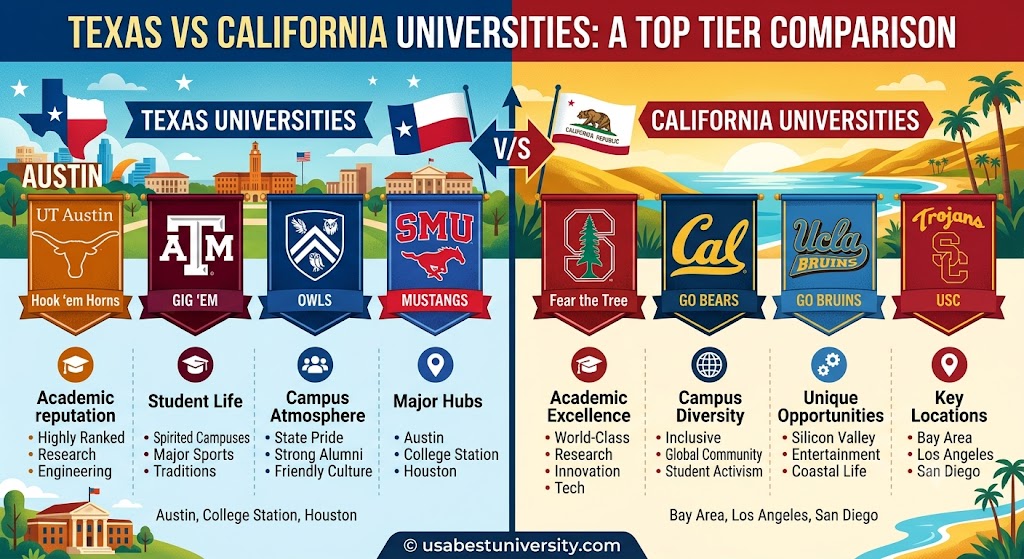
Texas enrolls ~85,000+. Both have world-class research universities. Both have thriving job markets. Both offer STEM OPT pathways. But they are fundamentally different propositions — in cost, culture, career sector, and the daily experience of being an international student.
This guide gives you the honest comparison that most university comparison articles avoid: not which state has better rankings, but which one actually gives you a better return on your time, money, and immigration pathway.
Quick Comparison — Texas vs California for International Students 2026
| Factor | Texas | California |
|---|---|---|
| Total Annual Cost (avg intl student) | $35,000–$60,000/yr | $72,000–$105,000/yr |
| State Income Tax | 0% | Up to 13.3% |
| Avg Rent (near major university) | $800–$1,400/month | $2,000–$4,500/month |
| Top Public University Rank | UT Austin (#30 nationally) | UC Berkeley (#1 public) |
| Top Private University Rank | Rice (#17 nationally) | Stanford (#6 nationally) |
| Public University Intl Tuition | $20,000–$48,000/yr | $48,000–$68,000/yr (UCs) |
| Scholarship Accessibility | More accessible (competitive waivers) | Limited for international students |
| Tech Job Market | Austin + DFW growing | Bay Area + LA strongest |
| Energy Job Market | Houston = world #1 | Smaller |
| Cost of Living vs National Avg | 10-15% below average | 30-50% above average |
| Indian Community | DFW = #3 metro US | Bay Area = #1 metro US |
| Direct Flights to India | DFW, Houston (direct) | Bay Area, LA (direct) |
| STEM OPT Access | ✅ 36 months | ✅ 36 months |
| H-1B Cap Gap Exposure | Same as California | Same as Texas |
| Weather | Hot summers, mild winters | Mild (Bay Area), hot (LA/inland) |
1. Cost — Texas Wins by a Large Margin
This is the most significant difference between studying in Texas and California — and it is not close.
Tuition Comparison
| University | State | Intl Tuition/yr (2026) |
|---|---|---|
| UT Austin | Texas | ~$40,582–$48,712 |
| Texas A&M | Texas | ~$40,124–$58,976 |
| UNT (with scholarship) | Texas | ~$13,506 |
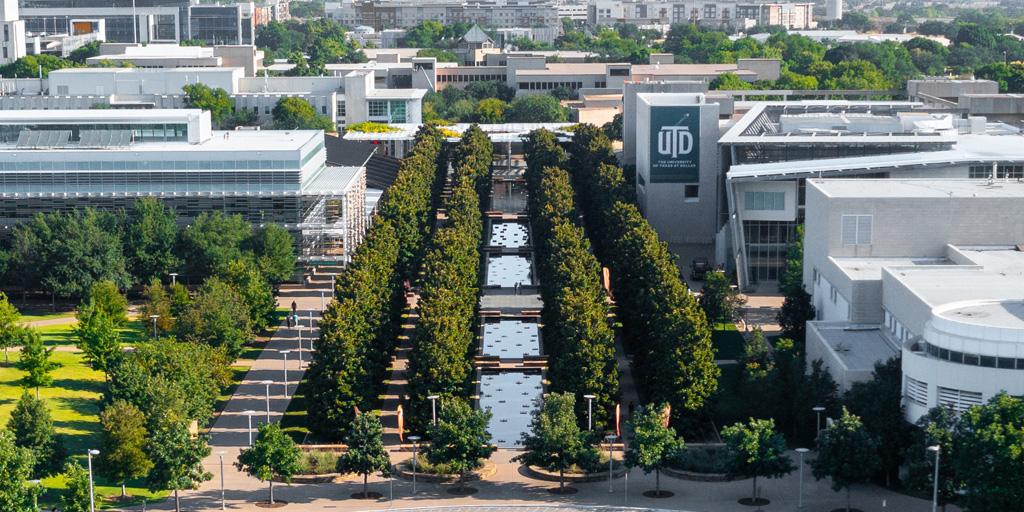
| UT Dallas (with AES) | Texas | ~$14,644 |
| UC Berkeley | California | ~$48,000 |
| UCLA | California | ~$48,000 |
| UC San Diego | California | ~$47,000 |
| UC Davis | California | ~$44,000 |
| Stanford University | California | ~$62,000+ |
| USC (Viterbi/Marshall) | California | ~$69,000 |
| CSU Campuses | California | ~$17,000–$19,000 |
Key insight: California’s tuition and living costs are nearly 40–50% higher than Texas. At the flagship public university level (UT Austin vs UC Berkeley), tuition is roughly comparable — but living costs are where the real gap opens up.
Living Cost Comparison
| City | State | Monthly Rent (1BR near campus) | Monthly Total Living |
|---|---|---|---|
| Austin (UT Austin) | Texas | $1,200–$1,600 | $1,800–$2,200 |
| College Station (TAMU) | Texas | $800–$1,100 | $1,400–$1,800 |
| Richardson/Denton ( UTD/UNT) | Texas | $800–$1,200 | $1,400–$1,800 |
| Houston (UH) | Texas | $900–$1,400 | $1,500–$2,000 |
| Berkeley (UC Berkeley) | California | $2,500–$4,000 | $3,500–$5,000 |
| Los Angeles (UCLA/USC) | California | $2,000–$3,500 | $3,000–$4,500 |
| San Diego (UCSD) | California | $2,000–$3,200 | $2,800–$4,000 |
| Davis (UC Davis) | California | $1,500–$2,500 | $2,200–$3,200 |
It costs $72,000 to $105,000 per year to study in California as an international student in 2026. This includes $52,000–$68,000 for tuition at UC campuses and $24,000–$40,000 for living expenses. San Francisco and Berkeley are most expensive ($3,000–$4,500/month for rent), while Davis offers the best value among UC locations.
The real-world difference: a 2-year MS degree in Texas (at UTD with AES scholarship) can cost approximately ₹50–60 lakhs total. The same degree at UC Berkeley costs approximately ₹140–180 lakhs. That is a difference of ₹80–120 lakhs — which, for most Indian families, represents the difference between self-funding and taking substantial loans.
State Income Tax — A Hidden Texas Advantage
Texas has zero state income tax. California has a state income tax of up to 13.3% — the highest in the United States. On a $100,000 annual salary during OPT or post-graduation employment, this difference translates to approximately $5,000–$7,000 in additional take-home pay per year in Texas. Over a 3-year STEM OPT period, that’s $15,000–$21,000 in additional earnings — equivalent to reducing the effective cost of a Texas education by that amount compared to California.
2. University Rankings — California Has More Elite Institutions
On pure rankings, California wins — and it’s not particularly close at the very top.
| University | State | US News 2026 Rank | QS World 2026 |
|---|---|---|---|
| Stanford University | California | #6 | #5 |
| Caltech | California | #9 | #15 |
| UC Berkeley | California | #30 (tied) | #12 |
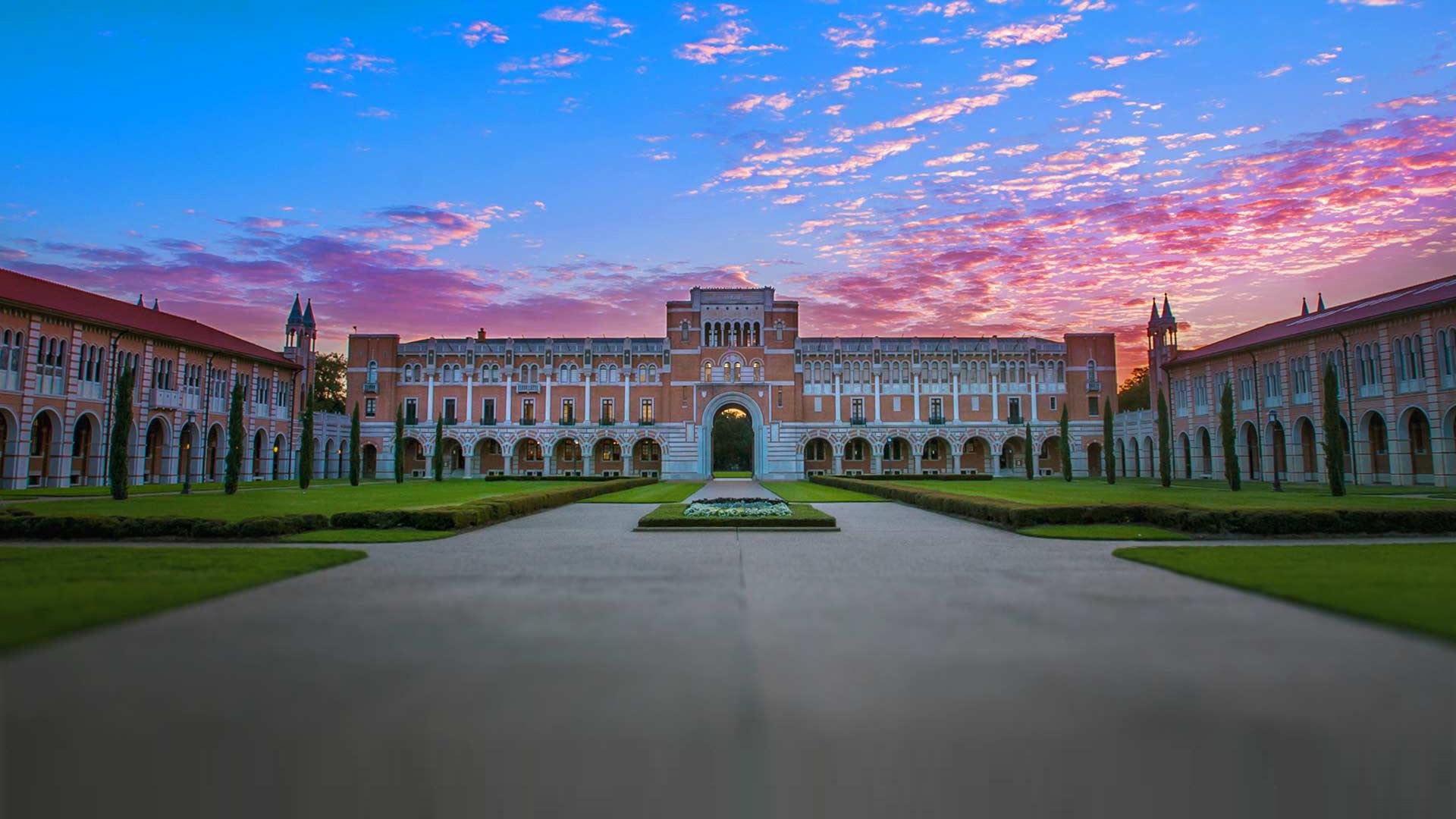
| Rice University | Texas | #17 | #122 |
| UCLA | California | #26 | #44 |
| UC San Diego | California | #34 | #67 |
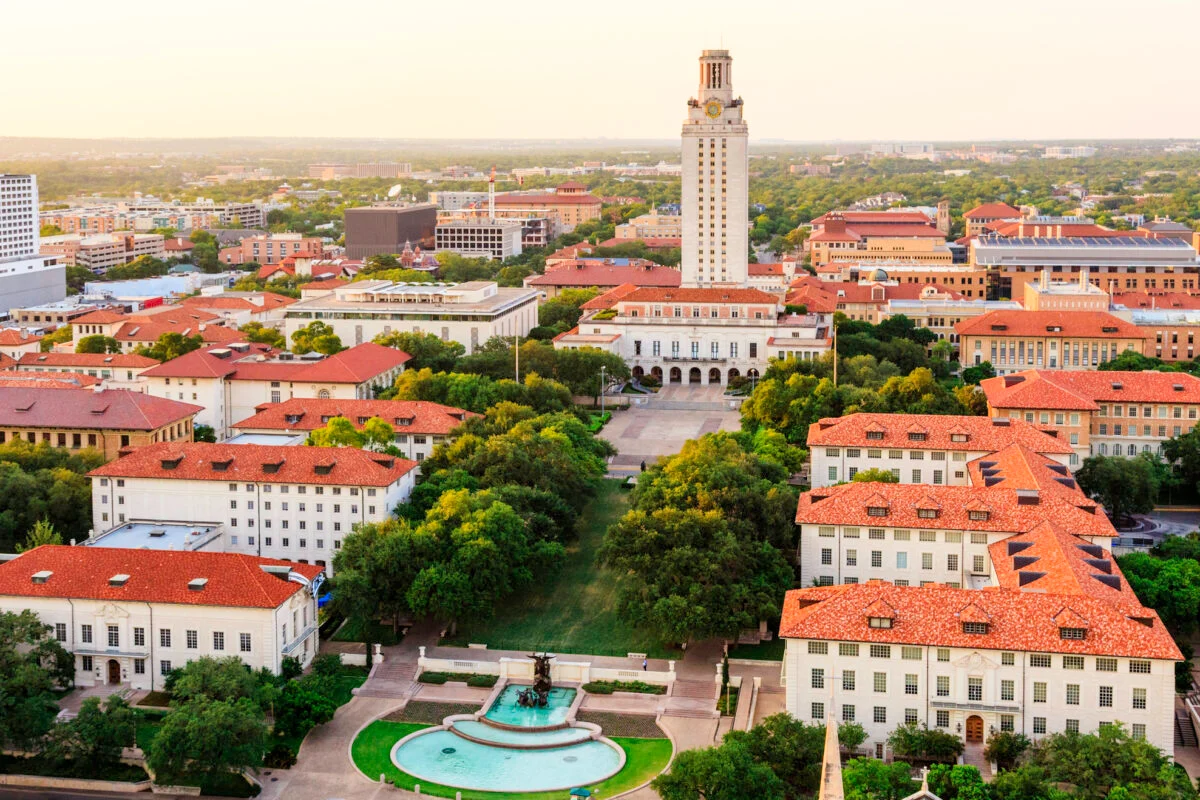
| UT Austin | Texas | #30 (tied) | #67 |
| USC | California | #27 | #120 |
| SMU | Texas | #61 | — |
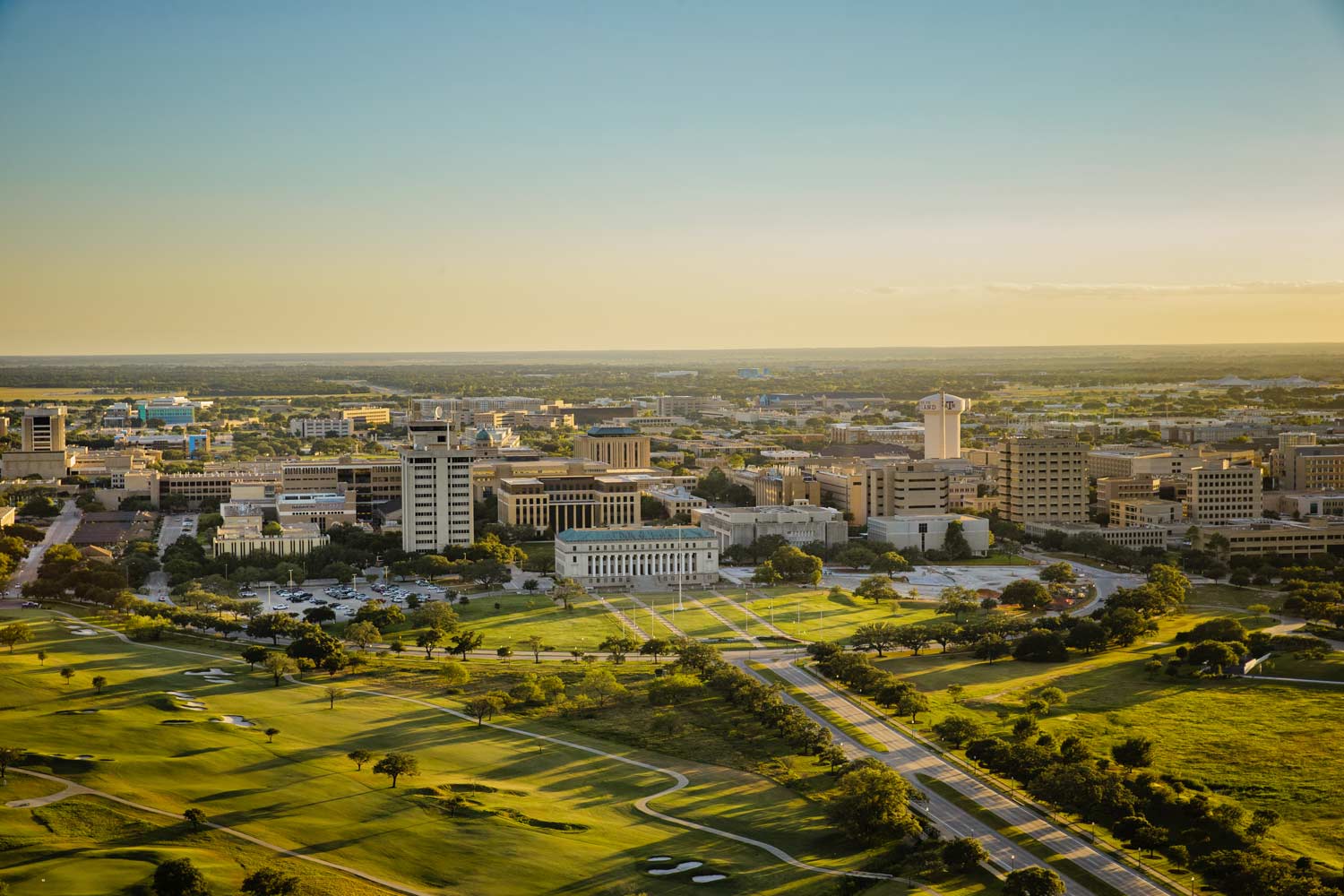
| Texas A&M | Texas | #51 | #169 |
| UC Davis | California | #38 | #148 |
| UC Santa Barbara | California | #32 | #158 |
| Baylor University | Texas | #91 | — |
| University of Houston | Texas | #144 | ~#600 |
California has Stanford (#6), Caltech (#9), UCLA (#26), USC (#27), UC Santa Barbara (#32), UC San Diego (#34), and UC Davis (#38) — all in the national top 40. Texas’s highest-ranked university is Rice (#17), followed by UT Austin (#30). Below the top 30, Texas and California are more comparable.
The key question: Does the ranking gap justify the cost gap? For most students — especially at the graduate level — the answer is no. A master’s degree from UT Austin or Texas A&M is recognized and respected globally. The marginal prestige difference between UT Austin (#30) and UC Berkeley (#30) is essentially zero — they’re tied. And the cost difference between them is enormous once living costs are factored in.
3. Job Market — Different Strengths
California’s Tech Advantage
California’s job market — particularly the San Francisco Bay Area — is the strongest technology job market in the world. Silicon Valley, where Google, Apple, Meta, Netflix, Nvidia, Salesforce, and hundreds of high-growth startups are headquartered, is simply not replicated anywhere else in the country, including Texas. For students targeting roles at the world’s biggest tech companies immediately after graduation, proximity to the Bay Area is a genuine advantage.
Los Angeles adds entertainment, fashion, and a growing tech sector. San Diego has a strong biotech industry. The breadth of California’s economy — technology, entertainment, agriculture, defense, finance — means more industries are represented in the state’s job market than in Texas.
Texas’s Specific Industry Strengths
Texas’s job market is deep in specific sectors that California cannot match:
- Energy (Houston) — ExxonMobil, Shell, Chevron, BP, Halliburton, Schlumberger. Houston is the undisputed energy capital of the world. No California city competes with it for petroleum engineering, chemical engineering, and energy management careers.s
- Technology (Austin + DFW) — Austin’s “Silicon Hills” has Apple, Dell, Oracle, Google, Meta, Tesla, Amazon, and hundreds of tech companies. DFW has AT&T, Texas Instruments, Samsung, Ericsson, Cisco, Nokia, and a growing fintech sector. The combined DFW + Austin tech market is substantial — though not as concentrated as the Bay Ar.ea
- Aerospace and Defense — Lockheed Martin (Fort Worth), Bell Textron (Fort Worth), NASA Johnson Space Center (Houston), Raytheon (McKinney). California has aerospace (SpaceX, Boeing), but Texas’s defense-aerospace cluster is among the strongest in the country.
- No State Income Tax — increasingly, California’s 13.3% state income tax rate is driving tech companies and employees to Texas. Austin and DFW have received major employer relocations from California in recent years (Tesla HQ to Austin, Oracle HQ to Austin, etc.)
Salary Comparison — Texas vs California Engineers and Tech Workers
| Role | Texas Avg Salary | California Avg Salary | After-Tax Difference |
|---|---|---|---|
| Software Engineer (entry) | ~$100,000 | ~$130,000 | CA higher gross, TX often higher net after tax + lower rent |
| Electrical Engineer | $117,680 | ~$125,000 | Similar net after CA taxes |
| Mechanical Engineer | $105,220 | ~$105,000 | TX marginally better after taxes |
| Petroleum Engineer | $130,000+ | Limited sector | TX clearly wins |
| Business Analyst | ~$85,000 | ~$100,000 | Similar net after CA taxes + COL |
California tech salaries are higher in absolute terms — but after California’s 9–13.3% state income tax and cost of living that runs 30–50% above the national average, the net financial advantage of California is smaller than raw salary numbers suggest. A $130,000 software engineering role in San Francisco with $3,500/month rent is financially comparable to a $100,000 role in Austin with $1,400/month rent — and the Austin employee pays zero state income tax.
4. Scholarship Accessibility — Texas Wins for International Students
This is one of the most underappreciated differences between the two states — and one of the most important for international students who need to manage costs.
California UC System — Very Limited International Scholarships
- UC campuses offer very limited merit scholarships for international students — most UC international scholarships are need-based grants, and international students are typically not eligible for state-funded aid.
- UC Berkeley, UCLA, and UC San Diego are explicitly need-aware for international applicants.
- Graduate TA/RA positions are available but competitive
- CSU campuses charge about $17,000–$19,000 in tuition and $15,000–$20,000 in living costs for international students — a more affordable option but lower-ranked than the UC system
Texas — Multiple Automatic Scholarship Pathways for International Students
- UT Dallas AES — Any level automatically qualifies international students for in-state tuition ($14,644/yr vs $40,000+). Apply by December 1, no separate application
- UNT Excellence Scholarship — Automatic consideration for all applicants by March 1; any tier unlocks in-state tuition ($13,506/yr)
- Texas A&M $4,000 Scholarship Waiver — $4,000 in competitive institutional scholarships unlocks in-state rates ($12,995/yr)
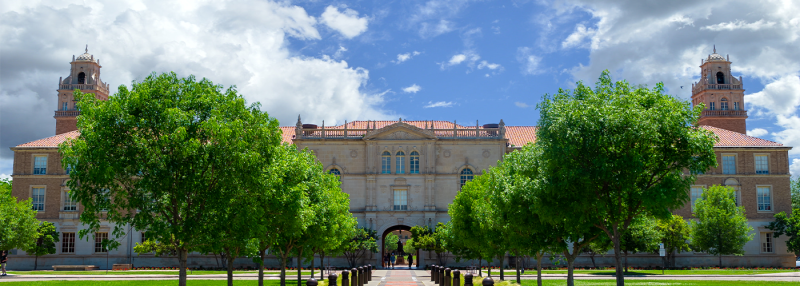
- Texas Tech Presidential Scholarship — Automatic consideration; unlocks in-state rate ($11,852/yr)
- Lamar University Graduate Waiver — Most international graduate engineering students receive automatic out-of-state waiver ($8,642/yr effective rate)
- Good Neighbor Scholarship — Available at all Texas public universities for qualifying Western Hemisphere nationals; covers full non-resident tuition premium
The difference is stark: at UT Dallas with AES, an international student pays $14,644/year in tuition. At UC Berkeley, an international student pays ~$48,000/year with very limited scholarship alternatives. For comparable program quality in CS or engineering, the Texas pathway is dramatically more accessible financially.
5. Indian and International Student Community — Both Strong, Different Locations
California
- Bay Area — the largest Indian-origin tech professional community in the world outside India. Silicon Valley has the highest concentration of Indian-American tech executives, founders, and professionals globally. Fremont, Milpitas, Sunnyvale, Santa Clara, and San Jose all have large Indian communities.s
- Los Angeles — significant Gujarati, Punjabi, and South Indian communities in Artesia, Cerritos, and Torrance
- Indian grocery stores, temples, and community organizations across the Bay Area and LA are extensive.
- California enrolls more international students than any other US state — roughly 140,000 across its universities and community colleges.
Texas
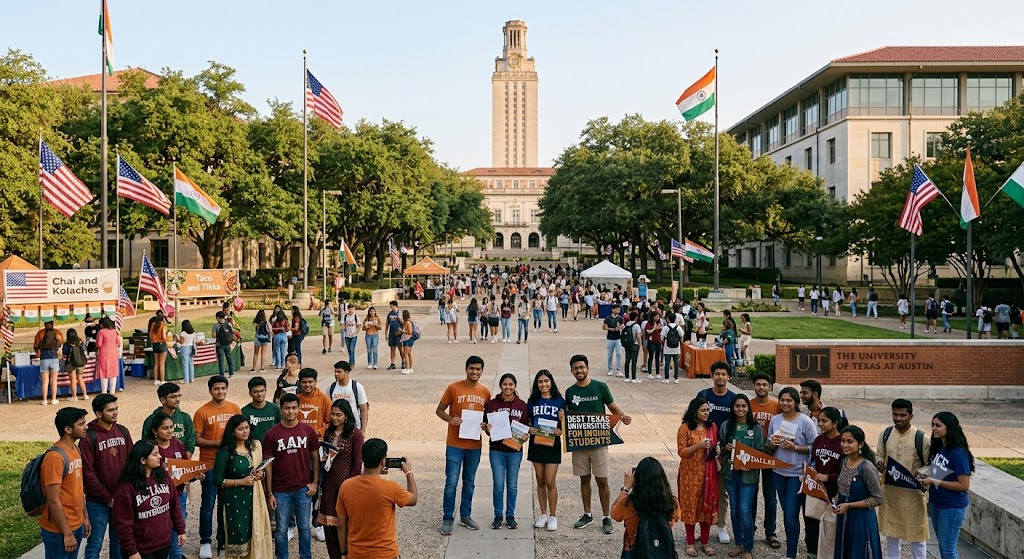
- DFW — the #3 U.S. metro for Indian-origin professionals, with Irving (called the “Telugu capital of America”), Plano, Richardson, and Frisco having major Indian communities. India Bazaar, Patel Brothers, TANTEX (Telugu Association of North Texas), and dozens of Indian cultural organizations are active.
- Houston — the second-largest Indian community in Texas; Southwest Houston’s Hillcroft Avenue “Little India” corridor; Sri Meenakshi Temple (Pearland) is one of the largest Hindu temples in the U.S.
- Austin — fastest-growing Indian community in Texas; Domain area; Austin Hindu Temple
For most Indian students, California’s Bay Area has the most established Indian community — but Texas’s DFW and Houston communities are large, growing rapidly, and surrounded by employers who actively recruit Indian-origin engineers and tech professionals.
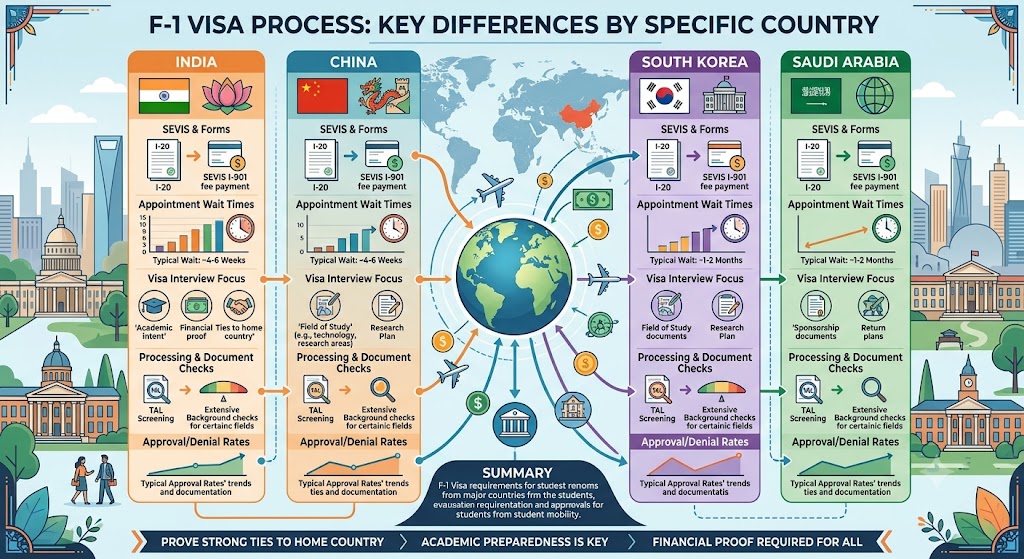
6. F-1 Visa and STEM OPT — Same Rules, Different Context
F-1 visa and STEM OPT rules are federal — they apply identically in Texas and California. The 36-month STEM OPT extension is available for qualifying programs at universities in both states. The H-1B cap gap extension works the same way in Austin and in San Francisco.
Where the states differ in the immigration context:
- Employer E-Verify for STEM OPT — most major California tech employers (Google, Apple, Meta, Nvidia) are E-Verify registered. Most major Texas employers (TI, Samsung, ExxonMobil, Dell, AT&T) are also E-Verify registered. No meaningful difference here
- H-1B sponsorship — California’s tech sector has historically sponsored more H-1B petitions in absolute numbers than Texas. However, Texas’s growing tech sector has dramatically increased H-1B sponsorship in recent years, and the per-employer concentration risk (so many students depending on a small number of Bay Area companies) has proven problematic in recent tech industry layoffs.s
- Post-OPT options — for Indian students facing 80+ year EB-2 backlogs, STEM OPT provides 3 years in either state. The O-1 and EB-1A pathways (not subject to per-country limits) are available regardless of state
For the complete F-1 visa process guide, see our F-1 Student Visa Guide for Texas Universities.
7. Quality of Life — A Genuine Tradeoff
| Factor | Texas | California |
|---|---|---|
| Weather | Hot summers (100°F+), mild winters; no snow in most cities | Mild year-round (Bay Area); hot inland; beach access in LA/SD |
| Natural Environment | Hill Country, Big Bend, Gulf Coast beaches | Beaches, mountains, Yosemite, Napa Valley |
| Food Diversity | Strong Tex-Mex, BBQ; growing international food scene | World-class culinary diversity; farm-to-table culture |
| Urban Life | Austin (music scene), Houston (cultural diversity), Dallas (arts) | San Francisco, LA — among the world’s most culturally rich cities |
| Car Dependency | High — most Texas cities require a car | High outside SF; BART and Muni in Bay Area are useful |
| Political Environment | Conservative-leaning state; some social policy differences | Progressive-leaning state |
| Natural Disasters | Hurricanes (Gulf Coast), occasional tornadoes, winter storms | Earthquakes, wildfires, droughts |
| Sports Culture | College football dominant; Cowboys, Texans, Rockets, Spurs | Lakers, Warriors, Dodgers, Giants; strong college basketball |
Head-to-Head: Texas vs California at the Same Level
UT Austin vs UC Berkeley — Public Flagship Comparison
| Factor | UT Austin | UC Berkeley |
|---|---|---|
| US News Rank | #30 (tied) | #30 (tied) |
| QS World Rank (2026) | #67 | #12 |
| International Tuition | ~$40,582–$48,712 | ~$48,000 |
| Housing (monthly near campus) | $1,200–$1,600 | $2,500–$4,000 |
| Acceptance Rate (intl) | ~11.76% | ~9% (overall) |
| Engineering Rank | Top 10 public | Top 3 nationally |
| CS Rank | Top 15 | Top 3 nationally |
| Business School | McCombs (#18 MBA) | Haas (#7 MBA) |
| Total 2-yr MS Cost (est.) | ~$120,000–$140,000 | ~$175,000–$220,000 |
Texas A&M vs UCLA — Large Public Research University
| Factor | Texas A&M | UCLA |
|---|---|---|
| US News Rank | #51 | #26 |
| International Tuition | ~$40,124 (before waiver) | ~$48,000 |
| Engineering Graduate Rank | #9 public / #15 overall | Top 15 overall |
| Acceptance Rate | ~57% | ~9% |
| Total 2-yr MS Cost (est.) | ~$100,000–$120,000 | ~$175,000–$210,000 |
UTD vs UC San Diego — Tech-Focused Public University
| Factor | UT Dallas (UTD) | UC San Diego (UCSD) |
|---|---|---|
| US News Rank | #229 | #34 |
| International Tuition (with scholarship) | ~$14,644/yr (with AES) | ~$47,000/yr |
| Total 2-yr MS Cost (with AES) | ~$55,000–$65,000 | ~$175,000–$200,000 |
| Industry Access | DFW Telecom Corridor | San Diego Biotech + Qualcomm |
| Acceptance Rate | ~65% | ~24% |
At comparable funding levels, Texas’s cost advantage becomes even more dramatic at the second-tier level. UTD with the AES scholarship costs approximately ₹55–65 lakhs for a 2-year MS degree total. UCSD costs approximately ₹175–200 lakhs. For a student borrowing to fund their education, that difference can mean the difference between manageable debt and financially crippling debt load.
Who Should Choose Texas?
Texas is the better choice if you:
- Are primarily motivated by cost and financial return on investment — Texas wins decisively on this dimension
- Are pursuing engineering, petroleum, chemical, or energy careers — Texas’s industry access is unmatched globally
- Want access to scholarship mechanisms that reduce international tuition to $8,000–$15,000/year — these are more accessible and more numerous than comparable California options.
- Want no state income tax on your OPT or post-graduation salary
- Are an Indian student from Andhra Pradesh or Telangana — DFW has the largest Telugu community outside India, and Irving is literally called the “Telugu capital of America”
- Are targeting careers in aerospace, defense, or DFW tech companies
- Have a budget for total annual expenses under ₹50–60 lakhs/year with scholarship support
Who Should Choose California?
California is the better choice if you:
- Are targeting the world’s top technology companies — Google, Apple, Meta, Nvidia, Salesforce — where Bay Area proximity and UC/Stanford alumni networks create a genuine advantage
- Want access to the highest-ranked universities in the United States — Stanford (#6), Caltech (#9), UC Berkeley (#12 globally) are not replicated in Texas
- Are pursuing film, entertainment, or media careers — Los Angeles is the only real answer.r
- Are targeting biotech and life sciences — San Diego’s biotech cluster and the Bay Area’s biotech ecosystem are among the strongest in the world
- Can fund a total annual cost of $72,000–$105,000/year without it creating an unmanageable financial situation
- Have been admitted to Stanford, Caltech, or a top UC campus where the prestige differential justifies the cost premium
The Honest Bottom Line
For the median international student choosing between Texas and California, Texas is the financially rational choice. The cost differential — $35,000–$60,000/year in Texas versus $72,000–$105,000/year in California — represents a gap of $37,000–$65,000 per year. Over a 2-year MS program, that’s $74,000–$130,000 in additional costs for a California education. For most students — particularly those self-funding or taking education loans — that is a difference that shapes their financial lives for years after graduation.
The exception is for students who gain admission to Stanford, UC Berkeley’s top programs, or Caltech — where the prestige premium, alumni network, and Silicon Valley proximity may genuinely justify the additional cost for careers targeting the world’s top technology companies. But for the vast majority of international students comparing UT Austin, Texas A&M, or UT Dallas against UC San Diego, UC Davis, or Cal State campuses, Texas wins on value by a wide margin.
For the full guides on Texas universities, see:
- 10 Cheapest Texas Universities for International Students
- Texas Universities with Full Scholarships
- Best Texas Universities for Indian Students 2026–27
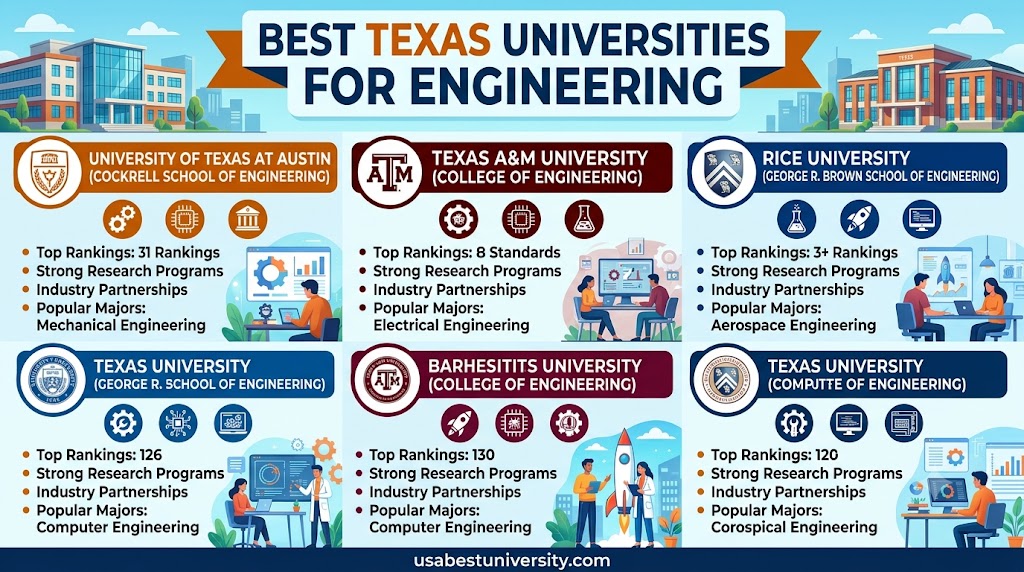
- Best Texas Universities for Engineering 2026
- F-1 Student Visa Guide for Texas Universities
Are you deciding between Texas and California for your studies? Tell us your program, budget, and career goals in the comments — we’ll give you our honest take.