Best Universities In USA

  • Home
  • About Us
  • Contact Us
  • Privacy Policy
  • Disclaimer
  • USA University

University of Texas at Dallas (UTD) – Programs & Admissions 2026

July 20, 2026 Leave a Comment

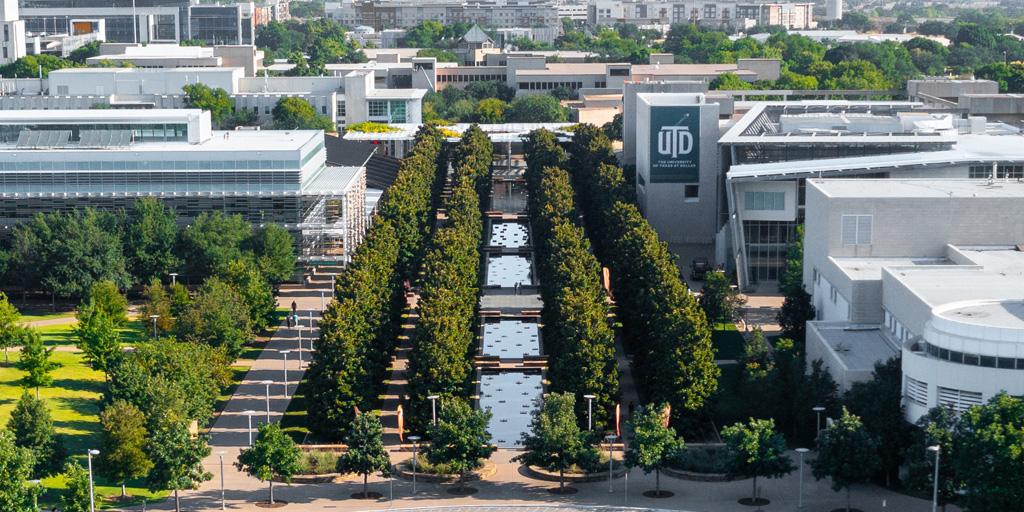
The University of Texas at Dallas (UTD / UT Dallas) is a public R1 research university in Richardson, Texas — part of the UT System — with 29,886 students from 150+ countries, a 65% acceptance rate, and in-state tuition of $14,644/year.

UTD is ranked #3 Best Public University in Texas by US News and #1 in Texas for international students (IIE Open Doors). The Academic Excellence Scholarship (AES) — automatically considered at admission — unlocks Texas in-state tuition rates for ANY non-resident recipient.

University of Texas at Dallas

The Eugene McDermott Scholars Program is a full-ride covering tuition, housing, meals, and up to $15,000 for study abroad — open to international students. Here’s everything you need to know.

What Is the University of Texas at Dallas?

UT Dallas has one of the most unusual origin stories of any major American research university. It was founded in 1961 as a private research arm of Texas Instruments — the semiconductor company that co-invented the integrated circuit and helped launch the modern electronics industry. The facility, originally called the Graduate Research Center of the Southwest, was established by Texas Instruments founders Erik Jonsson, Cecil Green, and Eugene McDermott specifically to advance scientific research in North Texas. It became part of the University of Texas System in 1969, opening its doors to undergraduate students for the first time.

That founding DNA — industry-connected, research-first, engineering-focused — still shapes UTD’s identity today. The university is strategically embedded in the Dallas–Fort Worth technology corridor, surrounded by the headquarters or major operations of AT&T, Cisco, Ericsson, Samsung, Fujitsu, Texas Instruments, and dozens of other technology companies. Students at UTD are not studying technology in isolation — they’re studying in a region that is actively building it.

UTD is classified as an R1 Doctoral University — Highest Research Activity by the Carnegie Classification. It is the largest public university in the Dallas area and the northernmost institution of the University of Texas System. The university offers more than 160 academic programs at undergraduate, graduate, and doctoral levels across seven schools.

UTD is fully accredited by SACSCOC, with AACSB (Naveen Jindal School of Management), ABET (Engineering and Computer Science), and other professional program accreditations.

University of Texas at Dallas at a Glance — Key Facts

DetailInformation
 Founded 1961 (as research arm of Texas Instruments); undergraduate students from 1969
 Location Richardson, Texas (800 W. Campbell Road)
 University System University of Texas System
 Type Public R1 Research University
 Total Enrollment 29,886 students (Fall)
 Undergraduate ~73% of enrollment (~21,800 students)
 Graduate ~27% of enrollment (~8,100 students)
 International Students 4,500+ from 150+ countries
 Indian Students Large community — Richardson has major Indian presence
 Acceptance Rate ~65%
 Median SAT Score 1,280
 Median ACT Score 28
 Student-to-Faculty Ratio 23:1
 In-State Tuition $14,644/year
 Out-of-State Tuition $40,144/year
 International Tuition ~$40,000–$41,000/year
 Avg Financial Aid (recipients) $12,626 (62% of undergrads receive aid)
 US News Ranking (2026) #229 National Universities; #3 Public in Texas
 International Students Rank #1 in Texas (IIE Open Doors)
 Annual Internships 4,300+ students placed annually
 Student Organizations 400+
 Nobel Prize Alumni Aziz Sancar, Ph.D. — Nobel Prize in Chemistry (2015, for DNA repair mechanisms)
 Athletics NCAA Division III, American Southwest Conference
 Mascot Temoc the Comet
 Accreditation SACSCOC, AACSB, ABET
 Website utdallas.edu

Programs and Schools at UT Dallas

UTD offers over 160 academic programs across seven schools — a focused catalog built around the university’s core strengths in technology, business, and science:

  1. Erik Jonsson School of Engineering and Computer Science (ABET) — Computer Science, Electrical Engineering, Computer Engineering, Software Engineering, Mechanical Engineering, Biomedical Engineering, Materials Science; UTD’s most enrolled and most nationally recognized school
  2. Naveen Jindal School of Management (AACSB) — BBA, MBA, MS in Business Analytics, MS in Finance, MS in Information Technology Management, MS in Healthcare Management; AACSB-accredited
  3. School of Natural Sciences and Mathematics — Biology, Chemistry, Physics, Mathematics, Biochemistry, Neuroscience
  4. School of Behavioral and Brain Sciences — Psychology, Neuroscience, Criminology, Communication Sciences and Disorders, Human Development and Early Childhood
  5. School of Arts, Technology, and Emerging Communication (ATEC) — Unique interdisciplinary school combining arts, design, animation, game development, and emerging technology — one of UTD’s most distinctive offerings
  6. School of Economic, Political and Policy Sciences — Economics, Political Science, Public Policy, Sociology, Criminology, International Political Economy
  7. School of Interdisciplinary Studies (Hobson Wildenthal Honors College) — Interdisciplinary bachelor’s degree programs and the Collegium V honors track

Most Popular Programs for International Students

UTD’s most in-demand programs — particularly for international graduate students — reflect the university’s tech and business strengths:

  • MS in Computer Science — UTD’s most enrolled graduate program; strong industry connections to the DFW tech corridor
  • MS in Business Analytics — leveraging Jindal School’s AACSB credentials and DFW’s data-driven industries
  • MS in Information Technology Management — practical IT management skills for the tech sector
  • MBA (Naveen Jindal) — full-time and online formats; AACSB-accredited; DFW corporate recruiting access
  • MS in Electrical Engineering — supported by Samsung, Texas Instruments, and Ericsson nearby
  • MS in Finance — strong placement into DFW financial services firms
  • MS in Healthcare Management — growing program tied to DFW’s expanding healthcare sector

ATEC — UTD’s Most Unique School

The School of Arts, Technology, and Emerging Communication (ATEC) is UTD’s most distinctive program offering — a school that genuinely integrates creative arts with cutting-edge technology. Programs in animation, game development, interaction design, and emerging media sit alongside more traditional arts and communication degrees in a curriculum designed for the creative technology industry. The game development program in particular draws students interested in careers at the intersection of technology and entertainment — an industry well-represented in the broader DFW region.

Nobel Prize Connection

UTD’s research DNA is reflected in its most distinguished alumni: Aziz Sancar, Ph.D., a faculty member and alumnus who received his Nobel Prize in Chemistry in 2015 for his work on DNA repair mechanisms — research with direct implications for cancer treatment. The Sancar connection is a point of genuine institutional pride and reflects UTD’s R1 research status tangibly.

UTD Tuition and Cost of Attendance

Student TypeTuition & FeesTotal COA (Est.)
 Texas Residents $14,644/year ~$28,000–$32,000/year
 Out-of-State (U.S.) $40,144/year ~$54,000–$58,000/year
 International Students ~$40,000–$41,000/year ~$55,000–$60,000/year

Graduate Tuition

Student TypeTuition & Fees (Annual)
 Texas Residents (Graduate) ~$19,000–$22,000/year (varies by program)
 Out-of-State / International (Graduate) ~$32,000–$45,000/year (varies by program)

Guaranteed vs. Variable Tuition Plan

UTD offers two tuition structures for undergraduates — an important and often overlooked option:

  • Variable Tuition Plan: Tuition set annually; can change each year. Total 8-semester (4-year) cost is approximately $60,029 at current rates. Lower in early years if rates don’t increase dramatically.
  • Guaranteed Tuition Plan: Locks in your tuition rate for the full 4 years. The total 8-semester cost is approximately $65,648. Slightly higher overall but provides complete budget certainty — no surprise increases.

The Guaranteed Plan is worth seriously considering for students who want predictable budgeting across four years, particularly international students managing currency exchange and family financial planning.

Cost of Living in Richardson

Richardson is one of the most affordable suburbs in the DFW area — and one of the most convenient for UTD students. Key cost facts:

  • Off-campus apartments near UTD: $800–$1,200/month (shared arrangements often lower)
  • Richardson’s proximity to Indian grocery stores, restaurants, and cultural infrastructure makes it a preferred location for Indian international students specifically.
  • Plano (adjacent) has newer apartment complexes with more amenities at slightly higher prices.
  • Campus shuttle and DART rail connections reduce the need for a car for most students.s

UTD Scholarships — Key Programs

Academic Excellence Scholarship (AES) — Automatic + In-State Tuition Waiver

The AES is UTD’s most important financial aid mechanism — and the most critical one for international students to understand:

  • Automatic consideration — all on-time freshman applicants with completed admission files by December 1 are automatically reviewed for AES. No separate scholarship application required.
  • AES review is holistic — GPA, test scores (if submitted), essays, and extracurricular involvement all factor in.
  • Awards range in amount — sometimes up to or exceeding full in-state tuition.
  • KEY FOR INTERNATIONAL STUDENTS: Any level of AES automatically qualifies non-Texas residents for in-state tuition rates — saving approximately $25,500/year compared to out-of-state rates.
  • AES stacks with most external scholarships and need-based aid.
  • AES does NOT stack with the McDermott or National Merit packages (recipients choose between them).
  • Renewable for up to 8 semesters with a maintained GPA of 3.0+ and satisfactory progress toward the degree.
  • Students admitted without AES may still qualify for the UT Dallas Top 10% Scholarship (for Texas residents in the top 10% of their high school class).

Eugene McDermott Scholars Program — Full Ride, Open to International Students

The McDermott Scholars Program is one of the most prestigious and generous undergraduate merit scholarships at any public university in the United States — and it is explicitly open to both domestic and international students:

  • Full tuition and mandatory fees are covered
  • Housing stipends (first-year Honors Housing or University Village)
  • Living expense stipends (COMET UNLIMITED Meal Plan each semester)
  • Up to $15,000 for study abroad and other engagement activities
  • Funding for second and third summer activities (service, research, internship, study abroad)
  • Mentorship and a cohort of 16–20 scholars per year with a global McDermott alumni network
  • Cohort travel to Santa Fe, Austin, and Washington, D.C.
  • Membership in the Collegium V Honors program
  • Awarded for 11 semesters (4 years + summers)

Eligibility: First-time freshman applicants only (no transfers, no gap years). Must be in the top academic tenth of the UT Dallas entering class. The McDermott application is a separate process from the UT Dallas admission application:

  • Submit the UT Dallas application (and receive a NetID) well before December 1
  • Complete the separate McDermott application via the program portal: essays, résumé, 2 letters of recommendation
  • Finalists invited to a virtual event (February) and campus interviews (February–March)
  • Approximately 16–20 Scholars selected annually — extremely competitive
  • Open to international students — no, FAFSA is not required for the McDermott award (it is purely merit-based)

Note for international students: The McDermott Award covers tuition, fees, housing, and meals — but does NOT cover additional costs specific to international students such as required health insurance, administrative fees, and additional tax obligations. These additional costs are the student’s responsibility.

National Merit Scholarship Package

For National Merit Finalists who designate UTD as their first-choice institution with the National Merit Scholarship Corporation:

  • Competitive package administered through the Hobson Wildenthal Honors College
  • Includes AES-level support plus additional National Merit funding
  • Automatic membership in the Collegium V Honors program
  • Contact the Honors College for current award amounts and requirements
  • Note: National Merit package does NOT stack with the McDermott Scholars Program

Comet Scholars Program — Need + Merit

The Comet Scholars Program awards scholarships to freshmen and transfer students who combine a strong academic record with significant financial need:

  • Requires demonstrated financial need (FAFSA for domestic students)
  • Recipients also receive dedicated academic support from program staff to assist with the transition to U.TD.
  • Primarily targeted at domestic students (FAFSA requirement limits international eligibility)

Artemis Scholarship Portal — All Other Scholarships

After admission, all UTD students gain access to the Artemis Scholarship Portal (utdallas.academicworks.com) — UTD’s centralized scholarship matching system. Completing one general application matches students against available departmental, college-specific, and university-wide scholarships. Seven school-specific scholarship opportunities are accessible through the portal and through individual school websites.

Good Neighbor Scholarship

UTD participates in the Texas Good Neighbor Scholarship — providing a full non-resident tuition exemption to eligible students from Western Hemisphere countries (excluding Cuba and the U.S.) who plan to return home after graduating. 235 awards statewide annually. Contact UTD International Student Services for eligibility and application details.

UTD Acceptance Rate and Admission Requirements

UT Dallas has an acceptance rate of approximately 65% — broadly accessible for a top-3 public university in Texas. Competitive programs (CS, Engineering, Business) may have lower effective acceptance rates for the most popular majors.

Undergraduate Requirements

  • Apply via Common App (utdallas.edu/admissions)
  • Application fee: $50
  • Median SAT: 1,280; Median ACT: 28
  • SAT requirement: 1180–1410 range for most programs
  • GRE/GMAT is considered for graduate programs
  • English proficiency: TOEFL iBT 80+, IELTS 6.5+, Duolingo 110+
  • AES consideration deadline: December 1 (complete admission file required)
  • Regular admission deadline: May 1 for the fall semester
  • Spring admission deadline: October (verify current dates at utdallas.edu)
  • Financial documentation required for international applicants

Graduate Requirements

  • Application fee: $50–$100 (varies by program)
  • Bachelor’s degree from an accredited institution
  • Minimum GPA: 3.0 for most programs
  • GRE: minimum 310/GRE recommended; 650 GMAT for MBA programs
  • Letters of recommendation (typically 2–3)
  • Statement of purpose
  • TOEFL iBT 80+, IELTS 6.5+, or Duolingo 110+ for international applicants
  • Graduate application deadlines vary by program — check specific department pages at utdallas.edu

Campus Life at UT Dallas

The Richardson Location Advantage

UTD’s campus in Richardson, Texas, sits at the heart of the Telecom Corridor — a stretch of Route 75 (Central Expressway) between Dallas and Plano that houses the North American headquarters or major operations of Ericsson, Samsung, Cisco, AT&T, Fujitsu, Nokia, Huawei, and dozens of other technology companies. Students literally commute to internships at the companies they studied in class — no relocation, no long commute, just direct access to the world’s technology industry.

The area surrounding UTD is also home to one of the largest and most established South Asian communities in Texas. Indian grocery stores (Patel Brothers, India Bazaar), Indian restaurants, temples (Hindu Samaj Temple, BAPS Swaminarayan), and cultural organizations are within minutes of campus — making Richardson one of the most practically welcoming locations in Texas for Indian international students specifically.

International Student Community — #1 in Texas

UTD is ranked #1 in Texas for international student enrollment by IIE Open Doors — a reflection of the genuine investment the university has made in international student support, community, and career resources. With 4,500+ international students from 150+ countries, the campus culture is genuinely globally diverse in a way that smaller Texas universities cannot replicate.

The International Student Services office provides visa advising, cultural adjustment support, OPT assistance, and connections to the thriving international student alumni network across the DFW tech sector.

Student Organizations — 400+

UTD has over 400 student organizations and 26 fraternity and sorority chapters. Technology and professional organizations are particularly active — robotics, AI, entrepreneurship, debate, and multicultural organizations all have strong chapters at UTD. The Indian Students Association (ISA) at UTD is one of the most active cultural organizations on campus, reflecting the large South Asian student population.

Hobson Wildenthal Honors College and Collegium V

The Hobson Wildenthal Honors College administers Collegium V — UTD’s flagship interdisciplinary honors program. Collegium V students take a specialized sequence of interdisciplinary courses alongside their major coursework, developing analytical breadth that complements technical depth. The program is admission-selective; McDermott Scholars are automatically members. Other students can apply through the Honors College portal after admission to UTD.

Athletics — NCAA Division III

UTD competes at the NCAA Division III level in the American Southwest Conference. The Comets field teams in basketball, baseball, softball, soccer, cross country, tennis, and golf. Division III athletics at UTD means no athletic scholarships in the traditional sense — but it also means student-athletes have a genuinely balanced academic and athletic experience. UTD’s focus is on academic performance above all, and the Division III environment supports that priority.

Career Outcomes — 4,300+ Internships Per Year

UTD’s career outcomes are one of its most compelling selling points. Key facts:

  • UTD places over 4,300 students in internships annually — an extraordinary number for a university of its size
  • The Telecom Corridor location means students can complete internships at Samsung, Ericsson, AT&T, Cisco, and Texas Instruments while living on or near campus.
  • The DFW area hosts 23 Fortune 500 company headquarters — more than any other metro area in the country except New York — creating depth in finance, technology, healthcare, retail, and energy career pipeline.s
  • UTD’s Career Management Center (CMC) hosts multiple job fairs, employer networking events, and recruiter visits throughout the year — major tech companies recruit heavily from UTD’s engineering and CS programs
  • Median alumni salary at 10 years: ~$65,793; CS and engineering graduates typically earn significantly above this median

For international students on F-1 visas, UTD strongly supports Optional Practical Training (OPT) — 12 months for most graduates, 36 months for STEM degree holders. Given that CS, Engineering, Business Analytics, and most UTD graduate programs carry STEM designations, the majority of UTD international graduates qualify for the extended 36-month STEM OPT period. The Richardson location’s proximity to tech employers means OPT job searches are often completed quickly.

How UTD Compares to Other Texas Universities

  • For the UT System flagship in Austin with #30 national ranking and the Texas Advance Commitment free tuition program, see University of Texas at Austin.
  • For a large public R1 in Houston with NASA and energy sector career access, see the University of Houston.
  • For a large public R1 near Fort Worth with automatic Excellence Scholarship and in-state waiver, see University of North Texas.
  • For a private R1 in Dallas with smaller class sizes and SMU’s DFW career connections, see Southern Methodist University.
  • For a full comparison of Texas university scholarship options, including AES and non-resident waivers, see Texas Universities with Full Scholarships.

Is UT Dallas Right For You?

UT Dallas is a strong fit if you:

  • Are pursuing Computer Science, Electrical Engineering, Software Engineering, Business Analytics, Finance, or Information Technology — UTD’s core strengths with direct industry connections
  • Are an international student who can earn any level of AES and unlock in-state tuition ($14,644/year instead of $40,144/year)
  • Want the #1 international student environment in Texas (IIE Open Doors) with 150+ country representation and a strong South Asian community infrastructure nearby
  • Are a high-achieving student who wants to pursue the Eugene McDermott Scholars Program full-ride — open to both domestic and international applicants
  • Want access to 4,300+ annual internship opportunities in the Telecom Corridor and DFW’s Fortune 500 ecosystem.
  • Want 36-month STEM OPT eligibility for most graduate programs
  • Prefer a suburban campus setting with excellent transit access to downtown Dallas and the broader DFW metro

UTD may not be ideal if you want a traditional large campus culture with major athletics, strong arts programs outside of ATEC, or a faith-integrated environment. The 23:1 student-to-faculty ratio means classes can be large, particularly in foundational undergraduate courses. And while UTD’s national ranking (#229) is significantly lower than UT Austin or A&M, the specific programs — especially CS, Engineering, and Business Analytics — punch well above that overall number in industry reputation and career outcomes.

How To Apply To the University of Texas at Dallas

  1. Apply via Common App at commonapp.org — select University of Texas at Dallas
  2. Pay the $50 application fee. fee
  3. Apply by December 1 with a complete admission file for automatic AES scholarship consideration — this deadline is critical for scholarship access
  4. Submit official high school transcripts and standardized test scores if available.
  5. Submit English proficiency scores: TOEFL iBT 80+, IELTS 6.5+, or Duolingo 110+
  6. Submit financial documentation showing ability to cover educational costs (international students)
  7. Complete the separate McDermott Scholars Application via the program portal if you are pursuing the full-ride — requires essays, résumé, and 2 letters of recommendation by December 1
  8. After receiving your NetID, log into the Artemis Scholarship Portal (utdallas.academicworks.com) for additional scholarship matching.g
  9. Apply for the Good Neighbor Scholarship through THECB if you are from a qualifying Western Hemisphere country.
  10. Receive your I-20 from UTD International Student Services once admitted
  11. Apply for your F-1 student visa — allow 2–3 months minimum

Final Thoughts

The University of Texas at Dallas is one of the most practically valuable universities in Texas for technology- and business-focused students — particularly international students. The AES scholarship’s automatic non-resident tuition waiver, the Eugene McDermott full-ride open to international applicants, the #1 international student ranking in Texas, 4,300+ annual internships, and the Telecom Corridor location combine to create an academic environment purpose-built for career success in technology and business.

For students who can earn the AES scholarship and access in-state tuition, UTD offers R1 research university access at a price point that makes it one of the best values in the UT System.

For current tuition, scholarship details, and application requirements, visit utdallas.edu directly.

Have questions about UT Dallas or comparing it with other Texas universities? Drop them in the comments below.

Filed Under: Texas University

Baylor University (BU) – Tuition, Programs & Admissions 2026

July 17, 2026 Leave a Comment

Baylor University is a private Baptist Christian R1 research university in Waco, Texas — the oldest continuously operating university in Texas, founded in 1845. With 20,000+ students from 90+ countries, a 51% acceptance rate, and tuition of $54,844/year.

Baylor University

Baylor is ranked #91 nationally and #7 for First-Year Experience by US News. International students are reviewed for merit-based scholarships through the holistic admissions process — no application fee for undergraduates. The 94.8% graduate placement rate within 6 months and major employers including AT&T, Dell, and KPMG recruiting on campus make Baylor one of the strongest career-prep universities in Texas. Here’s everything you need to know.

What Is Baylor University?

Baylor University was chartered on February 1, 1845 — before Texas became a U.S. state — making it the oldest continuously operating university in Texas and one of the oldest universities west of the Mississippi River. It was founded by the Union Baptist Association and named after Judge R.E.B. Baylor, a lawyer, soldier, and Baptist minister who helped establish the institution. Today, Baylor is the world’s largest Baptist university and has grown into a comprehensive research institution offering programs from undergraduate through doctoral levels.

Located in Waco, Texas — centrally positioned between Dallas-Fort Worth (100 miles north) and Austin (100 miles south) on the I-35 corridor — Baylor occupies a 1,000-acre campus on the banks of the Brazos River. The campus is consistently recognized as one of the most beautiful in Texas, featuring a mix of historic Victorian-era buildings, modern research facilities, and extensive green spaces.

In 2023, Baylor was reclassified as an R1 Doctoral University — Highest Research Activity by the Carnegie Classification — a significant upgrade that reflects the university’s growing research output and doctoral program expansion over the past decade. Baylor is now one of only two private universities in Texas with R1 status, alongside Rice University.

Baylor is fully accredited by SACSCOC, with AACSB (Hankamer Business School), ABA (Baylor Law), ABET (engineering), ACEN (nursing), NASM (music), and over 100 additional program-level accreditations.

Baylor University at a Glance — Key Facts

DetailInformation
 Founded 1845 (oldest continuously operating university in Texas)
 Location Waco, Texas (1,000-acre campus on Brazos River)
 Affiliation Baptist General Convention of Texas
 Type Private R1 Research University (Carnegie 2023)
 Total Enrollment 20,000+ students
 Undergraduate ~15,000+ students
 Graduate / Professional ~5,669 students
 International Students 850+ from 90+ countries
 Acceptance Rate ~51%
 Average Admitted GPA 3.67
 Median SAT Score 1,250–1,280
 Median ACT Score 27–30
 Average Class Size 26 students
 Campus Size 1,000 acres (on Brazos River)
 Tuition & Fees $54,844/year
 International Tuition ~$63,620/year
 Total COA (International) ~$74,234/year
 US News Ranking #91 National Universities; #2 Private in Texas
 First-Year Experience Rank #7 nationally (US News)
 Most Innovative Schools #26 nationally (US News)
 Best Undergraduate Teaching #26 nationally (US News)
 Graduate Placement Rate 94.8% within 6 months
 Median Alumni Salary (10 yrs) ~$65,793/year
 Athletics NCAA Division I, Big 12 Conference
 Mascot Judge (Bear)
 Accreditation SACSCOC, AACSB, ABA, ABET, ACEN, NASM
 Website baylor.edu

Programs and Schools at Baylor University

Baylor offers over 140 undergraduate programs and 75+ graduate programs across 12 colleges and schools. The curriculum spans pre-professional tracks, liberal arts, STEM disciplines, professional schools in law and business, and one of the strongest faith-integrated academic environments in Texas.

The 12 colleges include:

  1. Hankamer School of Business (AACSB) — BBA, MBA, MS in Information Systems, MS in Finance, MS in Entrepreneurship and Corporate Innovation; AACSB-accredited; direct access to Waco’s central Texas business market and DFW/Austin corporate sectors
  2. School of Engineering and Computer Science (ABET) — Computer Science, Electrical Engineering, Mechanical Engineering, Biomedical Engineering, Civil Engineering; ABET-accredited programs with a growing research profile
  3. College of Arts and Sciences — Biology, Chemistry, Physics, Mathematics, Psychology, Political Science, English, History, Sociology, Philosophy; the largest college at Baylor
  4. School of Law (ABA) — JD program; ABA-accredited; ranked #74 nationally by US News; strong Texas legal market placement
  5. Louise Herrington School of Nursing (ACEN) — BSN, MSN; ACEN-accredited; strong NCLEX pass rates; clinical placements in Waco’s growing healthcare sector
  6. School of Music (NASM) — Performance, Composition, Music Education, Music Therapy; NASM-accredited; nationally recognized
  7. Robbins College of Health and Human Sciences — Kinesiology, Nutrition Science, Public Health, Physician Assistant Studies, Health, Human Performance
  8. School of Education — Teacher certification tracks, Educational Psychology, Educational Leadership
  9. Diana R. Garland School of Social Work — BSW, MSW; faith-integrated social work programs
  10. School of Theatre Arts
  11. George W. Truett Theological Seminary — Graduate theological education
  12. Honors College — Selective interdisciplinary honors track for academically distinguished students

Standout Programs

Business (Hankamer School) — AACSB accreditation and a 94.8% placement rate within 6 months make Hankamer one of the most career-effective business schools in Texas. Top recruiters include AT&T, Dell, KPMG, Deloitte, Ernst & Young, and PwC. The MBA in Entrepreneurship and Corporate Innovation is a particularly distinctive program that integrates Baylor’s Waco-based entrepreneurship ecosystem with graduate business education.

Computer Science — Baylor’s CS program has grown significantly under R1 classification, with research connections to biomedical computing, cybersecurity, and data science. Popular among international students, particularly for the MS in Computer Science program.

Biomedical Engineering — One of Baylor’s fastest-growing engineering programs, leveraging the university’s proximity to Texas medical research networks and Baylor’s own health sciences research infrastructure.

Nursing (BSN) — ACEN-accredited with consistently strong NCLEX first-time pass rates. Waco’s growing healthcare sector — anchored by Baylor Scott & White Medical Center (yes, named for the same Baylor family) — provides strong clinical placement pathways.

Pre-Health Professions — Baylor’s pre-med track produces competitive medical school applicants. The university’s faith-based emphasis on service and the whole person aligns naturally with healthcare careers, and Baylor’s pre-health advising office is well-regarded for its support of students through the medical school application process.

Law (Baylor Law School) — Ranked #74 nationally (US News), with particular strength in trial advocacy. Baylor Law is known for producing practice-ready attorneys — its unique practice court program puts students in simulated courtroom environments with real judges and attorneys before graduation.

Baylor University Tuition and Cost of Attendance

ExpenseAnnual Cost
 Tuition & Fees (Domestic) $54,844/year
 International Tuition & Fees ~$63,620/year
 On-Campus Housing & Meals ~$14,000–$16,000/year
 Books & Supplies ~$1,200/year
 Personal & Transportation ~$2,500/year
 Total COA (International) ~$74,234/year

Graduate Tuition

Program TypeCost
 Graduate Programs (general) $54,844–$79,530/year (varies by program)
 Baylor Law (JD) Contact Baylor Law directly
 Graduate Application Fee $50 (most programs)
 Undergraduate Application Fee $0 — no application fee for undergraduates

Net Price After Financial Aid

  • Baylor is committed to meeting the demonstrated financial need for admitted domestic students
  • Merit-based scholarships range from $1,000 to full tuition for the most academically outstanding students
  • The average financial aid package for students who receive aid covers a significant portion of the sticker price — the actual net price varies widely by individual financial profile
  • Waco’s cost of living is 10% below the national average — a meaningful practical advantage for students managing budgets
  • Off-campus housing near Baylor typically runs $600–$950/month — significantly lower than in Austin, Dallas, or Houston

Baylor Scholarships

Merit-Based Scholarships — Automatic Consideration at Admission

Baylor reviews all applicants for merit-based scholarships through a holistic admissions process. No separate scholarship application is required for most merit awards — your admissions application IS your scholarship application. Scholarship amounts range from partial to full tuition. Key details:

  • Awards based on: GPA, class rank, SAT/ACT scores, extracurricular involvement, and essays
  • Average admitted GPA for scholarship-competitive applicants: 3.67+
  • Apply Early Decision 1 (November 1) or Early Decision 2 (January 1) for best scholarship consideration
  • Scholarships are renewable with continued academic performance
  • Students receive scholarship notifications with their admission decision

Honors College Scholarship

Students admitted to Baylor’s Honors College receive additional scholarship consideration. The Honors College offers interdisciplinary coursework and research opportunities, and admission to the college typically comes with enhanced merit aid for qualifying students. Contact the Honors College directly for current award amounts and eligibility criteria.

International Student Scholarships — Holistic Review

International undergraduate applicants are reviewed for merit-based scholarships through the same holistic admissions process as domestic students. Key details:

  • No application fee for international undergraduates — one of the few universities in this guide with this policy
  • Merit scholarships available ranging from $1,000 to full tuition based on academic profile
  • Need-based aid is also available, dependent on CSS Profile submission
  • International students are eligible for on-campus work-study jobs if their F-1 visa status permits (typically on-campus employment up to 20 hours per week)
  • Graduate international students are considered for tuition waivers, fellowships, stipends, and multi-year research or teaching assistantships through individual departments

Graduate Scholarships and Assistantships

Baylor’s graduate programs offer a range of financial support:

  • Partial to full tuition waiversare  available in most doctoral programs
  • Teaching Assistantships (TAs) and Research Assistantships (RAs) — typically providing a stipend plus a tuition waiver for doctoral students
  • Fellowships in select graduate programs — contact your target department for current availability
  • Health insurance subsidy available for some graduate assistants
  • Multi-year funding packages available for competitive PhD applicants

Need-Based Aid — CSS Profile

Baylor offers need-based financial aid to both domestic and international students who submit the CSS Profile. The CSS Profile provides a more detailed financial picture than FAFSA alone, allowing Baylor to meet more demonstrated need for qualifying families. Domestic students should also completethe  FAFSA for federal aid eligibility. Submit both forms as early as possible after October 1 each year.

Baylor Acceptance Rate and Admission Requirements

Baylor University has an acceptance rate of approximately 51% — moderately selective. The university practices holistic review, considering academic achievement, extracurricular involvement, faith alignment, and personal essays alongside GPA and test scores.

Undergraduate Requirements

  • Apply via Common App or the goBAYLOR application (baylor.edu/admissions)
  • No application fee for international undergraduates
  • Average admitted GPA: 3.67
  • Median SAT: 1,250–1,280; Median ACT: 27–30
  • Required essay (Common App essay + Baylor supplemental)
  • One counselor recommendation required; teacher recommendations encouraged
  • English proficiency: TOEFL iBT 80+, IELTS 6.5+, Duolingo 110+, PTE 60+
  • Application deadlines:
    • Early Decision 1: November 1 (decisions by December 15)
    • Early Decision 2: January 1 (decisions by early March)
    • Regular Decision: February 1 (decisions by mid-April)

Graduate Requirements

  • Application fee: $50 for most graduate programs
  • Bachelor’s degree from an accredited institution
  • Minimum GPA of 3.0 for most programs
  • GRE/GMAT scores (varies by program — GMAT required for MBA)
  • Letters of recommendation (typically 2–3)
  • Statement of purpose
  • TOEFL iBT 80+, IELTS 6.5+, or Duolingo 110+ for international applicants
  • Financial documentation for international applicants

Campus Life at Baylor University

A Beautiful Campus in the Heart of Texas

Baylor’s 1,000-acre campus on the Brazos River is consistently ranked among the most beautiful in Texas. Historic buildings — including Pat Neff Hall with its iconic dome — sit alongside modern research facilities, the Paul L. Foster Campus for Business and Innovation, the Baylor Sciences Building with advanced laboratory spaces, and McLane Stadium. The campus is compact enough to be walkable but large enough to feel like a complete world — complete with the Brazos Riverfront as a backdrop.

Waco itself has undergone significant transformation in the past decade. The emergence of the Magnolia Market at the Silos — created by Chip and Joanna Gaines of HGTV’s Fixer Upper, who are Baylor alumni — has made Waco a genuine tourist destination and has catalyzed significant downtown development. Waco is no longer the sleepy mid-Texas city it once was; it now draws millions of visitors annually and has a growing restaurant, retail, and culture scene that benefits Baylor students directly.

Faith Integration and Campus Culture

Baylor’s Baptist affiliation is genuine and visible in campus life. Chapel opportunities, campus ministries, Bible studies, and mission programs are woven into the student experience. Baylor’s Pro Humanitate (For Humanity) motto reflects the university’s conviction that education should serve people beyond the campus. Students from diverse faith backgrounds attend Baylor, but the Christian community is real and active — if faith community matters to your college experience, Baylor delivers it authentically.

First-Year Experience — #7 Nationally

Baylor’s #7 national ranking for First-Year Experience (US News) reflects genuine investment in helping students succeed from day one. Baylor 101 (the first-year orientation program), Learning Communities, and dedicated academic advising for first-year students are among the components that produce Baylor’s strong retention and graduation rates. The #6 Learning Communities ranking confirms this — Baylor’s residential learning communities integrate academic content with residential life in ways that typical dormitory arrangements do not.

Student Organizations — 300+

Baylor has over 300 student organizations covering academic clubs, professional societies, Greek life (both traditional and Christian-specific fraternities and sororities), cultural organizations, ministry groups, intramural sports, and performing arts groups. The campus social scene is active and oriented around both the university community and increasingly around Waco’s revitalized downtown area.

Notable Baylor Alumni

Baylor’s alumni network spans government, entertainment, sports, and business:

  • Robert Griffin III (RG3) — NFL quarterback, Heisman Trophy winner (2011), Baylor’s most famous modern athlete
  • Angela Kinsey — actress, The Office
  • Ann Richards — former Governor of Texas
  • Chip and Joanna Gaines — entrepreneurs, HGTV hosts, founders of Magnolia Market
  • Mike Leach — legendary college football coach (attended Baylor Law)

NCAA Division I Big 12 Athletics

Baylor competes in the NCAA Division I Big 12 Conference — one of the most competitive athletic conferences in college sports. The Bears compete in 19 intercollegiate sports. McLane Stadium (capacity 45,000) on the Brazos River is one of the most scenic football venues in college sports, and Baylor athletics has enjoyed a period of significant success across multiple programs over the past decade.

Recent athletic highlights include: Baylor football winning the 2022 Big 12 Championship, Baylor men’s basketball winning the 2021 NCAA National Championship, and strong performances in tennis, track and field, and women’s basketball. These achievements have raised Baylor’s national profile and energized campus athletics culture significantly.

Research and Career Outcomes

Baylor’s 2023 R1 classification marked a turning point in its research identity. Key research strengths include:

  • Biomedical Sciences — NIH-funded research including the $1M+ grant for hypoxic-ischemic brain injury drug development led by Dr. Daniel Romo
  • Environmental Science — Brazos River watershed research and ecological studies leveraging campus proximity to the river
  • Data Science and Computing — Growing CS research in cybersecurity, biomedical computing, and AI applications
  • Faith and Learning Integration — Baylor is a national leader in research at the intersection of religion, ethics, and public life through the Institute for Studies in Religion and the Baylor Religion Survey

Career outcomes:

  • Graduate placement rate: 94.8% within 6 months of graduation
  • Median alumni salary at 10 years: ~$65,793/year
  • Top recruiters: AT&T, Dell, KPMG, Deloitte, Ernst & Young, PwC, Baylor Scott & White Health, Texas Instruments, and hundreds of Central Texas, DFW, and Austin-based employers
  • Waco’s central location between DFW (100 miles) and Austin (100 miles) gives Baylor students access to two major job markets without living in either
  • For international students on F-1 visas: OPT (12 months) and STEM OPT (36 months) are available post-graduation for qualifying programs

How Baylor Compares to Other Texas Universities

  • For the #17-ranked private R1 in Houston with the most generous need-based aid and loan-free policy, see Rice University.
  • For a private R1 in Dallas with smaller enrollment and DFW metro career access, see Southern Methodist University (SMU).
  • For a private university in Fort Worth with Big 12 athletics, strong nursing programs, and 70% debt-free graduation, see Texas Christian University (TCU).
  • For a private Lutheran university between Austin and San Antonio with 100% freshman aid, see Texas Lutheran University.
  • For a comparison of the most affordable Texas university options, see our Cheapest Universities in Texas guide.
  • For a full comparison of Texas university scholarship options, see Texas Universities with Full Scholarships.

Is Baylor Right For You?

Baylor University is a strong fit if you:

  • Want an R1 research university in Texas with a genuine faith-integrated campus community and Baptist heritage
  • Are you pursuing business (Hankamer AACSB), engineering, computer science, nursing, law, pre-health, or music
  • Value a #7-nationally-ranked first-year experience and residential learning communities that set you up for a strong start
  • Want. Big 12 athletics with national championship-level programs in football, basketball, and other sports
  • Are you an. international student applying with no application fee and wants holistic merit scholarship consideration through a single admissions process
  • Want Waco’s affordable cost of living (10% below national average) with access to both DFW and Austin within 100 miles
  • Are drawn to the Chip and Joanna Gaines connection — Baylor’s campus and Waco’s Magnolia Market create a unique brand of Texas cultural cachet that resonates broadly

Baylor may not be ideal if you need the lowest possible tuition without scholarship support, prefer a secular university environment, want to live in a major metro city, or are seeking programs in highly specialized fields not offered across Baylor’s 12 colleges. The 51% acceptance rate means Baylor is accessible but not a certainty for all applicants.

How To Apply To Baylor University

  1. Apply via Common App or goBAYLOR (baylor.edu/admissions) — no application fee for international undergraduates
  2. Apply by November 1 (ED1) or January 1 (ED2) for best scholarship consideration; Regular Decision deadline February 1
  3. Submit official high school transcripts and SAT/ACT scores
  4. Complete required essays — Common App essay + Baylor supplemental
  5. Submit English proficiency scores: TOEFL iBT 80+, IELTS 6.5+, Duolingo 110+, or PTE 60+
  6. Submit CSS Profile for need-based financial aid consideration
  7. Complete the FAFSA (domestic students) for federal aid eligibility
  8. Receive a merit scholarship notification with your admission decision
  9. Graduate applicants: pay a $50 application fee, submit transcripts, GRE/GMAT, LORs, SOP, and financial documentation
  10. Receive an I-20 from Baylor International Student Services once admitted
  11. Apply for an F-1 student visa — allow 2–3 months minimum for processing

Final Thoughts

Baylor University occupies a distinctive position in Texas higher education: the state’s oldest continuously operating university, now holding R1 research status, with AACSB business accreditation, ABA law accreditation, a 94.8% graduate placement rate, and Big 12 national championship athletics — all on a beautiful 1,000-acre campus in a Waco that has been genuinely transformed over the past decade. For students who want faith-integrated education at a research university with career outcomes that rival much larger institutions, Baylor makes a compelling case.

For current tuition, scholarship details, and application requirements, visit baylor.edu directly.

Have questions about Baylor University or comparing it with other Texas options? Drop them in the comments below.

Filed Under: Texas University

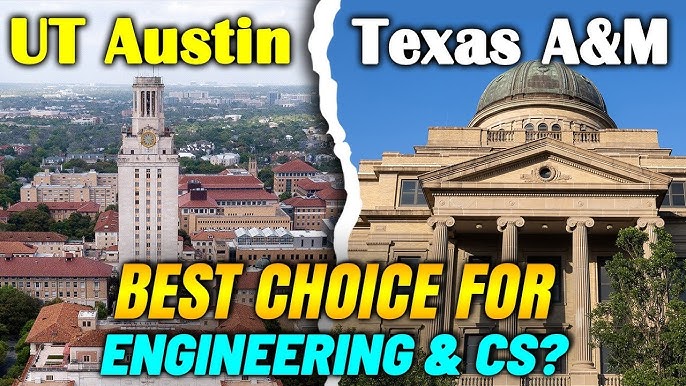
UT Austin vs Texas A&M 2026 – Which Is Right For You?

July 16, 2026 Leave a Comment

In Texas, choosing between UT Austin vs Texas A&M isn’t just a college decision — it’s practically a rite of passage. These two flagship universities represent two genuinely different visions of what a world-class public education looks and feels like.

UT Austin vs Texas A&M

Both are excellent. Both offer extraordinary value for Texas residents. But they are not interchangeable — and choosing the wrong one for your goals and personality is a real mistake. This guide gives you the actual data, the honest cultural differences, and a clear framework for deciding which one is the better fit for you.

Quick Comparison — UT Austin vs Texas A&M at a Glance

CategoryUT AustinTexas A&M
 US News Ranking (2026) #30 National / #7 Public #51 National / #1 Public in TX (WSJ)
 QS World Ranking (2026) #67 #169
 Location Austin, TX (urban) College Station, TX (college town)
 Total Enrollment 55,000+ 78,321
 Acceptance Rate ~22.2% (record low) ~57%
 Out-of-State Accept Rate ~11.76% Higher than UT
 In-State Tuition ~$13,506/year ~$12,995/year
 Out-of-State Tuition ~$42,000–$51,106/year ~$40,124/year
 In-State Total COA ~$34,000–$40,000/year ~$33,717/year
 Average SAT (Admitted) 1,355 1,270
 Average ACT (Admitted) 32 28
 1st-Year Retention 96% 94%
 6-Year Graduation Rate 86% 84%
 Median Salary (10 yrs) ~$68,600/year ~$65,600/year
 Student Loan Debt ( Median) $22,250 $18,750
 Annual Research $700M+ $1B+
 Athletics Conference SEC SEC (2012)
 Auto-Admit Threshold (TX) Top 5% of HS class Top 10% of HS class
 Free Tuition Program Texas Advance Commitment (under $100K income) N/A (scholarships available)
 Campus Size 431 acres 5,200 acres
 Student Organizations 1,200+ 1,000+
 Alumni Network Strong nationally, especially tech 500,000+ dues-paying members (largest in the  US)

1. Rankings and Academic Reputation

UT Austin — Higher Global Prestige

UT Austin ranks #30 nationally and #7 among public universities in US News (2026), and #67 globally in QS World Rankings — putting it in the top tier of public research universities worldwide alongside UCLA, the University of Michigan, and the University of Wisconsin-Madison. UT Austin has 45 graduate programs ranked in the Top 10 nationally, including 4 programs ranked #1 (Petroleum Engineering, Nuclear Engineering, Latin American History, Mobile/Wireless Networks).

UT Austin leads TAMU in rankings for: Computer Science, Business (McCombs), Law, Public Policy, Information Science, and the natural sciences. For tech-forward, globally competitive careers, UT Austin’s name carries broader international recognition.

Texas A&M — #1 Public in Texas by Outcomes

Texas A&M ranks #51 nationally (US News 2026) but was ranked the #1 public university in Texas by the Wall Street Journal for two consecutive years — a ranking that measures student experience and outcomes rather than research prestige. A&M ranks #169 globally in QS. Where TAMU genuinely leads: Engineering (especially petroleum and aerospace), Agriculture, Veterinary Medicine, and the Bush School of Government’s Homeland Security programs (#6 nationally).

Key insight: UT Austin wins on global prestige and breadth. Texas A&M wins on applied excellence, engineering depth, and outcomes-based rankings that measure what students actually gain from the experience.

2. Acceptance Rate and Admissions

UT Austin — Getting More Selective Every Year

UT Austin’s acceptance rate dropped to a record-low 22.2% for the Class of 2029 — down from 26.6% the prior year and 29% just two cycles before that. For out-of-state applicants, the acceptance rate is just 11.76% — as selective as many top-25 private universities. UT Austin has also reinstated its SAT/ACT requirement (test-optional policy ended for the cycle) and lowered its auto-admit threshold from Top 6% to Top 5% of the Texas high school class.

Competitive majors at UT Austin are significantly more selective than the university average. Computer Science, McCombs BBA, and Cockrell Engineering have acceptance rates well below 22%.

Texas A&M — More Accessible, Still Competitive

Texas A&M’s overall acceptance rate is approximately 57%, with auto-admit for Texas residents in the Top 10% of their high school class. That said, admission to specific programs — Mays BBA, certain engineering tracks — is more selective than the university average. 66% of admitted TAMU freshmen rank in the top 10% of their high school class, so despite the higher overall acceptance rate, the competition is real.

Verdict for Different Applicants

SituationRecommendation
 Texas resident, Top 5% of class Auto-admit to UT Austin — apply to both
 Texas resident, Top 6–10% of class Auto-admit to TAMU; apply holistically to UT Austin
 Texas resident, below top 10% TAMU is significantly more accessible
 Out-of-state U.S. student TAMU is more accessible (higher OOS accept rate); UT Austin is very competitive at ~11.76%
 International student Both competitive; TAMU’s larger enrollment = more international seats

3. Tuition and Financial Aid

In-State Tuition — A&M Slightly Lower

For Texas residents, both universities are exceptional values:

  • UT Austin: ~$13,506/year tuition; total COA ~$34,000–$40,000/year
  • Texas A&M: ~$12,995/year tuition; total COA ~$33,717/year

The difference in tuition is modest ($511/year). The bigger financial differentiator is financial aid programs:

UT Austin — Texas Advance Commitment (TAC) Changes Everything

UT Austin’s Texas Advance Commitment is the most powerful financial aid program at any Texas public university for qualifying families:

  • Family income under $65,000: Full tuition + fees covered
  • Family income $65,001–$100,000: Full tuition covered (expanded)
  • Over 12,000 UT Austin undergraduates attend tuition-free.

For lower- and middle-income Texas families, UT Austin may actually cost less than Texas A&M despite the slightly higher listed tuition — the TAC is that powerful.

Texas A&M — Lower Out-of-State Cost

For out-of-state and international students, TAMU has an important advantage: lower out-of-state tuition ($40,124 vs UT Austin’s $42,000–$51,106) and the Competitive Scholarship Non-Resident Tuition Waiver — earn $4,000+ in institutional scholarships and pay in-state rates instead of out-of-state. Graduate students only need a $1,000 qualifying scholarship to trigger this waiver.

Graduate — UT Austin More Expensive, Higher Salary Outcomes

For MBA specifically:

  • McCombs (UT Austin): ~$55,196/year (TX residents); median starting salary $155,000+
  • Mays (TAMU): Lower tuition; median starting salary $133,075; #1 Online MBA nationally

McCombs is more expensive but produces higher median starting salaries. Mays offers better ROI for students targeting Texas-based industries (energy, agriculture, operations) at a lower total investment.

4. Best Programs — Where Each School Wins

FieldUT Austin AdvantageTexas A&M Advantage
Computer Science✅ — stronger CS rankings, Austin tech sector accessGood program but UT leads
Engineering (overall)Top 10 nationally✅ — world-class in petroleum, aerospace, nuclear; #14 NSF funding
Petroleum Engineering#1 nationally✅ — also elite; both are top choices
Business / MBA✅ McCombs — #18 MBA nationally; higher median salary✅ Mays — #1 Online MBA; better ROI for TX industries
Law✅ — top 15 public law schoolsGood — #22 nationally, Top-3 dispute resolution
Agriculture / Animal ScienceGood program✅ — TAMU’s heritage program, nationally ranked
Veterinary MedicineNot available✅ — top vet school in the U.S.
Public Policy / Government✅ LBJ School — top 5 nationallyBush School — top 10%; #6 Homeland Security
Information Science✅ iSchool — #3 nationallyNot as prominent
Communications / Journalism✅ Moody College — nationally recognizedGood, but UT leads
Natural Sciences / Research✅ TACC supercomputer, Dell Medical School✅ $1B+ research, RELLIS Campus, energy focus
Architecture✅ NAAB-accredited, strong reputationGood program

5. Campus Culture — The Biggest Difference

This is where UT Austin and Texas A&M diverge most fundamentally — and where your personal answer matters more than any ranking or data point.

UT Austin — Urban, Individualistic, Tech-Forward

UT Austin’s campus sits in the heart of one of America’s most vibrant cities. The campus bleeds into Austin — the live music scene on 6th Street, Barton Springs Pool, food trucks on every corner, the Texas Capitol two blocks away. Students have 1,200+ organizations and a city of nearly 1 million people as their social infrastructure. The campus culture is more individualistic and progressive, with less emphasis on shared tradition and more emphasis on personal expression and exploration.

UT Austin pride is real — but it’s more cerebral than communal. You’re proud to be a Longhorn, but the shared identity is less all-consuming than at A&M. Students tend to look outward — toward Austin’s startup scene, the music industry, policy careers in Washington — as much as they look inward toward campus community.

Texas A&M — Tradition-Rich, Community-Centered, Loyalty-Driven

Texas A&M offers something genuinely rare in American higher education: a campus culture so tradition-rich and community-oriented that it borders on sui generis. The Corps of Cadets, Aggie Muster (attended by 250+ chapters worldwide), Midnight Yell Practice, Silver Taps, the 12th Man, and the Aggie Ring — these aren’t activities; they’re part of what it means to be an Aggie.

The tradeoff is real: College Station offers very little outside of A&M. If you need urban energy, cultural diversity outside campus, a music scene, or career infrastructure beyond campus recruiting, College Station doesn’t provide those things in the way Austin does. But if you want to belong to something larger than yourself — a community with genuine loyalty, decades of tradition, and one of the most powerful alumni networks in the country — A&M delivers that in a way UT Austin cannot replicate.

One-sentence summary: UT Austin gives you a world-class city. Texas A&M gives you a world-class community. Which matters more to you is a genuine self-knowledge question.

6. Career Outcomes and Alumni Networks

Salary — UT Austin Slightly Ahead Early, A&M Catches Up

  • UT Austin graduates earn a median salary of $68,600/year at 10 years post-enrollment
  • Texas A&M graduates earn $65,600/year at 10 years
  • UT Austin graduates “find economic success” early in careers; A&M graduates’ median salary “tends to overperform expectations ten years after initial enrollment by over $10,000” (FREOPP analysis)
  • Texas A&M bachelor’s degree ROI: $861,725 lifetime average — $200,000 above the Texas public university average
  • Both schools produce strong STEM outcomes; UT Austin CS/tech salaries and McCombs salaries are typically higher; A&M energy sector and agriculture salaries are competitive for those industries.

Alumni Networks — Different Strengths

  • UT Austin: Strong nationally, particularly in tech (Austin/Silicon Valley), entertainment, law, policy, and media. The alumni network reaches broadly across industries and geography.s
  • Texas A&M: The Association of Former Students has over 500,000 dues-paying members — the largest active alumni association in the United States. Aggies famously hire other Aggies. The network is particularly powerful in Texas across energy, agriculture, defense, construction, and finance. If you want to build a career anywhere in Texas, TAMU’s network is hard to beat.

Verdict: If your career targets are in tech, entertainment, law, or national policy — UT Austin’s network reaches further. If you want to build a career in Texas-based industries (energy, agriculture, defense, construction, finance) — TAMU’s Aggie Network is unmatched.

7. For International Students — Key Differences

FactorUT AustinTexas A&M
 International Tuition ~$40,582–$48,712/year ~$40,124–$58,976/year
 International Students 6,600+ from 130+ countries 7,000+ from 130+ countries
 Indian Students Large community 1,879 enrolled (Fall
 Non-Resident Tuition Waiver Competitive scholarship waiver available $4,000 scholarship unlocks in-state rate ($12,995)
 Good Neighbor Scholarship ✅ Available ✅ Available (after 1 full semester at TAMU)
 STEM OPT (36 months) ✅ Engineering, CS, Sciences ✅ Engineering, CS, Sciences
 Graduate TA/RA Waivers ✅ Available ✅ Available
 Acceptance Rate (OOS/Intl) ~11.76% (very competitive) Higher — more accessible

For international graduate students in engineering and CS, both are excellent choices. TAMU’s $4,000 competitive scholarship waiver to in-state rates makes it potentially more affordable. UT Austin’s higher program rankings in CS may justify the additional cost for career trajectories in global tech.

For international undergraduates: TAMU is significantly more accessible (higher acceptance rate) and has a large, established Indian student community. UT Austin’s lower OOS acceptance rate (~11.76%) makes it a reach for most international applicants.

8. The Rivalry — What It Actually Means

The UT–A&M rivalry is one of the most intense in American college sports — and it goes well beyond football. The two schools represent genuinely competing visions of Texas identity: Austin’s cosmopolitan, tech-forward progressivism versus College Station’s traditional, military-heritage communitarianism. Both have joined the SEC (A&M in 2012, UT Austin), which has intensified the athletic competition while simultaneously making both schools more nationally prominent.

The rivalry’s most important practical implication: the two schools do not play each other in football since A&M joined the SEC and UT Austin moved to the Big 12, then also to the SEC. SEC scheduling may eventually restore the matchup — but for now, the annual game that defined the rivalry is on hold.

For students choosing between the schools, the rivalry is cultural, not adversarial. Many Texas families are divided between Longhorns and Aggies — it’s a source of genuine affection and good-natured competition, not hostility.

Who Should Choose UT Austin?

UT Austin is likely the better fit if you:

  • Want the highest globally-ranked programs in Texas — CS, McCombs Business, LBJ Policy, iSchool, Moody Communication, UT Law
  • Are in the top 5–6% of your Texas high school class and want auto-admission to the state’s most prestigious public university
  • Are from a family earning under $100,000 and qualify for the Texas Advance Commitment (free tuition)
  • Want to be embedded in Austin’s tech, music, startup, and policy ecosystems from day one.
  • Are you an international graduate student targeting global tech companies where UT Austin’s CS rankings carry more weight
  • Prefer an urban campus where the city and the university blend seamlessly
  • Want a career in tech, law, entertainment, national policy, or journalism where UT Austin’s network reaches furthest

Who Should Choose Texas A&M?

Texas A&M is likely the better fit if you:

  • Are in the top 10% of your Texas high school class and want guaranteed admission to a #51 nationally ranked university.
  • Are pursuing petroleum engineering, aerospace, agriculture, veterinary medicine, or homeland security — programs where TAMU’s depth is genuinely world-class.
  • Want the highest bachelor’s degree ROI of any Texas public university ($861,725 lifetime average).
  • Are an out-of-state student who wants a more accessible admissions process at a flagship research university.
  • Are an international student who can earn $4,000 in institutional scholarships to access in-state tuition rates.
  • Want to join the most powerful alumni network in Texas — Aggies hire Aggies, and the Association of Former Students is 500,000+ strong.
  • Are drawn to tradition, community, and a campus culture where belonging is a core part of the experience.
  • Are targeting a career in Texas-based industries: energy, agriculture, defense, construction, or finance.
  • Want a college town experience where A&M IS the community — not a campus within the city.

Conclusion

Choosing between UT Austin and Texas A&M is not about which school is objectively better — both are outstanding, and both will serve you well. The real question is which school’s ecosystem better matches your goals, personality, and career direction.

Choose UT Austin if prestige rankings, urban life, tech-sector access, and broad global career reach are your priorities — and if you can get in.

Choose Texas A&M if engineering depth, the Aggie Network’s Texas career power, tradition-rich campus culture, and better accessibility for out-of-state applicants align with what you want from college.

For full details on each university, visit our complete guides:

  • University of Texas at Austin — Full Guide
  • Texas A&M University — Full Guide

For a broader comparison of Texas universities, see our guides to Rice University, SMU, TCU, and the 10 Cheapest Universities in Texas for International Students.

Are you deciding between UT Austin and Texas A&M? Tell us your major and career goals in the comments — we’ll give you our honest take on which is the better fit.

Filed Under: Texas University

Texas A&M University (TAMU) – Programs & Admissions 2026

July 15, 2026 Leave a Comment

Texas A&M University (TAMU) is the flagship institution of the Texas A&M University System — ranked #1 public university in Texas by the Wall Street Journal (2nd consecutive year) and #51 nationally by US News (2026), with 78,321 students from 130+ countries, a 57% acceptance rate, and in-state tuition of $12,995/year.

Texas A&M University

International students who earn a competitive institutional scholarship of $4,000+/year unlock the non-resident tuition waiver — paying in-state rates instead. TAMU bachelor’s degree graduates have the highest ROI of any Texas public university, according to FREOPP analysis. Here’s everything you need to know.

What Is Texas A&M University?

Founded in 1876 as the Agricultural and Mechanical College of Texas — the first public institution of higher education in the state — Texas A&M University has grown into one of the largest, most well-funded, and most distinctive universities in the United States. Located in College Station, Texas, the main campus spans 5,200 acres — one of the largest university campuses in the country — and serves over 78,000 students across undergraduate, graduate, and professional programs.

TAMU is the flagship of the Texas A&M University System — a network of 11 universities and 8 state agencies that includes Tarleton State University, Angelo State University, and Midwestern State University, among others. The system’s endowment exceeds $12.7 billion — the second-largest endowment of any U.S. public university system — funding research, scholarships, and institutional excellence across the network.

Texas A&M has a distinctive identity unlike any other university in this guide. The Corps of Cadets — the largest uniformed student organization outside of the U.S. military academies — is a living symbol of TAMU’s military heritage. The university is one of only six Senior Military Colleges in the United States. Traditions like Muster (an annual ceremony honoring Aggies who have died in the past year, held on April 21 — San Jacinto Day — at locations worldwide), Silver Taps, and the Aggie Ring create a sense of identity and community that TAMU alumni describe as unlike any other in American higher education.

TAMU is classified as an R1 Doctoral University — Highest Research Activity by Carnegie, with NSF research and development funding ranked #14 nationally among government-funded institutions and #22 overall. It is fully accredited by SACSCOC, with AACSB (Mays Business School), ABET (engineering), ABA (law), and numerous other program-level accreditations.

Texas A&M University at a Glance — Key Facts

DetailInformation
 Founded 1876 (first public university in Texas)
 Location College Station, Texas (5,200-acre campus)
 Additional Campuses Galveston, Qatar, McAllen, Washington D.C., Law (Fort Worth)
 University System Texas A&M University System ($12.7B endowment)
 Type Public R1 Flagship Research University
 Total Enrollment 78,321 students
 International Students 7,000+ from 130+ countries; 1,879 Indian students
 Acceptance Rate ~57%
 Average Admitted GPA 3.66+
 Median SAT Score 1,270
 Median ACT Score 28
 Student-to-Faculty Ratio 20:1
 1st-Year Retention Rate 94%
 6-Year Graduation Rate 84%
 Campus Size 5,200 acres (main) + Galveston, Qatar campuses
 In-State Tuition $12,995/year
 Out-of-State Tuition $40,124/year
 International Tuition ~$40,124–$58,976/year (program varies)
 In-State Total COA ~$33,717/year (on-campus)
 Out-of-State Total COA ~$60,846/year (on-campus)
 Annual Research Expenditure $1+ billion/year
 US News Ranking (2026) #51 National Universities; #1 Public in Texas (WSJ)
 QS World Ranking (2026) #169
 Bachelor’s Degree ROI #1 among Texas public universities (FREOPP)
 Avg ROI (Bachelor’s) $861,725 lifetime — ~$200K above Texas average
 MBA Avg Starting Salary $133,075
 Online MBA Rank #1 nationally (US News)
 Athletics NCAA Division I, SEC Conference
 Mascot Reveille (Rough Collie dog)
 Accreditation SACSCOC + 200+ program accreditations
 Website tamu.edu

Programs and Schools at Texas A&M

Texas A&M offers over 200 undergraduate majors, 300 graduate programs, and professional degrees across multiple colleges — including law, veterinary medicine, medicine, dentistry, nursing, pharmacy, and public health. With 505 total academic programs, TAMU’s catalog depth rivals that of any flagship university in the country.

Mays Business School (AACSB) — #1 Online MBA Nationally

The Mays Business School is TAMU’s most nationally visible program. Key rankings and facts:

  • #1 Online MBA in the U.S. (US News — including Veterans category)
  • Average MBA starting salary: $133,075
  • Full-time MBA admission GMAT requirement: 560+
  • Programs: BBA, MBA (full-time, part-time, online, executive), MS in Finance, MS in Accounting, MS in Management Information Systems, MS in Marketing, MS in Analytics
  • Mays BBA is considered one of the most competitive undergraduate business admissions at TAMU — applying directly to business from high school gives the best chance of admission.

College of Engineering (ABET)

Texas A&M’s engineering college is consistently ranked among the top 10 public engineering schools in the United States. Programs span Aerospace, Biomedical, Chemical, Civil, Computer Science, Electrical & Computer, Industrial, Mechanical, Nuclear, Ocean, and Petroleum Engineering. The college’s research ties to the energy industry (particularly through the proximity to the Houston energy corridor), NASA, and defense contractors make it one of the most career-relevant engineering programs in the country.

For international students in particular: TAMU’s engineering programs are among the most popular and highly rated, with MS programs in Computer Science, Electrical Engineering, and Mechanical Engineering consistently attracting large cohorts of international graduate students.

Bush School of Government and Public Service

Named after President George H.W. Bush and home to the George H.W. Bush Presidential Library and Museum on campus, the Bush School is ranked in the top 10% of MPA programs nationally and #6 in Homeland Security graduate programs. For students interested in government, policy, intelligence, or national security careers, the Bush School’s Washington, D.C. connections and presidential library resources are genuinely exceptional.

School of Law (ABA) — Top 25 Nationally

Texas A&M School of Law, located in Fort Worth, is ranked #22 overall nationally by US News with Top-3 rankings in dispute resolution and Top-6 in intellectual property law. For students interested in a law career in Texas or nationally, TAMU Law’s specialized rankings and Fort Worth location (adjacent to the DFW legal market) make it a strong option.

College of Agriculture and Life Sciences

Agriculture is in TAMU’s DNA — the university was founded as an agricultural and mechanical college, and the College of Agriculture and Life Sciences remains one of the strongest in the United States. Programs in Animal Science, Agribusiness, Soil and Crop Sciences, Horticultural Sciences, and Agricultural Economics are nationally recognized. The college’s research output directly serves Texas’s massive agricultural economy.

College of Veterinary Medicine & Biomedical Sciences

One of the premier veterinary schools in the United States, TAMU’s vet school is consistently ranked among the top programs nationally. Admission is extremely competitive — applicants typically need near-perfect GPA records and relevant animal experience.

Notable Unique Programs

  • Texas A&M at Qatar — Engineering campus in Doha; students earn a TAMU degree while studying in the Middle East.
  • Texas A&M at Galveston — Maritime campus offering marine sciences, marine transportation, and ocean engineering.
  • LAUNCH (First-Year Programs) — Dedicated first-year transition program including learning communities, mentoring, and academic support.
  • Honors Program (STEX — Students Who Excel) — Selective honors track for the most academically distinguished incoming students.

Texas A&M Tuition and Cost of Attendance

Student TypeTuition & FeesTotal COA (On-Campus)
 Texas Residents $12,995/year $33,717/year
 Out-of-State (U.S.) $40,124/year $60,846/year
 International Students ~$40,124–$58,976/year ~$60,000–$62,272/year

Graduate Tuition

Student TypeTuition & Fees
 Texas Residents (Graduate) ~$11,748/year
 Out-of-State / International (Graduate) ~$24,505/year

Graduate tuition at TAMU varies significantly by program. Engineering, CS, and MBA programs are on the higher end. Use TAMU’s tuition calculator at tuition.tamu.edu for your specific program and enrollment level.

Fixed Tuition Plan

Texas A&M participates in the Texas Guaranteed Tuition Plan for undergraduate students, as required by the Texas Education Code. First-time freshmen can lock in their tuition rate for up to 6 years — protection against annual tuition increases that benefits students who plan their degree timeline carefully.

Financial Aid Overview

  • 56% of undergraduates receive grants or scholarships averaging $11,641
  • Average net price after aid: ~$22,375/year (in-state)
  • 4-year estimated net cost for in-state students: ~$89,500 after aid
  • 84% 6-year graduation rate — one of the highest at any large public Texas university
  • 94% first-year retention rate — students who start at A&M stay at A&M

Texas A&M Scholarships — Key Programs

University Scholarship Application (USA Portal) — One Application

TAMU’s primary scholarship portal is the University Scholarship Application (USA). By completing one application, students are automatically considered for all eligible institutional scholarships:

  • Summer/Fall application window: October 15 – February 1
  • Spring application window: September 10 – October 12
  • The essay section must be completed for most scholarships
  • Apply by February 1 for maximum consideration

Competitive Scholarship Non-Resident Tuition Waiver — Most Important for International Students

This is the most financially significant scholarship mechanism for out-of-state and international students at TAMU:

  • Undergraduate requirement: Earn competitive TAMU institutional scholarships totaling at least $4,000/year (multiple scholarships of $1,000+ each can be combined to reach $4,000)
  • Graduate requirement: Earn a single competitive scholarship of at least $1,000/year (cannot be combined from multiple awards)
  • Once you qualify, the waiver eliminates non-resident tuition — you pay in-state rates of $12,995/year instead of $40,124/year.
  • The waiver is automatically applied once scholarship eligibility is confirmed.d
  • Important: Scholarships specifically designated for international students (IEFS, ITPEG) do NOT qualify for this waiver — only institutional competitive scholarships open to all students qualify
  • Self-supporting programs (certain laws, distance education, Qatar programs) are not eligible for this waiver.

Strategy for international students: Apply aggressively through the USA Portal for departmental and college scholarships. Getting to $4,000 in combined competitive awards is achievable for strong students and unlocks a waiver worth approximately $27,129/year in tuition savings.

Terry Foundation Scholarship — Up to Full COA

One of the most prestigious and generous scholarships available to Texas residents entering TAMU. Awards range up to the full cost of attendance for the most competitive Texas resident freshmen. Selection is based on academic excellence and extracurricular achievement. Apply through the USA Portal — highly competitive.

Good Neighbor Scholarship — In-State Rate for Western Hemisphere Students

Like all Texas public universities, TAMU participates in the state-administered Good Neighbor Scholarship — providing a full non-resident tuition exemption to eligible students from Western Hemisphere countries (excluding Cuba and the U.S.) who have completed at least one full academic semester at TAMU. Requirements: minimum 2.0 GPR for undergrads, 3.0 GPR for graduate students, non-immigrant visa status, and intent to return to home country after graduating. 235 awards statewide annually.

International Student Scholarships (IEFS)

TAMU awards institutional scholarships specifically for international students through the IEFS program. These are merit-based awards for currently enrolled international students. Key details:

  • Awarded based on academic merit and performance
  • Available to both undergraduate and graduate international students
  • Note: IEFS scholarships do NOT qualify for the non-resident tuition waiver
  • Apply through the USA Portal

George J. Eppright Award

A prestigious scholarship awarding at least $3,000 annually to competitive incoming freshmen. Based on academic achievement and co-curricular involvement. Apply through the USA Portal.

Corps of Cadets Scholarships

The TAMU Corps of Cadets offers significant scholarship opportunities for cadets:

  • Army ROTC: National and campus scholarships covering full tuition and fees; Patriot Scholarship adds room and board support
  • Murray Scholarship: Provides an in-state tuition rate for qualifying out-of-state AFROTC cadets
  • Easterwood Scholarship: For competitive incoming Corps members
  • Corps Member Scholarships: Various need-based and merit awards for active cadets — amounts vary widely

Mexican Citizens with Financial Need Waiver

For eligible Mexican citizens with demonstrated financial need, TAMU offers a waiver to attend at Texas resident tuition rates. Submit TASFA by the 12th class day for fall/spring. Contact Aggie One Stop for details.

International Texas Public Education Grant (ITPEG)

State-funded grant awarding up to $4,000 to international students with financial need, as determined through TASFA. Funding is very limited — not all eligible students receive this grant. Apply via TASFA. Note: ITPEG does not qualify for the non-resident tuition waiver.

Texas A&M Acceptance Rate and Admission Requirements

TAMU has an overall acceptance rate of approximately 57% — moderately selective. However, admission selectivity varies significantly by college. The Mays Business School and Cockrell-equivalent engineering programs are more selective than the university average. 66% of admitted freshmen rank in the top 10% of their high school class — so while the acceptance rate is 57%, the competition is real.

Undergraduate Requirements

  • Apply via Common App or ApplyTexas — TAMU accepts both
  • Application fee: $75 (domestic), $90 (international)
  • Recommended GPA: 3.66+ (unweighted)
  • Median SAT: 1,270; Median ACT: 28
  • Test scores required (TAMU is NOT test-optional for most programs)
  • Early Action deadline: October 15 (recommended for international students)
  • Regular deadline: December 1
  • English proficiency: TOEFL iBT 80+, IELTS 6.5+
  • International Financial Certificate + bank documentation required
  • F-1 students are automatically enrolled in SHIP health insurance each semester (waiver available)
  • On-campus housing is guaranteed for all incoming freshmen who apply by the deadline

Graduate Requirements

  • Apply through individual department portals
  • Application fee varies by program
  • Minimum GPA: 3.0 for most graduate programs
  • GRE/GMAT requirements vary by department
  • MBA: GMAT 560+ recommended
  • Letters of recommendation (typically 3)
  • Statement of purpose
  • TOEFL iBT 80+ or IELTS 6.5+ for international applicants
  • Official transcripts and financial documentation

Campus Life and Aggie Traditions

The Aggie Identity — Unlike Any Other University

Texas A&M’s campus culture is one of the most distinctive in American higher education — arguably the most tradition-rich of any public university in the country. Students are called “Aggies” from the moment they arrive, and the identity extends far beyond graduation. The TAMU alumni association — the “Aggie Network” — is considered one of the most powerful and loyal alumni communities in the United States. Former students actively support current students’ career development, often prioritizing fellow Aggies in hiring decisions.

Key Traditions

  • Aggie Ring: The most coveted piece of jewelry in Aggie culture — a heavy gold ring with an intricate design awarded to students who meet specific credit hour and GPA requirements. Ring Day ceremonies are celebrated with extraordinary intensity
  • Muster: Held April 21 (San Jacinto Day) at locations worldwide, Muster is a solemn ceremony honoring Aggies who died in the past year. When a name is called, those present answer “Here” — representing the continuity of the Aggie community across generations. Over 250 locations worldwide hold simultaneous Musters each year
  • Silver Taps: Monthly ceremony honoring students who have died during the semester. Held at the Academic Building at night with all campus lights extinguished
  • Midnight Yell: The night before every home football game, 40,000+ Aggies gather at Kyle Field for a yell practice — a tradition dating to 1931
  • 12th Man: TAMU’s entire student body stands throughout football games — symbolizing readiness to join the team. This tradition dates to 1922 and is protected by trademark
  • The Big Event: The largest single-day student-run community service project in the nation, with 20,000+ Aggies volunteering in the Bryan-College Station community each spring

Corps of Cadets

The Corps of Cadets is the largest uniformed student organization in the United States outside of the service academies. While membership is voluntary (only about 2,500 of TAMU’s 78,000 students are cadets), the Corps’ influence on TAMU’s identity and traditions is profound. Corps members live together, drill together, and maintain a regimented lifestyle that develops leadership in ways civilian student life cannot replicate. TAMU is one of only 6 Senior Military Colleges in the U.S., and Corps graduates are commissioned as officers in all branches of the U.S. military.

Kyle Field and SEC Athletics

TAMU joined the Southeastern Conference (SEC) in 2012 — one of the most consequential athletic realignment decisions in college sports history. Kyle Field, renovated to a capacity of 102,733, is the largest stadium in Texas and one of the loudest in college football. Aggie football game days in College Station are among the most distinctive college football experiences in the country — and the SEC has elevated TAMU’s national athletic profile significantly.

TAMU competes in 18 varsity sports across all major NCAA programs. Notable recent athletic achievements include strong performances in football, track and field, swimming, and baseball.

Research and Career Outcomes

TAMU’s research output places it among the elite of American public universities:

  • Annual research expenditure exceeds $1 billion — one of only a handful of public universities at this level
  • NSF R&D Funding ranked #14 nationally (government-funded), #22 overall
  • Research strengths include: Energy (petroleum engineering, renewable energy), Agriculture, Aerospace Engineering, Ocean Science (Galveston campus), Veterinary Medicine, and Homeland Security
  • The RELLIS Campus — a 2,000-acre advanced research and testing facility — is home to TAMU’s most cutting-edge research programs in collaboration with industry and government partners

Career outcomes:

  • Bachelor’s degree ROI: $861,725 lifetime average — approximately $200,000 above the Texas public university average (FREOPP)
  • MBA average starting salary: $133,075
  • The Aggie Network actively facilitates job placement — many employers specifically seek TAMU graduates.
  • Proximity to Houston (90 miles) creates direct pipelines into the energy, aerospace, healthcare, and petrochemical sectors.s
  • Austin’s tech sector (100 miles) adds technology and startup career access
  • International students on F-1 visas qualify for OPT (12 months) or STEM OPT (36 months) post-graduation, with STEM-designated programs including engineering, CS, and data science qualifying for the extended period

How TAMU Compares to Other Texas Universities

  • For the other flagship Texas public university with similar rankings and an Austin location, see University of Texas at Austin — the UT vs A&M rivalry is one of the most intense in college sports and academic culture.
  • For a large public R1 in Houston with a lower acceptance rate and NASA access, see the University of Houston.
  • For a large public R1 near Dallas with automatic scholarship waivers for international students, see the University of North Texas.
  • For a private R1 in Dallas with smaller classes and a 47% acceptance rate, see Southern Methodist University.
  • For smaller Texas A&M System universities with a similar mission and lower tuition, see Tarleton State University or Angelo State University.
  • For a full comparison of Texas university scholarship options, see Texas Universities with Full Scholarships.

Is Texas A&M Right for You?

Texas A&M is a strong fit if you:

  • Want the #1 public university in Texas (WSJ) with the highest bachelor’s degree ROI among Texas public universities
  • Are you pursuing engineering, agriculture, veterinary medicine, business, government/policy, or natural sciences
  • Are you a Texas resident who wants a flagship research university at in-state tuition rates
  • Are an international student who can earn $4,000+ in competitive institutional scholarships to qualify for the non-resident tuition waiver
  • Want to join one of the most powerful and loyal alumni networks in the United States — the Aggie Network.
  • Are drawn to TAMU’s distinctive traditions, Corps of Cadets opportunity, and SEC athletics culture
  • Want a large university with 505 academic programs and access to $1+ billion in annual research activities.y

TAMU may not be the best fit if you want a small-university experience, prefer a highly urban campus environment, or are pursuing programs that are not strongly represented in TAMU’s catalog. The large student body (78,000+) means the experience is less personalized than at smaller institutions — though the College community structure and active student organizations help create belonging within the larger university.

How to Apply to Texas A&M University

  1. Apply via Common App or ApplyTexas — both accepted; $90 application fee for international students.
  2. Apply by October 15 (Early Action) for best admission and scholarship consideration — recommended for international applicants.
  3. Submit official high school or college transcripts
  4. Submit SAT or ACT scores — TAMU is NOT test-optional for most programs
  5. Submit English proficiency scores: TOEFL iBT 80+ or IELTS 6.5+
  6. Submit financial documentation: International Financial Certificate + bank statement
  7. Complete the University Scholarship Application (USA Portal) by February 1 for maximum scholarship consideration — aim for $4,000+ in competitive awards to unlock the non-resident tuition waiver
  8. Apply for the Good Neighbor Scholarship through THECB if you are from a qualifying Western Hemisphere country
  9. Submit TASFA for ITPEG or Mexican Citizens waiver if applicable
  10. Receive I-20 from TAMU International Student & Scholar Services (ISSS) once admitted
  11. Apply for an F-1 student visa — allow 2–3 months minimum
  12. Apply for on-campus housing early — guaranteed for all incoming freshmen who meet the housing application deadline

Final Thoughts

Texas A&M University is one of the most distinctive universities in America — and one of the most difficult to fully understand without experiencing it. The combination of R1 research excellence, the most powerful alumni network in Texas, traditions built over 149 years, and an in-state tuition that remains competitive makes TAMU an extraordinary value for Texas residents.

For international students, the $4,000 competitive scholarship pathway to in-state rates, the Good Neighbor Scholarship, and the STEM OPT advantage in engineering and CS programs create financially viable paths to a degree from the #1-ranked public university in Texas.

For current tuition, scholarship details, and application requirements, visit tamu.edu or the Aggie One Stop directly.

Have questions about Texas A&M or comparing it with UT Austin or other Texas universities? Drop them in the comments below.

Filed Under: Texas University

Texas Universities with Full Scholarships For International Students

July 6, 2026 Leave a Comment

Finding a Texas university that offers a full or near-full scholarship for international students is genuinely possible — but the process is more specific than most scholarship guides admit.

Texas Universities with Full Scholarships

This article covers every major full-scholarship pathway available at Texas universities in 2026: who qualifies, how much each award covers, application deadlines, and which universities on this site offer the strongest packages. No filler, no vague advice — just the actual scholarships and how to get them.

The 3 Types of Full Scholarships at Texas Universities

Before diving into specific universities, it helps to understand the three distinct mechanisms that can produce a full or near-full scholarship for international students in Texas:

Type 1 — Full Tuition Exemption (State Programs)

The Texas state government administers two programs that can waive 100% of tuition at any Texas public university for qualifying international students. These are the most powerful scholarships available — but they are highly competitive and have specific eligibility requirements.

Type 2 — Competitive Scholarship + In-State Tuition Waiver

Texas law allows any non-resident (domestic or international) who receives a competitive scholarship of $1,000 or more to pay Texas in-state tuition instead of the higher out-of-state rate. Combined with the scholarship itself, this mechanism can reduce annual costs by $10,000–$20,000. It’s available at every Texas public university.

Type 3 — Institutional Full-Ride Awards (University-Specific)

Several Texas universities offer full-tuition or near-full-tuition institutional scholarships through their own endowments — typically the most competitive tier of their merit scholarship program. These cover tuition and sometimes room and board at specific institutions.

Type 1 — State Full Tuition Programs

Good Neighbor Scholarship — Full Tuition at Any Texas Public University

The Good Neighbor Scholarship is the closest thing to a guaranteed full-tuition waiver for qualifying international students at Texas public universities. Administered by the Texas Higher Education Coordinating Board (THECB), it covers the full difference between Texas resident and non-resident tuition — effectively bringing tuition down to in-state rates.

DetailInformation
 Who Can Apply Citizens of Western Hemisphere countries (excluding Cuba and the U.S.)
 What It Covers Full non-resident tuition premium — you pay in-state rate only
 Where Available All Texas public universities
 Total Annual Awards 235 across all Texas universities
 Key Requirement Must intend to return to the home country after graduating
 GPA Requirement Strong academic record — competitive selection
 Apply Through THECB + individual university international offices

The Good Neighbor Scholarship is available at all public universities featured on this site including Sul Ross State University ($7,592 in-state rate), UTRGV ($9,799), Midwestern State University ($9,950), Tarleton State University ($10,180), Texas Tech University ($11,852), Lamar University ($8,905), and the University of North Texas ($11,852–$13,506).

Strategy: Apply to the university with the lowest in-state tuition (Sul Ross at $7,592) to maximize the financial benefit of this award. But remember — only 235 awards are made statewide per year, so competition is real. A strong academic record and a compelling application are essential.

Mexican Citizens with Financial Need Waiver

Available specifically to Mexican citizens with demonstrated financial need at select Texas public universities, including Texas A&M and others. Covers the full non-resident portion of tuition. Apply through the Texas Application for State Financial Aid (TASFA) by the 12th class day of the fall or spring semester. Not widely advertised — contact the international financial aid office at your target university directly.

Type 2 — Competitive Scholarship + In-State Tuition Waiver (By University)

The following universities offer this mechanism — where receiving a competitive scholarship of $1,000+ unlocks in-state tuition rates for international students. The result is a significant effective discount that compounds over four years.

University of North Texas — Up to $12,000/Year + In-State Waiver

UNT’s Excellence Scholarship is automatically considered for all first-time freshmen admitted by March 1. The top tier — President’s Elite Award — pays $12,000/year ($48,000 total). Any tier of the Excellence Scholarship also unlocks the competitive tuition waiver, bringing international tuition down to Texas resident rates of ~$11,852/year. Combined, a President’s Elite recipient at UNT pays:

ItemCost
 International tuition (before) ~$25,000/year
 In-state rate (after waiver) ~$13,000/year
 Minus Excellence Scholarship −$12,000/year
Effective tuition cost ~$1,000/year

At the top scholarship tier, UNT effectively provides near-free tuition for international freshmen who qualify. Deadline: Apply by March 1 for fall admission.

Texas Tech University — Presidential Scholarship + In-State Rate

Texas Tech’s Presidential Scholarship is automatically considered with your admissions application — no separate form required. Receiving any level of Presidential Scholarship qualifies international students to pay Texas in-state tuition of $11,852/year. The scholarship itself reduces tuition further based on academic tier. Deadline: December 1 for fall admission scholarship priority.

Tarleton State University — 600+ Scholarships + Waiver

Tarleton’s single-application scholarship system matches students against 600+ awards. Any competitive award of $1,000+ qualifies for the Non-Resident Tuition Waiver, bringing costs to the Texas resident rate of $10,180/year. With $106 million in total annual financial aid and 80% of students receiving aid, Tarleton offers one of the most accessible scholarship ecosystems in the Texas A&M System. Deadline: February 15 for scholarship priority.

Midwestern State University — Automatic Merit + Waiver

MSU Texas awards over $2 million in automatic merit scholarships annually. Receiving any competitive award of $1,000+ triggers the in-state tuition waiver, bringing costs to $9,950/year — among the lowest in-state rates at any Texas Tech System university. As the only COPLAC member in Texas, MSU also offers a genuine liberal arts education at this reduced price. Deadline: March 1 for fall scholarship consideration.

Lamar University — Graduate Out-of-State Tuition Waiver

Lamar University’s Graduate Studies Award covers up to $10,000/year toward out-of-state tuition for graduate students — and most international engineering and MBA students receive this waiver automatically based on transcripts and TOEFL/IELTS scores.

Engineering graduate students additionally receive a $1,000 general scholarship on top of the waiver. Effective graduate tuition after the award: $8,642/year (Texas resident rate). No separate application required — the waiver is considered at admission. Application fee: $25 — lowest among Texas public university graduate programs.

Type 3 — Institutional Full-Ride and Near-Full Scholarships

LCU F.W. Mattox Presidential Scholar Award — Full Tuition + Room + Board

Lubbock Christian University’s most prestigious scholarship covers full tuition, fees, room and board — the most comprehensive institutional award on this list. Named after LCU’s founding president, it is nomination-based through the admissions process.

High-achieving students with strong GPAs, leadership experience, and demonstrated Christian character are identified during the admissions review — no separate application is required, but you should proactively discuss this scholarship with the admissions team. Renewable for up to four years with continued academic performance.

LCU Cornerstone Scholars Program — Full Tuition

LCU’s second full-tuition award is also nomination-based through admissions. Focused on student leaders with strong Christian character and community involvement. Like the Mattox Presidential Scholar Award, this is identified during the standard admissions process — making LCU one of the few Texas universities where two separate full-tuition awards are accessible through a single application.

Texas Wesleyan University — $21,000/Year Automatic International Scholarship

TXWES automatically applies a $21,000/year scholarship to eligible international students enrolled full-time — no separate application required. At the listed tuition of ~$37,934/year, this reduces effective tuition to approximately $16,934/year. Combined with additional merit awards and Christian Leadership Scholarships ($7,000–$12,000/year), top-achieving international students at TXWES can bring effective tuition below $10,000/year. Contact internationaladmissions@txwes.edu to confirm eligibility before enrolling.

Wayland Baptist University — Pioneer Scholarship (Full Tuition Top Tier)

WBU’s Pioneer Scholarship top tier covers full tuition for students with the strongest academic profiles. Automatically considered at admission based on high school GPA or ACT/SAT/CLT scores — no separate application needed. Valedictorians qualify automatically for the highest tier. Additionally, WBU’s Terra Scholarship specifically supports international business students — funded by a Brazilian alumnus who attended on a basketball scholarship and later established the award with his wife (a Flying Queens player) to give back to the university that shaped their careers.

Sul Ross State University — President’s Endowed University Scholars Program

SRSU’s most competitive award requires ACT 25+ or SAT 1150+, an academic seal on the high school transcript, references, and an essay. Successful scholars must participate in the SRSU Honors Program. Combined with the already-low in-state tuition of $7,592/year and the Good Neighbor Scholarship (for qualifying nationalities), SRSU’s total cost for top students can approach zero for tuition. The $25 application fee is the lowest of any university in this guide.

Full Scholarship Quick Comparison Table

UniversityScholarship NameMax Annual AwardApplication Required?Deadline
 LCU F.W. Mattox Presidential Scholar Full tuition + room + board No (nomination-based) Apply early
 LCU Cornerstone Scholars Full tuition No (nomination-based) Apply early
 UNT President’s Elite Excellence Award $12,000/yr + in-state waiver No (automatic) March 1
 WBU Pioneer Scholarship (top tier) Full tuition No (automatic) Apply early
 TXWES International Students Scholarship $21,000/yr automatic No (automatic) Rolling
 Texas Tech Presidential Scholarship + Waiver In-state rate (~$11,852/yr) No (automatic) December 1
 Tarleton 600+ Scholarships + Waiver In-state rate (~$10,180/yr) One application February 15
 MSU Texas Excellence Scholarship + Waiver In-state rate (~$9,950/yr) No (automatic)March 1
 Lamar Graduate Tuition Waiver + $1,000 In-state rate (~$8,642/yr) No (automatic for grad) At  admission
 SRSU Good Neighbor + President’s Scholars Full tuition (~$7,592/yr) Yes (essay + refs) January 15
 All TX Public Good Neighbor Scholarship Full non-resident premium waiver Yes (THECB) Varies

Which Scholarship Should You Target? A Decision Guide

If You Are From a Western Hemisphere Country (Latin America, Caribbean)

Apply for the Good Neighbor Scholarship through THECB alongside your university application. Target Sul Ross State University (lowest in-state rate at $7,592) or Midwestern State University ($9,950) to maximize the financial benefit. Apply to the university first, then pursue the Good Neighbor Award through THECB. 235 awards statewide — apply to multiple universities to increase your chances.

If You Are a High-Achieving Freshman (GPA 3.8+ or Top 10% of Class)

Apply to UNT by March 1 for automatic Excellence Scholarship consideration — the President’s Elite tier at $12,000/year combined with the in-state waiver brings effective tuition to near-zero. Also apply to Texas Tech by December 1 for Presidential Scholarship consideration. Both are automatic — no extra application required beyond your standard admissions file.

If You Are a Christian Student with Leadership Experience

Apply to Lubbock Christian University — the F.W. Mattox Presidential Scholar and Cornerstone Scholars programs are the only full-tuition-plus-room-and-board awards in this guide available through the standard admissions process. Contact admissions directly about scholarship consideration: admissions@lcu.edu

If You Are an International Graduate Student in Engineering or Business

Lamar University’s graduate tuition waiver is automatically awarded to most international graduate students in engineering, bringing tuition to $8,642/year with no separate application. The AACSB MBA and ABET engineering programs are both strong. The application fee is just $25.

If You Want Maximum Scholarship Matching with One Application

Tarleton State University’s single-application system matches you against 600+ scholarships automatically. The university awards over $106 million in aid annually, and 80% of students receive assistance. The Texas A&M System affiliation adds employer network value on top of the scholarship access.

If You Want a Private University in a Major City with Automatic Aid

Texas Wesleyan’s automatic $21,000/year international scholarship requires no separate application — just full-time enrollment at TXWES. Located in Fort Worth with access to the full DFW Metroplex job market. Contact internationaladmissions@txwes.edu to confirm eligibility.

3 Things Most Students Get Wrong About Texas Scholarships

1. Waiting for a Separate Scholarship Application

Most of the strongest scholarships at Texas universities — UNT Excellence, Texas Tech Presidential, Lamar Graduate Waiver, TXWES International, WBU Pioneer, MSU Excellence — are automatically considered at admission. There is no separate scholarship form. The only action required is applying to the university early — before priority scholarship deadlines. Students who wait to hear about scholarships before applying are missing the point: the application IS the scholarship application.

2. Comparing Sticker Price Instead of Net Price

The listed international tuition at most Texas universities is not what students pay. After scholarships, the Good Neighbor waiver, and competitive tuition waivers, the effective cost at many of these institutions is well below the listed rate. Always compare net price — not sticker price — when choosing between universities.

3. Not Applying to Multiple Universities

The Good Neighbor Scholarship awards 235 slots statewide. Presidential, Excellence, and Pioneer scholarships are competitive and subject to available funding. Applying to 3–4 Texas universities simultaneously increases your chances of securing the best scholarship package — especially for Type 2 awards where the deadline varies by institution. Use the comparison table above to identify your top targets and apply to all of them before the earliest priority deadline (December 1 at Texas Tech).

Key Deadlines — Mark Your Calendar

DeadlineUniversity / Scholarship
 December 1 Texas Tech University — Presidential Scholarship priority.
 January 15 Sul Ross — Scholarship application opens (new students).
 February 1 Sul Ross — Early consideration for scholarships.
 February 15 Tarleton State — 600+ scholarship priority deadline.
 March 1 University of North Texas — Excellence Scholarship priority.
 March 1 Midwestern State — Automatic merit scholarship priority.
 April 1 Sul Ross — General scholarship final deadline.
 Rolling Texas Wesleyan, Wayland Baptist, LCU, Lamar — apply early.
 Varies Good Neighbor Scholarship — contact THECB and each university.

Final Thoughts

Full scholarships at Texas universities for international students are real — but they require knowing exactly which programs exist, meeting eligibility criteria, and applying early. The most important lesson from this guide: most of the best scholarships require nothing beyond your admissions application, submitted before the priority deadline. The students who miss out are usually those who apply late or wait for a separate scholarship portal that doesn’t exist.

The five actions that maximize your scholarship outcome at Texas universities:

  1. Apply by December 1 to Texas Tech for Presidential Scholarship consideration.
  2. Apply by March 1 to UNT for the Excellence Scholarship and in-state tuition waiver.
  3. Apply for the Good Neighbor Scholarship through THECB if you are from a qualifying Western Hemisphere country.
  4. Contact LCU admissions directly if you are a high-achieving Christian student who wants to be considered for the Mattox Presidential Scholar award.
  5. Apply to Lamar if you are a graduate student in engineering or business — the tuition waiver is nearly automatic.

Use the individual university guides on this site to get the complete picture for each institution before applying.

Have questions about which scholarship you qualify for or how to apply? Drop them in the comments below.

Filed Under: Texas University

Recent Posts

  • Texas State University (TXST) – Tuition, Programs & Admissions 2026
  • University of Texas at Dallas (UTD) – Programs & Admissions 2026
  • Baylor University (BU) – Tuition, Programs & Admissions 2026
  • UT Austin vs Texas A&M 2026 – Which Is Right For You?
  • Texas A&M University (TAMU) – Programs & Admissions 2026

Categories

  • Study in USA
  • Texas University
  • USA University

Copyright © 2026