Quick Answer: Texas Tech University (TTU) is a major public research university in Lubbock, Texas, with over 40,000 students, a 71% acceptance rate, and tuition of $11,852/year for Texas residents and $24,157/year for out-of-state students (2026).
It’s the only university in Texas where the main university, law school, and medical school all share the same campus — and it offers Presidential Scholarships that can qualify non-residents to pay in-state tuition rates. Here’s everything you need to know.
What Is Texas Tech University?
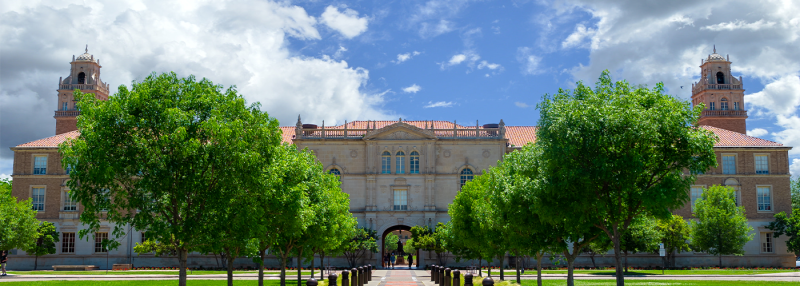
Founded in 1923 as Texas Technological College, Texas Tech University has grown into one of the largest and most comprehensive public universities in the American South. Located in Lubbock in West Texas, TTU sits on a striking 1,839-acre campus — one of the most architecturally distinctive in the country, built almost entirely in Spanish Renaissance style with red brick and terra cotta.
Texas Tech is the flagship institution of the Texas Tech University System, which includes Texas Tech University Health Sciences Center, Angelo State University, and Texas Tech University at Odessa. The main TTU campus in Lubbock is classified as an R1 Doctoral University by the Carnegie Classification — meaning it’s among the nation’s top-tier research institutions, right alongside much larger and more well-known schools.
TTU is also one of only 20 R1 universities in the U.S. that is also a Hispanic-Serving Institution (HSI), placing it at a unique intersection of research excellence and commitment to student access. The university attracts students from all 50 states and over 100 countries, and its alumni network of more than 259,000 graduates spans every major industry.
TTU is fully accredited by the Southern Association of Colleges and Schools Commission on Colleges (SACSCOC), and individual programs hold additional accreditations from AACSB (business), ABET (engineering), ACEN (nursing), ABA (law), and others.
Texas Tech University at a Glance — Key Facts For 2026
| Detail | Information |
|---|---|
| Founded | 1923 |
| Location | Lubbock, Texas |
| Type | Public Research University (R1) |
| Total Enrollment | 40,000+ students |
| International Students | Students from 100+ countries |
| Acceptance Rate | ~71% |
| Student-to-Faculty Ratio | 21:1 |
| Campus Size | 1,839 acres |
| QS World Ranking | #781–790 |
| US News National Ranking | Top 300 National Universities |
| Athletic Conference | Big 12 |
| Mascot | Raider Red (the Masked Rider) |
| Accreditation | SACSCOC |
| Website | ttu.edu |
Programs and Colleges at Texas Tech
Texas Tech offers one of the broadest academic catalogs among Texas public universities. Organized into 13 colleges and schools, TTU provides over 150 undergraduate programs and more than 100 graduate and doctoral programs.
The 13 colleges include:
- Jerry S. Rawls College of Business Administration
- Edward E. Whitacre Jr. College of Engineering
- College of Arts and Sciences
- College of Agricultural Sciences and Natural Resources
- College of Architecture
- College of Education
- College of Human Sciences
- College of Media and Communication
- Honors College
- Graduate School
- School of Law (Texas Tech University School of Law)
- Texas Tech University Health Sciences Center (School of Medicine)
- University College
That last point is worth repeating: TTU is the only institution in Texas with its university, law school, and medical school all on one campus. That means pre-law and pre-med students have direct access to professional programs without transferring, and undergraduates can build relationships with law and medical faculty from day one.
Most Popular Programs
Among the most sought-after programs at TTU are Business Administration, Mechanical Engineering, Computer Science, Psychology, Agricultural Economics, Petroleum Engineering, Architecture, and Mass Communications. The engineering college in particular has a strong reputation — graduate engineering enrollment is around 771 students with over 70% being international students, which speaks to TTU’s global draw in technical fields.
For graduate students, the Rawls College of Business offers an MBA available both on campus and as an accelerated online program. TTU also offers programs in niche fields that few universities can match — including Wind Energy, Petroleum Engineering, and Range Science, all shaped by the West Texas landscape and economy surrounding campus.
Texas Tech Tuition and Cost of Attendance (2026)
As a public university in the UT and Texas Tech systems, TTU’s tuition is competitive compared to private alternatives — and there are multiple ways to reduce the cost further through scholarships.
Undergraduate Tuition
| Student Type | Tuition & Fees | Total COA (On-Campus) |
|---|---|---|
| Texas Residents | $11,852/year | $28,525/year |
| Out-of-State (U.S.) | $24,157/year | $40,830/year |
| International Students | ~$24,451/year | ~$40,000–$44,000/year (est.) |
Graduate Tuition
| Student Type | Tuition & Fees |
|---|---|
| Texas Residents | $9,518/year |
| Out-of-State (U.S.) | $17,918/year |
| International Students | ~$21,180/year |
Online Graduate Programs
TTU offers highly competitive online tuition for graduate programs, ranging from $450 to $800 per credit hour depending on the program. This makes TTU’s online master’s programs some of the most affordable at an R1 research university in the country.
Cost of Living in Lubbock
Lubbock is consistently ranked as one of the most affordable cities in Texas. On-campus housing and living costs run approximately $15,473/year — lower than Austin, Dallas, or Houston. Off-campus apartments in Lubbock average $700–$900/month, and the city’s overall cost of living is well below the national average. For students managing budgets tightly, this geographic advantage is real.
Four-Year Estimated Cost
The estimated 4-year total cost of attendance is approximately $114,100 for Texas residents and $164,496 for out-of-state students based on 2026 numbers. After financial aid, the average net price drops significantly — 70% of TTU undergraduates receive some form of grant or scholarship aid.
Texas Tech Scholarships — What’s Actually Available
Scholarships at TTU are more straightforward than at many universities — the process is largely automatic based on your admissions profile, and there’s a clear merit-based structure.
Presidential Merit Scholarships (Freshmen)
These are TTU’s flagship merit awards, automatically considered when you apply for admission. No separate application is required. Awards are based on ACT/SAT scores and class rank, and pay one-half toward fall and one-half toward spring terms.
A key advantage for non-residents: if you receive a Presidential Scholarship, you qualify to pay in-state tuition rates — a saving of over $12,000/year. This is one of the most significant scholarship benefits available at any Texas public university for out-of-state applicants.
Priority deadline: December 1 each year. Apply by then to maximize your chances.
Red Raider Guarantee
For Texas residents with a family adjusted gross income of $80,000 or less who demonstrate financial need, TTU guarantees coverage of tuition and mandatory fees through this program. Students must be enrolled full-time and file FAFSA by the priority date (March 15 for 2026–27).
Competitive Scholarship Tuition Waiver
Any non-resident student awarded a competitive scholarship of $1,000 or more per academic year qualifies to pay in-state tuition. This applies to Presidential Scholarships and other designated competitive awards — making this a powerful incentive for out-of-state and international students to pursue scholarships aggressively.
Good Neighbor Scholarship (International Students)
This Texas state-administered program provides a complete waiver of tuition to eligible international students from Caribbean and Latin American countries. Students still pay university fees, but the tuition waiver is significant. Awards are based on academic merit and competition is intense — final decisions are made by the Texas Higher Education Coordinating Board, not TTU itself.
International Peace Scholarship
Available to international women pursuing graduate degrees in the U.S. or Canada. Candidates must plan to return to their home country after completing their degree. Contact TTU’s International Affairs office for details on this and other international-specific funding.
Financial Aid Overview
86% of TTU students receive some form of financial aid, with an average aid package of $17,000. For freshmen specifically, 89% qualify for federal, state, or institutional assistance. Filing FAFSA early — priority deadline is December 1 — is essential to maximize your package.
Texas Tech Acceptance Rate and Admission Requirements
TTU has an acceptance rate of approximately 71%, making it moderately selective. It’s more competitive than many regional Texas schools, but less selective than UT Austin or Texas A&M — which places it in a practical middle ground for students with solid academic records who want a legitimate research university experience.
Undergraduate Admission Requirements
- Apply through Common App or ApplyTexas.org — TTU accepts both
- Application fee: $75 for international students
- High school diploma or equivalent
- Admission is based on class rank and test scores (ACT/SAT):
- Top 10% of class: automatic admission
- Top 25% + ACT 25 or SAT 1140: admitted
- Top 50% + ACT 28 or SAT 1230: admitted
- Top 75% + ACT 29 or SAT 1270: admitted
- English proficiency: TOEFL 79+, IELTS 6.0+, Duolingo accepted
- GPA of 3.0 (on 4.0 scale) recommended for undergraduate programs
Graduate Admission Requirements
- Bachelor’s degree from an accredited institution
- Minimum GPA of 3.0 for the last 90 credit hours of coursework
- GRE or GMAT (required for some programs, optional for others)
- Statement of purpose summarizing academic background, career goals, and reason for choosing the program
- Letters of recommendation (typically 2–3)
- Official transcripts from all previous institutions
- TOEFL 79+ or IELTS 6.5+ for international applicants
Application Deadlines
TTU offers three intake periods — Fall, Spring, and Summer. Key deadlines to know:
- Priority Scholarship Deadline (Freshmen): December 1
- Priority Scholarship Deadline (Transfer): January 1
- FAFSA Priority Date (Red Raider Guarantee): March 15
- Graduate deadlines vary by program — check your specific department
Campus Life at Texas Tech
The Texas Tech campus is one of the most visually distinctive in the country. Nearly all buildings are constructed in Spanish Renaissance architecture — red brick, arched walkways, clay tile roofs — giving the campus a coherent, striking look that’s hard to miss. With 1,839 acres and over 200 buildings, it’s a university designed to feel permanent and substantial.
Student Organizations
TTU has over 450 student-led organizations covering every interest from engineering competitions and pre-law societies to cultural clubs, intramural sports, and performing arts groups. The Indian Student Association at TTU is one of the more active cultural organizations on campus, celebrating Indian culture and providing community for international students from South Asia.
TTU Traditions
Texas Tech has some of the most distinctive traditions in college athletics. The Masked Rider — a student on horseback in a black costume and cape — leads the football team onto the field before every home game, a tradition that dates back to 1954.
Arbor Day brings the campus together to plant trees, and Carol of Lights illuminates campus buildings with 25,000 lights each December while choirs perform in the Science Quadrangle. These aren’t just marketing talking points — they’re a real part of what makes TTU feel like a community rather than just a school.
Athletics
TTU competes in the Big 12 Conference at the NCAA Division I level. The Red Raiders are known nationally for football (thanks to former coach Patrick Mahomes — yes, that Patrick Mahomes played quarterback here), basketball, baseball, and track and field. Football game days in Lubbock are a genuine cultural event — Jones AT&T Stadium holds nearly 60,000 fans and the atmosphere is intense.
Location: Lubbock, Texas
Lubbock is a mid-size city of around 260,000 people. It’s not Austin or Dallas, and that’s actually part of its appeal — low cost of living, minimal traffic, and a campus that genuinely functions as the center of social life.
The city is home to a growing healthcare sector, energy industry, agricultural businesses, and increasingly, technology companies. For students who want the complete college town experience without paying big-city prices, Lubbock delivers.
Research and Career Outcomes
As an R1 research university, TTU invests seriously in research infrastructure. Key research strengths include:
- Wind Energy: West Texas is one of the windiest regions in North America — TTU has leveraged this into genuine research leadership in renewable energy
- Petroleum Engineering: Tied directly to the energy economy of West Texas and the Permian Basin
- Agriculture and Plant Science: Including pioneering work in drought resistance and water conservation — critical in an arid region
- Disaster and Wind Engineering: TTU’s National Wind Institute is a national leader in storm and structural research
- Biotechnology and Biomedical Sciences: Connected to the Health Sciences Center on campus
On the career side, 90% of TTU graduates find employment shortly after completing their degrees. Major employers of TTU alumni include Accenture, Amazon, AT&T, Deloitte, American Airlines, Lockheed Martin, and ExxonMobil — a mix of tech, consulting, defense, and energy that reflects both the university’s program strengths and its Texas location.
The median salary for graduates six years after completing their degree is in line with national averages for public university graduates, with engineering, business, and health sciences alumni consistently earning above that median.
For international students on F-1 visas, TTU supports Optional Practical Training (OPT) after graduation — up to 12 months for most graduates and up to 36 months for STEM degree holders.
Is Texas Tech Right for You?
Texas Tech is a strong fit if you:
- Want a large R1 research university with a tight-knit campus culture and strong traditions
- Are interested in engineering, business, energy, agriculture, law, or health sciences
- Are an out-of-state or international student who can compete for a Presidential Scholarship to access in-state tuition
- Want a low-cost-of-living college town experience without sacrificing academic quality
- Value campus spirit, Big 12 athletics, and a strong alumni network
TTU may not be ideal if you need to be in a major metro area for internships and networking, prefer a smaller university environment, or are looking for the highest selectivity as a signal of prestige. But for students focused on outcomes over reputation alone, Texas Tech consistently delivers.
How To Apply To Texas Tech University
- Apply via Common App or ApplyTexas.org — both are accepted
- Pay the $75 application fee (international students)
- Submit official transcripts from all high schools and colleges attended
- Submit ACT/SAT scores if using test scores for admission or scholarship consideration
- Submit English proficiency scores (TOEFL/IELTS) if required
- Apply by December 1 to be considered for priority merit scholarships
- File FAFSA early — priority date March 15 for Red Raider Guarantee
- Receive your I-20 from the International Affairs office once admitted, then apply for an F-1 visa
No separate scholarship application is required for Presidential Scholarships — they’re automatically considered with your admissions application.
How Texas Tech Compares to Other Texas Universities
- For the other Texas flagship public university with #30 national ranking and Texas Advance Commitment free tuition, see University of Texas at Austin.
- For the #1 public university in Texas (WSJ) with the highest bachelor’s degree ROI, see Texas A&M University.
- For a smaller Texas Tech System university with affordable tuition and automatic merit scholarships, see Angelo State University.
- For a Texas Tech System university with COPLAC liberal arts designation in Wichita Falls, see Midwestern State University.
- For a private faith-based option in Lubbock with full-tuition scholarship potential, see Lubbock Christian University.
- For the most affordable Texas university options, see our 10 Cheapest Universities in Texas for International Students.
- For a full comparison of Texas university scholarship options, see Texas Universities with Full Scholarships.
Final Thoughts
Texas Tech University sits in a practical sweet spot for many students: large enough to offer research opportunities, professional schools, and 450+ student organizations, but with a campus culture and sense of community that many larger universities lose.
The scholarship structure — particularly the Presidential Scholarship’s in-state tuition waiver for non-residents — makes TTU financially competitive with schools that have much lower sticker prices. And Lubbock’s affordability stretches whatever budget you’re working with further than you’d expect.
For the most current tuition rates, scholarship amounts, and application deadlines, always check directly at ttu.edu.
Have questions about applying to Texas Tech or comparing it with other Texas universities? Leave them in the comments below.
Leave a Reply