Rice University is one of the most prestigious private research universities in the United States — ranked #17 nationally by US News with an 8–9% acceptance rate and tuition of $65,475/year.
What makes Rice genuinely exceptional among elite universities: it is a loan-free institution that meets 100% of demonstrated financial need for all admitted students.
The Rice Investment covers full tuition, fees, room and board for families earning under $65,000 — and half tuition for families earning up to $200,000. Average net price for need-based aid recipients: just $15,091/year. Here’s everything you need to know.
What Is Rice University?
Founded in 1912 as the William Marsh Rice Institute, Rice University was established with an ambitious original goal: to be a free-tuition institution of the highest academic grade. While tuition is no longer free, the spirit of that founding mission — making world-class education accessible regardless of financial background — lives on through the most generous financial aid program of any university in Texas.
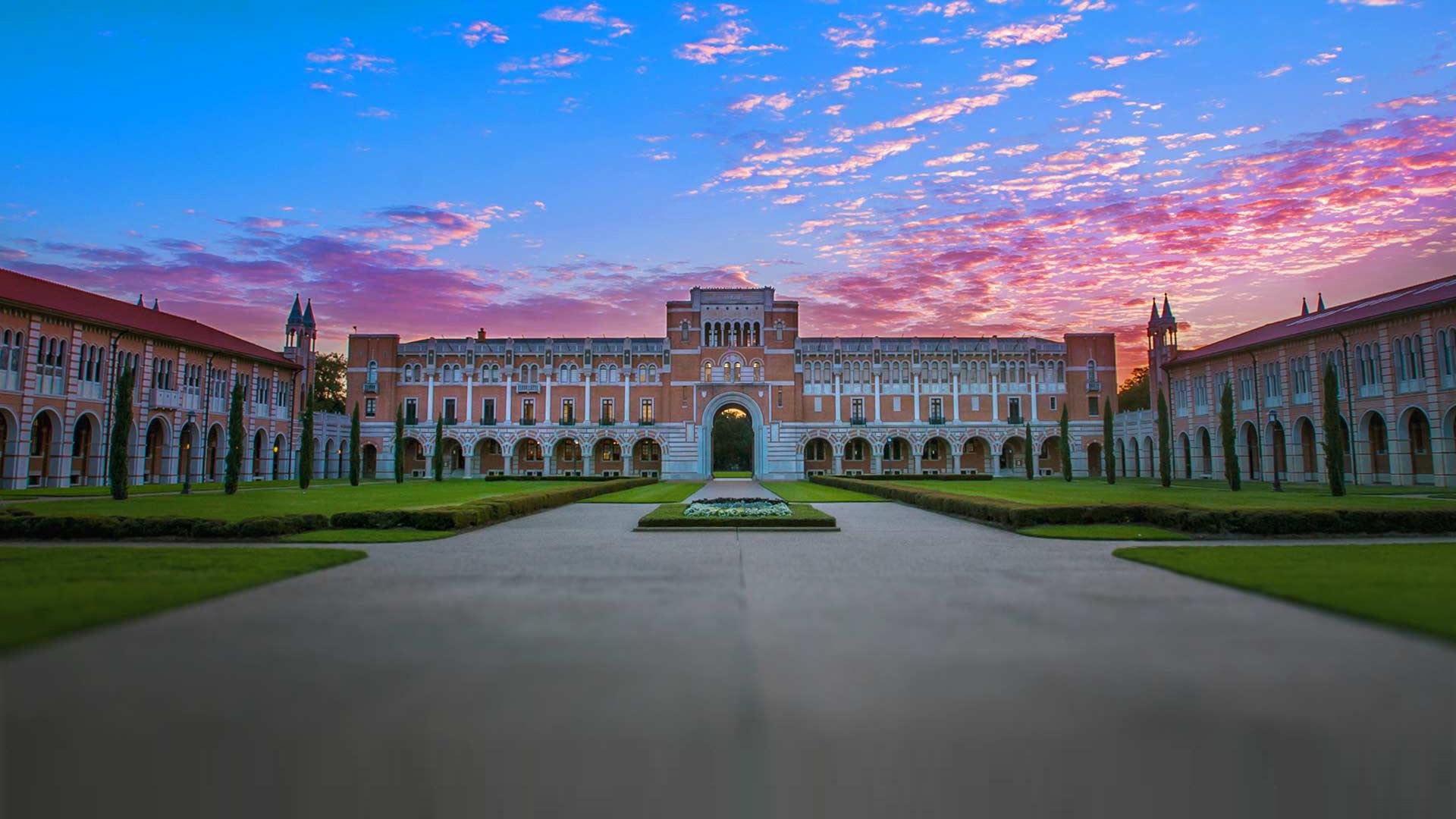
Rice sits on a 300-acre campus in the heart of Houston’s Museum District — one of the most beautifully landscaped campuses in the American South, with Spanish Renaissance architecture, towering oak trees, and immediate proximity to the Texas Medical Center and Hermann Park. With just over 4,500 undergraduates, Rice is one of the smallest major research universities in the country by enrollment — a deliberate choice that maintains a 6:1 student-to-faculty ratio and average class sizes that are genuinely small even by liberal arts college standards.
Rice is classified as an R1 Doctoral University — Highest Research Activity by the Carnegie Classification, placing it alongside MIT, Caltech, and the Ivy League in research output relative to its size. Its endowment of over $8.6 billion — enormous for a university of 4,500 undergraduates — is the financial foundation that makes the Rice Investment possible.
Rice is ranked #1 in Texas for percentage of international students (27.2% of the student body) and is fully accredited by SACSCOC, with AACSB (Jones Business School), ABET (engineering), and NAAB (architecture) among its program accreditations.
Rice University at a Glance — Key Facts
| Detail | Information |
|---|---|
| Founded | 1912 (as William Marsh Rice Institute) |
| Location | Houston, Texas (Museum District, 300-acre campus) |
| Type | Private R1 Research University |
| Undergraduate Enrollment | ~4,500 students |
| Total Enrollment | ~9,000 students (including graduate) |
| International Students | 27.2% of the student body — #1 in Texas |
| Acceptance Rate | ~8–9% |
| Student-to-Faculty Ratio | 6:1 |
| Endowment | $8.6+ billion |
| Tuition & Fees | $65,475/year |
| Total COA (On-Campus) | ~$78,278/year |
| Avg Net Price (need-based) | $15,091/year |
| US News Ranking (2026) | #17 National Universities; #1 in Texas |
| QS World Ranking (2027) | #122 |
| QS World Ranking | #141 (climbed from #145) |
| 4-Year Graduation Rate | 87% |
| Median Graduate Salary (6 yrs) | $79,751/year |
| MBA Placement Rate | 94% within 3 months |
| Residential Colleges | 11 (all undergrads assigned to one) |
| Athletics | NCAA Division I, American Athletic Conference |
| Mascot | Sammy the Owl |
| Accreditation | SACSCOC, AACSB, ABET, NAAB |
| Website | rice.edu |
Programs and Schools at Rice University
Rice offers 50+ undergraduate majors across seven academic divisions — a focused catalog that reflects the university’s philosophy of depth over breadth. Every program at Rice benefits from the same 6:1 ratio and the same research infrastructure.
The seven divisions include:
- George R. Brown School of Engineering (ABET) — Chemical, Civil, Electrical, Computer, Mechanical, Bioengineering, Environmental Engineering; strong research connections to NASA, energy sector, and Texas Medical Center
- Jesse H. Jones Graduate School of Business (AACSB) — Full-time MBA, MBA for Professionals, MS in Finance, MS in Accounting; MBA placement rate 94% within 3 months, ranked #25 nationally for Full-Time MBA
- School of Architecture (NAAB) — One of the top architecture programs in the U.S., renowned for design excellence and research
- School of Humanities — English, History, Philosophy, Art History, Linguistics, Religious Studies, Classical Studies
- School of Music — Performance, Composition, Musicology; Shepherd School of Music is consistently ranked among the finest in the country.
- School of Natural Sciences — Biology, Biochemistry, Chemistry, Physics, Astronomy, Earth Science, Ecology, Mathematics, Statistics, Computer Science
- School of Social Sciences — Economics, Political Science, Psychology, Sociology, Anthropology, Cognitive Science, Sports Management
Most Popular Programs Among International Students
Computer Science, Chemical Engineering, Bioengineering, Biochemistry, and Economics are the most enrolled programs for international students at Rice. The engineering programs are particularly notable — Rice’s proximity to the NASA Johnson Space Center, the Texas Medical Center, and Houston’s energy sector creates research and internship pathways unavailable at most other universities.
Rice also offers several dual-degree and interdisciplinary programs that are rare at any university: students can pursue a double major or minor across divisions with genuine ease, which is unusual at research universities where departments often operate in silos. A student pursuing Computer Science and Art History is not an anomaly at Rice — it’s a common profile.
Rice University Tuition and Cost of Attendance
| Expense | Annual Cost |
|---|---|
| Tuition & Fees | $65,475/year |
| Housing & Dining (On-Campus) | ~$17,010/year (residential college) |
| Books & Supplies | ~$800/year |
| Personal & Health Insurance | ~$3,000–$5,000/year |
| Total COA (Estimated) | ~$78,278/year |
Graduate tuition varies by program — ranging from $20,000 to $71,000/year. The MBA program total cost is approximately $70,000–$75,000 for 3 semesters or $100,000 for 4 semesters, including living expenses.
Net Price — What Students Actually Pay
The sticker price at Rice is rarely what students pay. Here’s the reality:
- Average net price for federal loan recipients: $15,091/year
- 45% of first-year students receive need-based financial aid
- 57% of undergraduates receive some form of financial assistance
- Merit scholarships average $20,300 for qualifying students
- 241 athletic scholarships are awarded annually
- Rice meets 100% of demonstrated need for ALL admitted students — including international students
The Rice Investment — One of the Most Generous Aid Programs in the U.S.
The Rice Investment is Rice’s signature financial aid program — and one of the most generous at any private university in the country. It functions as a needs-based grant that escalates with financial need:
| Family Income | Rice Investment Award |
|---|---|
| Under $65,000/year | Full tuition + fees + room & board (zero remaining cost) |
| $65,001 – $130,000/year | Full tuition covered (room/board not included) |
| $130,001 – $200,000/year | At least half of the tuition is covered |
| Above $200,000/year | May still qualify for need-based aid — apply through CSS Profile |
Critical details about the Rice Investment:
- No loans required — Rice is a loan-free institution. All financial aid is provided as grants and scholarships, not debt
- Available to domestic students (U.S. citizens, permanent residents, undocumented/DACA)
- International students are not eligible for the Rice Investment but still have 100% of their demonstrated need met through institutional grant ai.d
- Family income thresholds include assets — a family with income under $65,000 but significant assets may not qualify at the full level.
- The program is funded by Rice’s $8.6 billion endowment and ongoing alumni fundraising .ing
Financial Aid for International Students
International students at Rice face a different — and more nuanced — financial aid situation:
- Rice is need-aware for international applicants — your financial situation IS considered during the admission process
- International students who receive need-based aid have 100% of their demonstrated need met through institutional grant aid.
- International students are NOT eligible for the Rice Investment specifically, but can receive an equivalent need-based institutional grant.s
- International applicants must submit the International Student Financial Statement as part of their application.on
- Those not requesting financial aid must show documentation of resources covering the first year of study before their file is reviewed.
- CSS Profile deadline for international applicants: November 15
- Merit scholarships from the Office of Admission are available to international students and are separate from need-based aid
QuestBridge Scholarship
Rice is a QuestBridge Partner College. Students matched to Rice through the QuestBridge National College Match program receive a four-year, full-ride scholarship covering tuition, fees, room, board, and books. QuestBridge targets high-achieving students from low-income backgrounds (typically family income under $65,000).
The application deadline for QuestBridge is in September each year. If you are a domestic student with financial need and strong academics, QuestBridge is one of the most powerful pathways to a full scholarship at Rice.
Merit Scholarships
Rice’s Office of Admission awards merit scholarships to incoming students based on academic profile. Average merit scholarship: $20,300. These are renewable annually with a minimum 2.8–3.0 cumulative GPA and full-time enrollment. Merit scholarships are awarded based on the admission application — no separate scholarship application is required.
Rice Acceptance Rate and Admission Requirements
Rice University has an acceptance rate of approximately 8–9% — making it one of the most selective universities in Texas and among the most competitive in the country. In Fall, Rice received 32,473 applications and offered admission to 2,587 students.
What Rice Looks For
Rice takes a holistic approach — GPA and test scores matter, but essays, extracurricular involvement, intellectual curiosity, and demonstrated leadership are equally important. The residential college system means Rice is also evaluating fit: how will this student contribute to their college community? Competitive admitted students typically have:
- GPA of 3.9+ (unweighted) or near-perfect weighted GPA
- ACT 34–36 or SAT 1510–1580+ (if submitting)
- Significant extracurricular achievement or distinctive personal qualities
- Compelling application essays that demonstrate intellectual depth
Undergraduate Requirements
- Apply via Common App (rice.edu/admission)
- Application fee: $75 (fee waivers available)
- Test-optional — SAT/ACT not required; Superscore accepted if submitted
- Two letters of recommendation (one counselor, one teacher minimum)
- Supplemental Rice essay required
- English proficiency: TOEFL iBT 90+, IELTS 7.0+ (international students)
- International Financial Statement required for all international applicants
- CSS Profile: November 15 for international students seeking financial aid
Application Deadlines
| Decision Plan | Deadline | Notification |
|---|---|---|
| Early Decision (binding) | November 1 | Mid-December |
| Regular Decision | January 1 | Late March/April |
Rice does not offer Early Action. Early Decision is binding — if admitted, you must attend. International students applying for financial aid must submit the CSS Profile by November 15 (for Early Decision) and by December 15 (for Regular Decision). Tax documents must be uploaded via the applicant portal, not IDOC (which is domestic-only).
Graduate Requirements
- Apply through individual school portals (rice.edu/graduate)
- Application fees vary by school (~$85)
- Bachelor’s degree with a strong academic record
- GRE/GMAT (required for most programs)
- Letters of recommendation (typically 3)
- Statement of purpose
- Writing samples (some humanities programs)
- TOEFL iBT 90+, IELTS 7.0+ for international applicants
The Residential College System — Rice’s Defining Feature
The residential college system is the single feature that most distinguishes Rice from every other university in this guide. All incoming undergraduates are randomly assigned to one of 11 residential colleges — each with its own identity, traditions, intramural teams, dining hall, budget, and student government. This is not optional. Every Rice student belongs to a residential college from day one.
The colleges — Baker, Will Rice, Hanszen, Wiess, Jones, Brown, Lovett, Sid Richardson, Martel, Duncan, and McMurtry — develop distinct personalities and cultures over generations of students. Your college becomes your primary social community, your intramural team, your study group, and your home base throughout your four years. Rice students consistently cite the residential college system as the defining feature of their experience — and the 93%+ first-year retention rate reflects how effectively it creates belonging from day one.
Faculty-in-residence (called Magisters) live in the colleges and host dinners, study sessions, and events throughout the year. Each college has its own dining facility, and food is served across campus — with Rice’s dining program rated among the best in the country for quality and variety. The food at Rice is genuinely exceptional and is a frequent topic in student reviews.
Research and Career Outcomes
Rice’s research infrastructure is extraordinary for a university of its size. Key research strengths include:
- Nanotechnology — Rice scientists invented Buckminsterfullerene (Buckyballs) here, earning the 1996 Nobel Prize in Chemistry. Nanotechnology research at Rice remains world-leading
- Energy — The Baker Institute for Public Policy and the Rice University Energy and Environment Initiative reflect Houston’s energy economy
- Bioengineering and Medicine — BioScience Research Collaborative with Texas Medical Center across the street; direct access to MD Anderson, Houston Methodist, Texas Children’s Hospital
- Space Science — Rice Space Institute connects to NASA Johnson Space Center, 25 miles away
- Computer Science and AI — Growing programs in machine learning, cybersecurity, and data science
The median salary for Rice graduates six years after enrollment is $79,751 — the highest of any university covered on this site and a direct reflection of the programs and industries Rice’s location and reputation support. MBA placement rate is 94% within 3 months. Graduate salary for business school alumni averages up to $129,000/year.
For international students on F-1 visas, Rice supports Optional Practical Training (OPT) — 12 months for most graduates, up to 36 months for STEM degree holders. Given that engineering, computer science, biochemistry, and related fields are Rice’s strongest programs, most international students at Rice qualify for the extended 36-month STEM OPT period.
Campus Life at Rice
The 300-acre Museum District campus is consistently ranked among the most beautiful in the U.S. The campus sits across the street from the Texas Medical Center, adjacent to Hermann Park (Houston’s largest urban park and botanical garden), and within walking distance of the Houston Museum of Natural Science, the Museum of Fine Arts Houston, and the Houston Zoo. For a research university, the cultural richness surrounding Rice’s campus is exceptional.
Rice has 300+ student organizations covering every academic, cultural, recreational, and professional interest. The Indian Students Association at Rice (ISAR) is active and established. Greek life does not dominate Rice’s social scene — the residential college system provides the social structure that Greek organizations fill at most other universities, making Rice’s social life more integrated and less stratified than typical.
Rice competes in the NCAA Division I American Athletic Conference with 17 varsity sports teams, including baseball, basketball, football, soccer, tennis, and track and field. Rice baseball is particularly strong nationally. The on-campus Rice Stadium (capacity 47,000) hosts football and major events.
How Rice Compares to Other Texas Universities
- For a less selective private R1 in Dallas with lower tuition and a new R1 classification, see Southern Methodist University (SMU).
- For a highly ranked private university in Fort Worth with Big 12 athletics and strong need-based aid, see Texas Christian University (TCU).
- For a large public R1 in Houston with NASA and energy sector access at much lower tuition, see the University of Houston.n
- For a full comparison of full scholarship opportunities at Texas universities, see Texas Universities with Full Scholarships.
- For the most affordable Texas university options, see our Cheapest Universities in Texas guide.
Is Rice University Right for You?
Rice is a strong fit if you:
- Are an exceptional student with a GPA of 3.9+ and significant extracurricular achievement — Rice’s 8–9% acceptance rate is real
- Are you a domestic student from a family earning under $200,000 who can benefit from Rice Investment’s need-based aid structure — Rice may cost you less than many public universities
- Want the research infrastructure of a top-20 university at the scale of a small liberal arts college (6:1 ratio, 4,500 undergrads)
- Want to be in Houston for NASA, the Texas Medical Center, and energy sector career access.
- Value a residential college system that creates community from day one
- Are you pursuing engineering, computer science, bioengineering, architecture, music, business, or natural sciences
Rice is not accessible to most students — the 8–9% acceptance rate is a genuine barrier. But for students who do gain admission, Rice’s combination of academic quality, financial aid generosity, and career access makes it one of the best higher education values in the United States — particularly for domestic students from middle-income families who qualify for the Rice Investment.
How to Apply to Rice University
- Apply via Common App at commonapp.org — select Rice University
- Pay the $75 application fee (fee waivers available)
- Submit official transcripts and school profile
- Submit a minimum of two letters of recommendation (one counselor, one teacher)
- Complete Rice’s supplemental essays — these are critical and heavily weighted
- Submit SAT/ACT scores voluntarily if strong (test-optional)
- Submit CSS Profile by November 15 (international, Early Decision) or December 15 (international, Regular Decision) for financial aid consideration
- Submit International Student Financial Statement — required for all international applicants
- Upload parent and student tax documents via the Rice applicant portal (not IDOC)
- Apply for QuestBridge (September deadline) if you are a domestic student with family income under $65,000
- Receive the I-20 from Rice International Students and Scholars once admitted
- Apply for an F-1 student visa — allow 2–3 months minimum
Final Thoughts
Rice University is not for every student — the acceptance rate alone makes it one of the most selective universities in Texas and the country. But for the students who do gain admission, Rice offers something genuinely rare: the academic depth of a top-20 research university, the personal attention of a small college, a financial aid program that makes it genuinely affordable for middle- and lower-income domestic families, and a Houston location that provides extraordinary career access in energy, healthcare, aerospace, and technology.
The 6:1 student-to-faculty ratio, $79,751 median graduate salary, and 87% four-year graduation rate speak for themselves.
For the most current information on tuition, financial aid, and application requirements, visit rice.edu directly.
Have questions about Rice University or comparing it with other Texas universities? Drop them in the comments below.
Leave a Reply