Texas State University (TXST) is a public R2 research university in San Marcos, Texas — the 5th largest university in Texas and one of the fastest-growing in the United States — with 40,674 students, an 89% acceptance rate, and in-state tuition of $11,450/year.
International students who receive an Assured Scholarship of $1,000+ qualify for the non-resident tuition waiver, paying in-state rates instead. The Terry Foundation Scholarship covers the full cost of attendance. Located halfway between Austin and San Antonio on I-35, TXST sits in one of the most strategically positioned spots in Texas for career access. Here’s everything you need to know.
What Is Texas State University?
Texas State University was authorized by the Texas Legislature in 1899 and opened its doors in 1903 as the Southwest Texas State Normal School — a teacher-training institution in the Texas Hill Country. Over the following century, it transitioned from a normal school to a state college, then to a regional university, and finally received its current name — Texas State University — in 2013.
That progression from normal school to comprehensive research university mirrors the arc of many of the great American public universities, and TXST’s growth story is ongoing: enrollment has grown from fewer than 10,000 students in the 1980s to over 40,000 today, making it one of the fastest-growing major universities in the country.
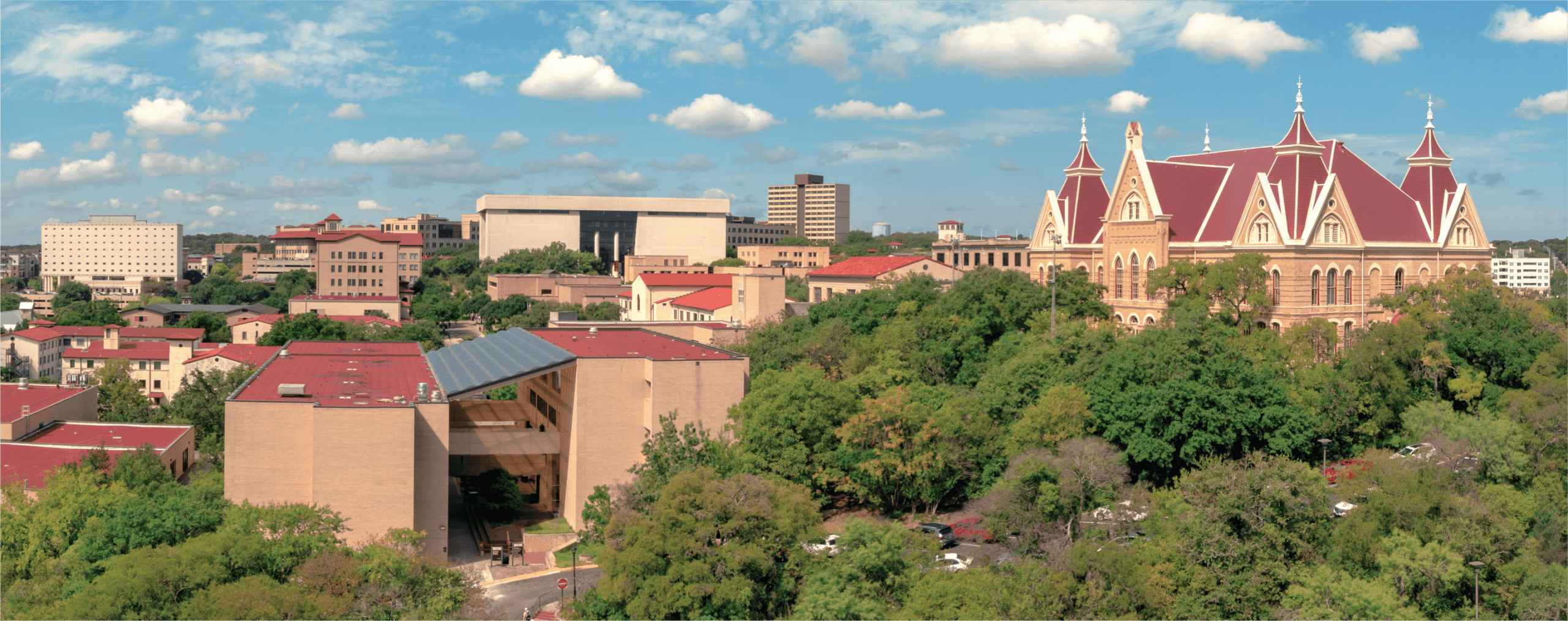
TXST is located in San Marcos, Texas — a city of approximately 70,000 people positioned exactly halfway between Austin (30 miles north) and San Antonio (50 miles south) on the I-35 corridor. This location is not incidental — it places Texas State students within commuting distance of two of Texas’s three largest cities and their combined job markets. The campus sits along the San Marcos River, creating a scenic natural backdrop unusual among large Texas public universities.
The university is classified as a Carnegie R2 Doctoral University — High Research Activity and is a member of the Texas State University System — the same system as Lamar University and Sam Houston State University. It is fully accredited by SACSCOC, with AACSB (McCoy College of Business), ABET (engineering), ACEJMC (journalism), and NASM (music) among its program-level accreditations.
One notable alumnus: Lyndon B. Johnson, the 36th President of the United States, attended what was then Southwest Texas State University. The LBJ Student Center on campus is named in his honor — a reminder that Texas State has been shaping Texas and national leaders for over a century.
Texas State University at a Glance — Key Facts
| Detail | Information |
|---|---|
| Founded | 1899 (authorized); 1903 (opened) |
| Location | San Marcos, Texas (on the San Marcos River) |
| University System | Texas State University System |
| Type | Public R2 Research University |
| Total Enrollment | 40,674 students |
| Undergraduate | ~34,000 students |
| Graduate | ~6,600 students |
| International Students | Students from 87+ countries |
| Acceptance Rate | ~89% |
| Median SAT Score | 1,100 |
| Median ACT Score | 22 |
| Student-to-Faculty Ratio | 21:1 |
| Campus Size | 492 acres (main) + Round Rock campus |
| In-State Tuition | $11,450/year |
| Out-of-State Tuition | $22,930/year |
| International Tuition | ~$22,503–$27,130/year |
| Graduate In-State Tuition | $8,997/year |
| Graduate Out-of-State | $16,377/year |
| Average Aid (recipients) | $9,539 (60% of undergrads receive aid) |
| US News Ranking (2026) | #131 National Universities; #11 in Texas |
| Times Higher Education | #1201 World |
| Notable Alumni | Lyndon B. Johnson (36th U.S. President) |
| Texas Size Rank | 5th largest university in Texas |
| Athletics | NCAA Division I, Sun Belt Conference |
| Mascot | Boko the Bobcat |
| Accreditation | SACSCOC, AACSB, ABET, ACEJMC, NASM |
| Website | txst.edu |
Programs and Colleges at Texas State University
Texas State offers over 200 undergraduate and graduate degree programs across nine colleges — a catalog that has grown significantly as the university has expanded its research profile and enrollment over the past two decades.
The nine colleges include:
- McCoy College of Business (AACSB) — BBA, MBA, MS in Accounting, MS in Information Systems, MS in Finance; AACSB-accredited; strong regional business placement record
- College of Liberal Arts — Communication Studies, English, History, Political Science, Philosophy, Sociology, International Studies, Geography
- College of Science and Engineering (ABET) — Computer Science, Electrical Engineering, Civil Engineering, Biochemistry, Mathematics, Physics, Environmental Science, Geographic Information Systems (GIS)
- College of Applied Arts — Criminal Justice and Criminology, Social Work, Journalism, Mass Communication, Recreation Administration, Digital Media Innovation
- College of Education — Teacher Certification, Counseling and Guidance, Educational Leadership
- College of Health Professions — Health Information Management, Clinical Laboratory Science, Physical Therapy, Respiratory Care, Radiation Therapy
- College of Fine Arts and Communication (NASM) — Music, Theatre, Dance, Art, Graphic Design; NASM-accredited
- Graduate College
- Emmett and Miriam McCoy College of Business (graduate business programs)
Standout Programs at TXST
Mass Communication and Journalism (ACEJMC) — One of Texas State’s most nationally recognized programs. The School of Journalism and Mass Communication holds ACEJMC accreditation — the gold standard for journalism programs, held by fewer than 120 schools nationwide. Texas State’s journalism graduates enter the Austin and San Antonio media markets with credentials from a program ranked among the best in the South.
Criminal Justice and Criminology — TXST’s School of Criminal Justice and Criminology is nationally respected and offers programs from bachelor’s through doctoral levels. The school’s geographic positioning between Austin (state government, law enforcement agencies) and San Antonio (military law enforcement, federal agencies) gives criminal justice students internship access that few programs can match.
Geographic Information Systems (GIS) — Texas State’s geography and GIS programs are among the most recognized in the country. The university’s Department of Geography and Environmental Studies has strong faculty research in GIS, remote sensing, and spatial analysis — fields with growing demand across government, technology, and environmental sectors.
Business (McCoy College AACSB) — The AACSB accreditation places McCoy in the top 6% of business schools globally. The MBA program has an 80% placement rate within months of graduation. Programs in Finance, Accounting, and Information Systems are the most enrolled at the graduate level.
Computer Science and Engineering (ABET) — Growing programs aligned with the Austin tech corridor. San Marcos’ proximity to Austin’s technology sector — Apple, Dell, Google, Tesla, Oracle all have major Austin operations — creates direct internship pathways for TXST CS and engineering graduates.
Health Professions — Physical Therapy, Respiratory Care, Clinical Laboratory Science, and Radiation Therapy programs serve the healthcare needs of the Central Texas corridor. TXST’s Round Rock campus (in the northern Austin suburbs) specifically serves health professions students with clinical placements in Austin’s rapidly growing healthcare sector.
Round Rock Campus
In addition to the main San Marcos campus, Texas State operates a significant Round Rock campus in the northern Austin suburbs. The Round Rock campus focuses on upper-division and graduate programs — particularly in health professions, education, and business — serving students who live and work in the greater Austin area and cannot relocate to San Marcos. This dual-campus structure extends TXST’s reach into Austin’s job market in a practical way that few Texas universities match.
Texas State Tuition and Cost of Attendance
| Student Type | Tuition & Fees | Total COA (Est.) |
|---|---|---|
| Texas Residents | $11,450/year | ~$24,000–$26,000/year |
| Out-of-State (U.S.) | $22,930/year | ~$36,000–$38,000/year |
| International Students | ~$22,503–$27,130/year | ~$35,000–$40,000/year |
Graduate Tuition
| Student Type | Tuition & Fees |
|---|---|
| Texas Residents | $8,997/year |
| Out-of-State / International | $16,377/year |
Cost of Living in San Marcos
San Marcos is one of the most affordable college towns in Texas — and one of the most livable. Off-campus housing near Texas State runs approximately $700–$1,000/month for apartments. The Bobcat Shuttle is a free bus service running throughout campus and surrounding areas, reducing the need for a car. CARTS Transit connects San Marcos to Austin and San Antonio for students who need city access without a vehicle.
The San Marcos River runs through campus — students tube, kayak, and swim in it during spring and fall. The Guadalupe River (popular for tubing) is nearby. Outdoor recreation is genuinely part of Texas State’s campus culture in a way that urban campuses cannot replicate.
Financial Aid Overview
- 60% of undergraduates receive grants or scholarships averaging $9,539.
- Federal Pell Grants available for qualifying domestic students.
- FAFSA priority deadline: March 15 each year.
- Texas Public Education Grant (TPEG) and TEXAS Grant are available to qualifying Texas residents.
- Graduate College scholarships and fellowships are available through the BOSS portal.
Texas State Scholarships — Key Programs
Assured Scholarships — Automatic + Non-Resident Tuition Waiver
Texas State’s Assured Scholarships are automatically awarded to qualifying incoming freshmen based on admission credentials — no separate application required:
- Eligibility: Submit admission application, official high school transcript, and official SAT or ACT scores
- Awards are guaranteed to all qualified residents AND non-residents (including international students) who meet minimum scholarship qualifications before their first semester
- KEY FOR INTERNATIONAL STUDENTS: Non-residents receiving any Assured Scholarship may also qualify to pay the in-state tuition rate for the same period covered by the scholarship — saving approximately $11,480/year
- Students applying without ACT/SAT scores and ranked in the top 35% of their class are eligible for Merit Scholarship consideration through academic review
Competitive Scholarship Non-Resident Tuition Waiver
Any student qualifying for at least $1,000 in Texas State competitive merit scholarships (National or Assured) may receive a non-resident tuition waiver — paying in-state tuition of $11,450/year regardless of residency. Key requirements:
- Must be lawfully present in the United States
- Must be registered with Selective Service (if applicable)
- Waiver administered through the department that awarded the scholarship
- NOT available to students in Accelerated Online Programs (AOP) or specific gateway programs
National Merit Scholarship — $40,000 Total
Texas State awards a $40,000 National Merit Scholarship ($10,000/year for 4 years) to National Merit Finalists who designate TXST as their first-choice institution with the National Merit Scholarship Corporation. This is one of the most generous National Merit packages at any Texas public university in absolute dollar terms. Automatically pairs with Assured Scholarship eligibility and non-resident tuition waiver for qualifying students.
Terry Foundation Scholarship — Full Ride
The Terry Foundation provides full-ride scholarships renewable up to four years to qualifying incoming Texas State freshmen. Selection is competitive and based on academic excellence, leadership, and extracurricular achievement. Apply through BOSS by the December 15 deadline for freshman applicants. Terry Foundation scholars at TXST join a statewide cohort of Terry Scholars at multiple Texas universities.
Bobcat Online Scholarship System (BOSS) — All Competitive Scholarships
Texas State’s primary scholarship portal is BOSS — the Bobcat Online Scholarship System. Most competitive scholarships require a BOSS application by specific deadlines:
- Freshman BOSS deadline: December 15 for the following fall semester
- Transfer BOSS deadline: varies — check onestop.txst.edu for current dates
- Continuing student scholarships: typically November–April window
- International scholarship application: submit through BOSS by March 1 for the following academic year
- Departmental scholarships (Criminal Justice, International Studies, Mass Communication, etc.) are all accessed through BOSS
International Student Scholarships — Competitive, via BOSS
Texas State offers competitive scholarships specifically for international students through the One Stop Financial Aid portal:
- Apply annually via BOSS by March 1
- A new application must be submitted each academic year — scholarships are not automatically renewed.
- Graduate College scholarships and fellowships are also available to international graduate students — check gradcollege.txst.edu for current opportunities.s
- Graduate College scholarship offer letters can be used for I-20 purposes and may specify in-state tuition eligibility.
Good Neighbor Program
Texas State participates in the Texas Good Neighbor Program — providing tuition assistance to academically talented students from Western Hemisphere nations (excluding Cuba and the U.S.) who plan to return to their home countries after completing their education. Contact Texas State’s International Student and Scholar Services (ISSS) office for eligibility and application details through THECB.
Graduate College Scholarships and Fellowships
The Graduate College offers several funding programs for new and continuing graduate students:
- Texas State Merit Fellowships — for highest-quality incoming master’s or doctoral students; not available for fully online programs
- Thesis Research Support Fellowships — up to $2,000 per award for master’s thesis research expenses; two rounds of funding annually
- Teaching Assistantships (TAs) and Research Assistantships (RAs) available through individual departments typically provide a stipend plus a tuition waiver.
- Graduate College “Shop Talks” — professional development sessions advising students on external fellowship and grant opportunities
Texas State Acceptance Rate and Admission Requirements
Texas State University has an acceptance rate of approximately 89% — one of the most accessible large public universities in Texas. The university’s open-access mission ensures qualified students across a broad academic range can pursue a Texas State degree.
Undergraduate Requirements
- Apply via Common App or ApplyTexas
- Application fee: $90 for international students
- Official high school transcript
- SAT or ACT scores (required for Assured Scholarship eligibility; test-optional for admission consideration)
- Median SAT: 1,100; Median ACT: 22
- English proficiency: TOEFL iBT 80+, IELTS 6.5+, PTE 52+, Duolingo 110+, Cambridge C1 Advanced
- International application deadlines:
- Fall: May 1 (priority); July 1 (final)
- Spring: October 1 (priority); November 1 (final)
- Summer: March 1 (priority)
- Financial documentation: bank statement or sponsor letter showing sufficient funds
- For BOSS scholarship consideration: submit BOSS application by December 15
Graduate Requirements
- Bachelor’s degree from an accredited institution
- Minimum GPA of 2.75 (varies by program — some require 3.0)
- GRE/GMAT scores (varies by program)
- Letters of recommendation (typically 2–3)
- Statement of purpose
- TOEFL iBT 80+, IELTS 6.5+, PTE 52+, or Duolingo 110+ for international applicants
- Graduate application deadlines vary by program — check gradcollege.txst.edu
Campus Life at Texas State University
San Marcos — A Genuine College Town
San Marcos is a college town in the truest sense — the city’s culture, economy, and social life are deeply intertwined with Texas State University. With 40,000+ students in a city of 70,000 people, Bobcats are everywhere. The San Marcos River, which runs directly through the edge of campus, gives students outdoor recreation access — tubing, kayaking, swimming — that no urban university campus can match. Sewell Park on the river is a beloved gathering spot for students year-round.
San Marcos’ downtown square has evolved into a genuinely active social and dining district, with local restaurants, coffee shops, and live music venues catering to the student population. The city sits on the Edwards Aquifer, one of the most significant freshwater ecosystems in Texas — giving environmental science and geography students a living research laboratory practically on campus.
Student Organizations — 400+
Texas State has over 400 student organizations covering academic departments, Greek life, cultural organizations, professional societies, faith-based groups, and recreational clubs. The university’s diversity — students from 87+ countries — means cultural organizations are active and well-attended. The International Student and Scholar Services (ISSS) office coordinates dedicated orientation, advising, and community programs for international students.
NCAA Division I Athletics — Sun Belt Conference
The Texas State Bobcats compete at the NCAA Division I level in the Sun Belt Conference. Bobcat Stadium (capacity 30,000+) on campus hosts home football games. TXST also fields teams in basketball, baseball, softball, soccer, cross country, tennis, track and field, and golf. The football program has grown significantly since transitioning to FBS competition, and game days in San Marcos bring the campus community together in a college-town atmosphere that smaller or urban universities rarely achieve.
The LBJ Connection
Lyndon B. Johnson, the 36th President of the United States, attended what was then Southwest Texas State University — graduating in 1930. The LBJ Student Center on campus honors this connection. Johnson’s presidency (1963–1969) brought landmark legislation including the Civil Rights Act, the Voting Rights Act, and Medicare — a legacy that connects Texas State to American political history in a tangible way. For students interested in politics, public policy, or government careers, this connection adds a layer of institutional identity that is genuinely meaningful.
Career Outcomes
Texas State’s career outcomes reflect the practical focus of its programs and the geographic advantage of its location:
- MBA placement rate: 80% within months of graduation
- Access to Austin’s job market (30 miles north) and San Antonio’s (50 miles south) — two of Texas’s top three cities for employment — without living in either
- Major employers recruiting from TXST include H-E-B (headquartered in San Antonio), Texas state government agencies (Austin), major healthcare systems, tech companies in the Austin corridor, and military/federal agencies near San Antoni.o
- Journalism graduates enter a regional media market that includes Austin’s growing media sector and San Antonio’s established broadcast market
- Criminal justice graduates have pathways into Texas law enforcement, state and federal agencies, and corrections.
For international students on F-1 visas, Texas State supports OPT (12 months) and STEM OPT (36 months) post-graduation for qualifying STEM programs including Computer Science, Engineering, Mathematics, and Biology.
How Texas State Compares
- For a smaller public university in the same Texas State System with top engineering ROI in Southeast Texas, see Lamar University.
- For a similarly sized public university in North Texas with a stronger COPLAC liberal arts identity, see Midwestern State University.
- For a private university between San Antonio and Austin with a lower enrollment, see Texas Lutheran University in Seguin.
- For the UT System flagship in Austin with higher rankings and the Texas Advance Commitment free tuition program, see University of Texas at Austin.
- For a full comparison of Texas university scholarship options, see Texas Universities with Full Scholarships.
Is Texas State Right for You?
Texas State University is a strong fit if you:
- Want a large public university between Austin and San Antonio with access to two major job markets
- Are you pursuing journalism, mass communication, criminal justice, business, education, health professions, or GIS
- Are an international student who can earn an Assured Scholarship ($1,000+) to unlock in-state tuition rates ($11,450/year)
- Want a genuine college-town experience with outdoor river recreation and an active student community in a small city
- Are a National Merit Finalist who wants the $40,000 TXST National Merit package
- Are pursuing graduate education at a price point that makes post-graduate ROI genuinely manageable
TXST may not be ideal if you need the highest-ranked programs in your field, want a highly urban campus experience in a major metro, or are pursuing highly specialized programs not available across TXST’s nine colleges. The 89% acceptance rate means TXST is accessible to most qualified applicants — but the large student body (40,000+) means some students take time to find their community and academic direction.
How to Apply to Texas State University
- Apply via Common App or ApplyTexas — pay the $90 international application fee.
- Submit official high school transcripts and official SAT or ACT scores (required for Assured Scholarship eligibility)
- Submit English proficiency scores: TOEFL iBT 80+, IELTS 6.5+, PTE 52+, Duolingo 110+
- Submit financial documentation showing adequate support for one year
- Apply by December 15 via BOSS for freshman scholarship consideration — including competitive departmental awards
- Apply for international scholarships via BOSS by March 1 for the following academic year
- File FAFSA (domestic students) by March 15 for priority need-based aid
- Apply forthe Good Neighbor Program through THECB if from a qualifying Western Hemisphere country
- Receive the I-20 from Texas State ISSS once admitted, and begin the F-1 visa application
- Allow 2–3 months minimum for F-1 visa processing
Final Thoughts
Texas State University delivers a combination that is hard to find anywhere else in Texas: a large, affordable public research university with AACSB business accreditation, nationally recognized journalism and criminal justice programs, a scenic river campus in a genuine college town, and one of the most strategically positioned locations in the state — halfway between Austin and San Antonio with access to both job markets. For students who value location, affordability, and program breadth in roughly equal measure, TXST consistently over-delivers relative to its sticker price.
For current tuition, scholarship details, and application requirements, visit txst.edu directly.
Have questions about Texas State University or comparing it with other Texas options? Drop them in the comments below.
Leave a Reply